Author: T_Dot_Lane

Side Effects

Known as the “master of suspense,” Alfred Hitchcock is considered a true pioneer of the contemporary thriller.  He popularized the idea of the “femme fatale,” a woman whose beguiling attributes rendered men helpless, often with deadly consequences.  So, when someone references Hitchcock or describes a film as “Hitchcockian,” I’m curious to see the supposed hallmarks of one of my favorite directors.  When I heard one of the stars of the new movie Side Effects describe it as reminiscent of Hitchcock – I was convinced to give it a look.

Side Effects is Steven Soderbergh’s (Contagion, Magic Mike) latest addition to a prolific career.  I’m a fan of his slick cinematography and the occasional languid feel of some of his movies, and Side Effects was no exception.  The movie features Channing Tatum (The Vow, Magic Mike) and Rooney Mara (The Girl With the Dragon Tattoo), as Martin and Emily Taylor, a young couple trying to rebuild their lives after Martin’s release from prison for insider trading.  Separated for five years, the couple is eager to reunite, and they seem very loving and loyal to each other.  Emily appears devoted, having stood by Martin during his fall from grace.  However, soon after his release Emily falls into an inexplicable depression.  I suppose some jittery anxiety is normal, as the pair hasn’t been intimate in quite some time.  Yet Emily’s mood doesn’t comport with what should ostensibly be a very happy time in their lives.  After she commits a dangerous act that shall remain nameless (you’re welcome), she comes under the care of Dr. Jonathan Banks (Jude Law, Sherlock Holmes: A Game of Shadows), a psychiatrist who believes she may simply be feeling overwhelmed by Martin’s return.  Eventually he gives her a prescription, but she continues to deteriorate both rapidly and publicly.  She melts down at a black-tie party in front of their friends, and she needs consolation from a co-worker at her job.

Throughout her struggle, Martin remains patient and understanding as Emily listlessly goes through the motions of everyday life.  She tries one prescription pill after another, as nothing seems capable of snapping her out of her funk.  People suggest different medicines to her, and Banks gives her a sample of a drug called Ablixa (http://www.tryablixa.com/) after consulting briefly with her former psychiatrist (Catherine Zeta-Jones, Broken City).  What follows is a series of events that will leave you shocked and scratching your head.  The movie really shifts gears about halfway through, and I understand the Hitchcock comparisons.  There was an intimate, dream-like quality to the film that made it feel mysterious and slightly foreboding, and I appreciated that aspect of the movie.

Despite the intriguing plot and expert cinematography, I found a lot to be desired when it came to performances.  To be fair, it was only Channing Tatum that left me underwhelmed, yet again.  I think he’s very good-looking and charming.  According to some, he’s even the ‘sexiest man alive.’  Unfortunately for Tatum, this was a trait that served him better in Soderbergh’s last film, Magic Mike.  Here I found him serviceable, at best.  There just never seems to be much beneath the surface, with him.  By no means do I think he’s unintelligent, but his performances always strike me as one note, failing to resonate.  Rooney Mara, on the other hand, was convincing as a troubled, unstable young woman.  Perhaps it’s her diminutive stature, but she always seems vulnerable, and I thought her physical make up served her well in the role.  Her character required a duality that she ably conveyed.  Lastly, Jude Law was effective as the well-meaning doctor who genuinely wants to help Emily but is clueless as to what deeper issues may be bubbling under her troubled veneer.  The pacing was a bit slow in certain spots, but this was remedied by the final act.

I’ve tried to reveal as little as possible, but I’ll leave you with a solid recommendation for this tense thriller. Side Effects was sexy, mysterious, and suspenseful.  Amidst a sea of Oscar contenders currently in some theaters, I thought it was a welcomed reprieve.  Grade: B+


Silver Linings Playbook

Bradley Cooper burst on the scene in 2009’s The Hangover and has been pretty busy ever since. He went on to star alongside Robert De Niro in Limitless, which gave me the opportunity to witness him in a more dramatic role.  He continued to expand his more serious repertoire with last summer’s The Words, giving an authentic performance wrought with emotion.  I disagree with those I’ve heard question Cooper’s range and talents.  His latest Oscar-nominated feature may convince some that he has what it takes to stick around for a while, as he teams with talented director David O. Russell (The Fighter) for Silver Linings Playbook.

Cooper stars as Pat, a man trying to rebuild his life after an emotional betrayal sends him into a psychological tailspin.  His marriage is on the flimsiest ground, a fact that is apparent to everyone but Pat.  We are introduced to him on the day of his release from a mental health facility in Baltimore, where he was sentenced to a brief stint after the aforementioned wifely betrayal left another man in intensive care.  Cooper reunites with his Limitless co-star Robert De Niro in the movie, as the veteran actor stars alongside Jacki Weaver (The Five Year Engagement) as Pat’s parents Dolores and Pat Sr. They are loving towards Pat and his older brother Jake (Shea Whigham, Boardwalk Empire), though Pat’s recent troubles and attendant mental state have given them cause for concern.  During his hospitalization Pat was diagnosed as bipolar, which clarifies some of the turmoil he’s experienced in his life up to that point.  He learned some coping mechanisms while there, and he tries to apply his new positive philosophy to life by looking for the “silver lining” whenever possible.

Pat settles in back home in Philadelphia, reconnecting with friends.  He has dinner with his old buddy Ronnie (John Ortiz, Pride and Glory) and his overbearing wife Veronica (Julia Stiles, The Bourne Ultimatum), where he is reintroduced to her sister Tiffany (Jennifer Lawrence, X-Men: First Class).  She is detached yet alluring, her grip on mental stability just as tenuous as Pat’s.  As Pat lives in denial about the possibility of reconciliation with his estranged wife Nikki, Tiffany continues her recovery from sex addiction in the aftermath of her husband’s recent death.  At Tiffany’s insistence, the pair form a friendship that initially begins as a quid pro quo where she will deliver a message to Nikki (who has a restraining order against Pat) if Pat will be her dance partner in a local ballroom competition.

Cooper’s performance was honest, and his chemistry with Jennifer Lawrence was effortless.  They both gave unguarded, nuanced performances, as their characters struggled for acceptance and affirmation in one another.  Lawrence shows incredible versatility, proving that she can shine in virtually any role: from popcorn fare like X-Men or The Hunger Games to grim material like Winter’s Bone.  I can’t recall the last movie I’ve seen that had so many standout roles.  The film has been nominated for eight Academy Awards, a whopping four of which are in acting categories.  De Niro put on a brilliantly understated display that began with subtlety but ended with layered complexity, revealing where Cooper’s character may have inherited some of his idiosyncratic and manic behavior.  Every performance was noteworthy, including Chris Tucker’s (Rush Hour) turn as Pat’s quirky pal Danny.  I don’t usually get caught up in the Oscar buzz, but in this case the hype is justified.  Grade: A

This Is 40

During the last few years, Judd Apatow has emerged on the comedic forefront with some very memorable movies.  Before his recent popularity, he began his career writing/directing several episodes of NBC’s critically acclaimed Freaks and Geeks.  His big screen directorial debut came with The 40 year Old Virgin, which I thought was hilarious.  Apatow kept the laughs going with Knocked Up, and This is 40 is the aptly billed “sort-of sequel” to that movie.  Unfortunately, it wasn’t nearly as funny as its predecessor.

Paul Rudd (The Perks of Being a Wallflower) and Apatow’s wife, actress Leslie Mann (The Change-Up) reprise their limited roles from Knocked Up, returning as Pete and Debbie.  They have two adorable daughters named Sadie and Charlotte, and they have a lot for which to be thankful.  However, it seems that Pete is rather bogged down with life’s common stressors, such as the demands of his job and family.  He gets most of his “me time” in the bathroom, before his wife routinely interrupts him and beckons him back to the family.  The movie shows how 40 isn’t “old,” but it definitely comes with a different set of demands and expectations.  Both Pete and Debbie own their own businesses, and each professional endeavor highlights unique feelings of inadequacy for both of them.  Pete has a fledgling record label and featured artist, while Debbie deals with younger employees at her own boutique.

Family is the central theme of the movie, with a focus not just on Sadie and Charlotte, but on their parents as well.  Pete’s father (Albert Brooks, Drive) has repeatedly borrowed money from him for years, to the family’s detriment.  Just as Debbie begins to accept her impending 40th birthday, she finds out that she is pregnant again and makes it clear that they can’t afford to hemorrhage funds to Pops.  She also has a strained relationship with her own father (John Lithgow, The Campaign), who divorced her mother long ago and started a second family.  She feels disconnected from him, as he is a much more visible presence in his second family’s life.  In the movie’s final act, Pete and Debbie try to resolve some long-standing issues with their fathers, with mixed results.

I liked This is 40, but if you are expecting non-stop hilarity you will be disappointed.  This is not one of Apatow’s funnier movies. I think Mann and Rudd are gifted comedic actors, and I enjoyed them in movies like I Love You Man and The Change-Up.  However, This is 40 is not as funny as either of those two movies.  It was more heart-warming and sweet than funny, and I was definitely straight-faced more than once.  The movie focuses on family so much that it became endearing.  That’s fine, but it’s not funny.  Good movie, but not as “laugh out loud” funny as I thought it would be.  Grade: B.

Jack Reacher

Sometimes it’s hard for me to separate the artist from the work.  If I dislike the way an actor conducts themselves outside of their movies, I don’t really look at their movies the same way, if at all.  Clint Eastwood pisses me off now.  I think he’s an ornery old cracker.  His movies are dope, but I just don’t rock with him like that.  Which brings me to Tom Cruise (Rock of Ages), my old favorite up until recently.  I have always liked Cruise, the venerable star whose movies were sure blockbusters.  And then he started to seem like a kooky scientologist.  Granted, I never heard of him doing anything really bad; he just seemed kind of weird.  But dammit, I couldn’t completely give up on him.  I liked him in the last Mission Impossible movie, because he’s still a great action star.  He’s charismatic and capable and seems like he performs his own stunts.  I’m sold on him in these types of roles, so when I saw the trailer for Jack Reacher, it looked worth checking out.

Cruise stars as Jack Reacher, a military investigator who is “off the grid.”  He served honorably, receiving numerous medals of distinction.  He hasn’t been definitively heard from or seen in a couple of years, and only resurfaces after being requested by a domestic terror suspect.  The movie begins with a vivid and terrifying sequence of events where members of the public are seemingly shot at random.  In light of the recent shootings in Connecticut, I’m sure this scene was particularly disturbing for some.  It reminded me of the DC Sniper, as we see the killer hunt his victims as they engaged in routine activity.  First he trained his sight on a woman walking alone, then on a man seated on a bench, and so on and so forth.  At first it seemed that he was bypassing his targets, whimsically sparing each one – but he quickly retraced his steps and picks off each victim in rapid succession.  He makes his getaway quickly, and soon the wrong man is arrested for the heinous crime.  We know this right away, but what we don’t know is why this unsuspecting former soldier named Barr was chosen as the fall guy, or why he wants Reacher to help him.

Rosamund Pike (Wrath of the Titans) and David Oyelowo (Lincoln) round out the cast as Barr’s lawyer Helen and the detective who wants to put him away, respectively.  They were serviceable in their roles, though something about Pike annoys me.  I think I haven’t forgiven her for replacing Gemma Arterton in Wrath of the Titans, which is unfair.  Nevertheless, I was glad that her character and Reacher kept it professional throughout the movie.  I didn’t notice any particular chemistry between the two, which was in keeping with Reacher’s solitary nature.

Reacher was similar to some of Tom Cruise’s past characters, in that he was a skilled antihero, a good guy who isn’t afraid to punish mercilessly when pushed by an adversary.  Despite his toughness, I liked that Reacher was more of a thinker than a bruiser; he only used violence as a last resort.  His mysteriousness only heightens the suspense of the movie, and I thought much of it was smart and well done.  However, after mulling it over with a friend who also saw it – I have to admit that certain scenes were foolish and didn’t quite make sense.  One fight scene between Reacher and two foes looked like something out of the Three Stooges, and it dumbed down an otherwise smart movie.  I’m not sure why the scene played out that way, though writer/director Christopher McQuarrie is brilliant to me, on the strength of The Usual Suspects alone.  I thought the writing was very sharp for the most part, but I was admittedly sucked in from the opening scene, so I may have had blinders on.

Tom Cruise is like a timeless, cryogenic wonder.  He is either genetically blessed, or he has the best plastic surgeon in Hollywood – because he still looks great and is believable.  At the age of 50 he is still convincingly playing the action hero, which is pretty impressive.  I’m not familiar with the series by which the movie was inspired, but I understand there was some backlash from its fans about his casting.  The Reacher of literary note was a blonde behemoth – which clearly does not describe Cruise.  Like I said, I’m not familiar with the books, so I share no such disappointment.  In sum, I thought Jack Reacher was pretty good, but it’s not a must-see.  Grade: B.

Django Unchained

Few filmmakers in recent memory have proven more controversial than Quentin Tarantino (Inglourious Basterds).  From his penchant for violence, to his excessive use of the “n-word,” his movies have sparked discourse amongst critics and fans alike.  He’s one of my favorite directors, so quite naturally I was looking forward to Django Unchained, his highly anticipated antebellum spaghetti western.  Before viewing Django, you’ll need to dispel notions of historical accuracy and political correctness, and that should make the film easier to digest.  Despite the much-ballyhooed use of the n-word, I enjoyed Django largely because of its memorable performances, though I wouldn’t rank it highly among my Tarantino favorites.

The movie begins appropriately with the introduction of the titular Django, (Jamie Foxx, Horrible Bosses) a slave who has been separated from his wife Broomhilda (Kerry Washington, A Thousand Words) and sold to a different plantation.  Slave traders lead Django and several others in a pitiful procession across a desolate Texas landscape, en route to his new plantation home. Eventually they cross paths with an amiable bounty hunter by the name of King Schultz (Christoph Waltz, Water for Elephants), a resourceful and charming man who masquerades as a traveling dentist.  He is in hot pursuit of three outlaw brothers, and Django may know their whereabouts.  Django is willing to help Schultz locate the trio, provided that Schultz agrees to help him find and rescue Broomhilda from her new plantation.  After the not-so-small matter of separating Django from the slave traders is solved, the pair set out on their quest.  Not only does Django locate and dispatch the initial three outlaws with Schultz, he helps him execute other bounties as well.  On the surface Schultz and Django would appear to make strange bedfellows, but the German dentist holds no prejudice, limited only by the rigid, cruel social constructs of the day.

Despite the small victory of the initial bounty, Django knows that he cannot rest until he finds Broomhilda. It is the driving force for everything he does, and Tarantino hammered the point home with flashbacks to Django and Broomhilda on their plantation, including a scene where she was whipped brutally.  Schultz keeps his word to track Broomhilda, and eventually he gets a beat on her.  She is in the possession of one Monsieur Calvin Candie (Leonardo DiCaprio, J. Edgar), a rather debonair slave master with faux Parisian sensibilities. Under an elaborate ruse, Django and Schultz find themselves in a position to rescue Broomhilda from Candie’s clutches, while dispensing a little old-fashioned justice along the way. The motif is one common to Tarantino’s previous work: a singular character with laser-like focus on revenge.

The most satisfying aspects of the movie were its rich performances, particularly those of Foxx, DiCaprio, and Waltz.  Foxx will probably end up being remembered for this role just as much as he was for Ray, and I thought he portrayed Django with a cool, understated fury.  This is the second Tarantino film for Cristoph Waltz, and I hope the trend continues.  He is a wonderful actor and I’ve been impressed with his abilities in every performance.  Lastly, Leonardo DiCaprio was deliciously evil as the cruel Calvin Candie, showing once again there is not much of which he is not capable.  I was a little disappointed with Kerry Washington’s lack of meaningful dialogue or screen time with Jamie Foxx, but the movie was written such that Broomhilda and Django are apart for the majority of the film, and he is its unmistakable star.  It’s not called “Broomhilda Unchained,” so I can live with that.

Django is a complicated film that certainly will not suit everyone.  I enjoyed it, but I’m not going to hop on the Django bandwagon.  Some feel that the movie trivializes and parodies slavery, due to the abundance of humorous elements.  Particularly comical was Samuel L. Jackson’s turn as the quintessential house negro who vies for “Massa’s” attention and approval.  His character’s contentious jealousy of Django is amusing, but unfortunately accurate.  That type of dissension still exists within the Black community today; though I’m not sure Tarantino intended this parallel.  As a matter of fact, I’m not sure Tarantino wanted to do anything with this movie other than entertain his audience; and that’s ok.  He certainly did not thoughtfully explore the underpinnings of slavery, though he did provide an accurate snapshot of its savagery.  I’m not complaining about his depiction, but I can understand the criticism of those who feel that he didn’t portray the subject with the gravity it requires.  To those folks, I would simply say that if you view this movie as a revenge movie set during slavery, you’d be less disappointed.  This is not Roots; this is not Amistad.  I don’t think Tarantino was trying to be profound or accurate at all.  I think he just wanted to make a “cool” movie, and the idea of a slave killing a bunch of white people just sounds badass.

Although I enjoyed the performances, there wasn’t much character development – but maybe that’s just not what this movie aims for.  Revenge movies are more about the accomplishment of the avenging act, not the protagonist’s metamorphosis.  At the end of the day, I think Django Unchained was a good (not great) film that doesn’t quite live up to its staggering expectations.  It’s a worthy addition to Tarantino’s catalogue, but I wouldn’t rank it among his best.

Grade: B+

This article first appeared at Poptimal and was reprinted with permission.

Skyfall

I’m no expert, but I do consider myself a 007 enthusiast.  During one particularly nasty winter several years ago, I was trapped indoors by a blizzard.  Since I couldn’t go anywhere, I pretty much watched TV the whole time.  It turns out that every James Bond movie ever made up to that point was available On Demand.  I watched easily about 10 movies, give or take. That means I saw all of the ones with Sean Connery and most of the ones with Roger Moore.  I’d seen the more recent entries at that point, which would have included those with Pierce Brosnan.  I’ve bored you with that anecdote so you know where I’m coming from when I say that Sean Connery remains the best to have ever ordered a martini shaken, not stirred.

Although I think Connery was the best, Daniel Craig (Dream House) has pleasantly surprised me, and I’d actually rank him in the top 3 to ever take on the iconic role.  The franchise got a reboot in 2006 when he stepped in for Casino Royale, the first book in Ian Fleming’s series.  Craig has grown on me.  He’s not traditionally handsome, and I couldn’t imagine him in the part until I saw for myself just how capable he was.  He kept momentum with Quantum of Solace, and I expected Skyfall to be nothing short of amazing.  It was pretty good, but not exactly great (to me).

There are certain things that I like about this franchise; I guess it’s my inner geek that enjoys these little hallmarks.   I like the theme, with its typically slow-motioned graphics and scantily clad silhouettes.  I also like Bond’s penchant for harrowing chases and narrow escapes.  All of that was present, but the actual storyline left a little to be desired.  When we catch up to Bond this time, he is in the midst of a hot pursuit.  The movie opened up with immediate action, and as usual Daniel Craig delivered.  Suave yet rugged, he personifies the embodiment of danger and refinement.  When Bond inadvertently gets in the crosshairs of another agent (Naomie Harris, Ninja Assassin), M (Judi Dench, J. Edgar) authorizes her to take the risky shot anyway.  She narrowly misses her intended target, wounding Bond instead.  Believing that Bond is dead, M tries to regroup.

Their grief is short-lived, as Bond resurfaces just as the Boss of the same villain he previously pursued carries out a terrorist attack on MI6.  The nefarious mastermind in question is Silva (Javier Bardem, Vicky Cristina Barcelona), a former agent with a vendetta against M.  To further foul things up, Silva also engineers the release of every active agent’s true identity.  Here we reach my primary criticism of Skyfall: the lack of originality.  A very similar plot was already featured in last summer’s The Bourne Legacy.  The first time I saw a movie where the identity of every secret agent was leaked, I was impressed.  But once something becomes trite or hackneyed, I’m no longer impressed by it.  Although I always appreciate a clear storyline, I thought the writers could have done more.   

Director Sam Mendes (American Beauty, Road to Perdition) conveyed the excitement of the franchise and captured the chemistry between Daniel Craig and well…everybody.  Javier Bardem is a fine actor and made a great villain, but really – will any bad guy he portrays ever rival his turn in No Country For Old Men?  Impossible.  From a visual perspective, the movie was sleek and polished, with some really cool cinematography at certain points.  I didn’t find much fault with the film, but there have been better entrants in the series.  Overall, Skyfall won’t disappoint you Bond fans out there.  Those with a less forgiving eye may be underwhelmed, but by all accounts most people enjoyed it.   I think it’s worth checking out.  Grade: B+

Flight

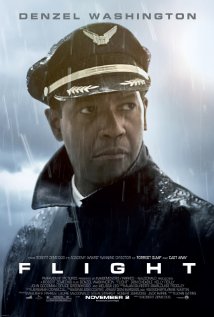
I’m getting a little repetitive in my reviews here lately, but it can’t be helped. There’s just some good stuff coming out of Hollywood lately, and the last few movies I’ve seen have been amazing.  Flight was another recent addition to what’s been a great year in film.  Denzel Washington (Safe House) is one of the preeminent actors of our generation, obviously.  We already know that he’s talented and marketable, but I think that the further along and more settled an actor becomes in their career, the less likely they are to take risks or to stretch themselves.  Washington has made a career out of being the hero, and when I initially saw the trailer for Flight, I assumed it would be more of the same.  Like, you saved people from a train (Unstoppable), and now you’re going to save people on a plane.  Been there, done that.  But after watching Flight, I was simply blown away.

Washington stars as Whip Whitaker, a seasoned commercial pilot whose experience, knowledge, and gumption make him one of the best.  While he’s in complete control in the cockpit, his personal life on the ground is much rockier.  He has a contentious relationship with his ex-wife and is estranged from their teenaged son.  The movie begins in a hotel room with Whip GETTING. IT. IN.  I mean, whatever you’re into – he had it; pick your poison.  Coke? Check. Drink? Check. Weed? Check.  I thought he was just having a good time, so imagine my surprise when he and his lovely bedmate mention their impending flight!  I like revealing, expository opening scenes, and director Robert Zemeckis (Cast Away) expertly told us all we needed to know about Whip in five short minutes.  Well, almost all we needed to know.

Let’s jump to the actual flight, which includes one of the most intense scenes I’ve ever witnessed on the silver screen.  The real trouble starts when the plane takes an unexpected nosedive about 20 minutes into the flight.  Folks, let me pause here.  This scene was nothing short of amazing.  I have to tip my hat to Zemeckis for this because I’ve never been so riveted by a single movie scene, and I swear I’ve seen it all at this point.  My movie buddy clutched my thigh, and my eyes began to water.  That’s how amazing this crash scene was.  Everything was depicted perfectly, from the panic and terror of the passengers, to the bravery and sacrifice of the flight attendants as Whip once again showed his mettle.  To stabilize the plane, he inverts it…and they fly upside down!  The plane levels off and he rights the aircraft, lessening the inevitable impact of the crash while lives hung in the balance.  To put it simply…Whip is The Motherfucking Man.

I’ve chosen my words carefully and tried not to reveal anything that I don’t think you’d already have gleaned from the trailer.  Whip’s aviation abilities are above reproach, but his pre-flight behavior was indicative of a man with a serious problem.  After the crash, that behavior is scrutinized and it’s revealed over the course of the film that Whip is a raging alcoholic.  The depths of addiction know no bounds, and I’m speaking from experience.  If you’ve never struggled with it or known someone who has, some of the things Washington’s character does will seem unbelievable, but I thought it was spot-on.  Anyone who has dealt with addiction knows there’s a dark place you have to go before you can vanquish whatever demon threatens you – and that place is called Rock Bottom.  I was greatly impressed with Washington’s ability to portray a character that was deeply flawed, yet sympathetic.  His obvious addiction is expertly juxtaposed with the heroism and skill he displayed on the flight.  As a viewer, you want to despise the recklessness of his actions one minute and applaud him the next.  That conflicting duality of his personality made for an excellent film.  We are the sum of our parts, but it was hard to define Whip Whitaker at times.

Flight literally took my breath away, it was that good.  Washington is a force to be reckoned with and he swagged all over this joint.  His sex symbol status is different now, and I could have done without the shot of his booty, but he is still handsome and oozes charisma.  I’ve never seen him in such a fluid role, where the dichotomy between right and wrong and hero and villain becomes blurred by circumstance.  Actress Kelly Reilly (Sherlock Holmes: A Game of Shadows) was also a revelation in her role.  I’d never heard of her before this, but she was a wonderful counterbalance to Whip’s addictive personality, as they forged a tentative romance that never really had a fair shot.  Go see this movie! Grade: A.

The Man With the Iron Fists

I was rather excited when I saw the commercial for RZA’s The Man With the Iron Fists.  The Wu Tang Clan super producer finally had the chance to bring his demonstrated love of Chinese martial arts culture to the big screen.  RZA has been fusing Chinese culture into music since he first beckoned us to enter the 36 chambers back in 1993.  Wildly creative, even when it produces mixed results (anyone remember the Bobby Digital album?) – RZA has never been afraid to forge new ground.  It should be no surprise that his first foray into filmmaking yielded positive results, even though he relies on some help from a talented cast that included Russell Crowe (The Next Three Days), as I’ve never seen him.

RZA stars as an unassuming blacksmith in ancient China.  He calls Jungle Village home, a town overrun by powerful clans.  Caught between warring factions, the blacksmith must fashion weaponry for the gangs without pledging allegiance to any particular one.  Running a profitable but dangerous enterprise, he earns his keep so that he and his woman Lady Silk (Jamie Chung, Sucker Punch) can leave town and make a better life for themselves.  Things take a turn for the worst when the leader of the Lion Clan is murdered by his own lieutenant.  The turncoat is Silver Lion, a ruthless warrior who wants to take over Jungle Village.  He and Bronze Lion conspired to murder Gold Lion, the leader of their gang and a relatively peaceful captain.

After his death, his son Zen Yi (Rick Yune, Ninja Assassin) travels to Jungle Village to investigate and avenge his father’s demise.  Complicating matters is the Lion Clan’s planned hijack of a shipment of gold bullion belonging to the governor of their province.  The shipment is being guarded by the Gemini Twins, a pair of deadly martial artists.  Also tracking the bullion is Jack Knife (Crowe), a British soldier who seems like he prefers the brothel to the battlefield.  Earning his moniker through handiwork with a scissored blade, Jack is a formidable opponent who is not afraid of the Lion Clan.

The backstory of the movie involves Lady Silk’s employer, Madam Blossom.  She runs Jungle Village’s Pink Blossom brothel, where both the Lion Gang and Jack Knife are shacking up.  Madam Blossom and her stable of lovelies have their own designs on the gold bullion and are not to be underestimated.  RZA’s blacksmith is the titular character of the movie, but the wide cast of characters shape his existence and are an integral part of the storyline, which ventures all over the place.  The blacksmith’s loyalty to Zen Yi costs him dearly, but he eventually uses his newfound disability to his advantage, becoming the man with the iron fists.  With Jack and Zen Yi as allies, the stage is set for an unforgettable showdown with the Lions.

The Man With the Iron Fists won’t be everyone’s cup of tea.  The dialogue is often campy and “on the nose,” and even the costumes and makeup are ridiculous in some instances.  For example, Silver Lion looked like Prince, at least to me.  Despite these laughable elements, I thought the movie was great – and even those comical aspects may have been intentional.  Those old Kung Fu movies that probably inspired RZA weren’t exactly known for their profound acting performances.  Any shortcomings by the cast were more than made up for by the performances of Lucy Liu and Russell Crowe.  Crowe particularly seemed to relish his role, a fun and raucous departure from his more recent efforts.  Lucy Liu is no stranger to the physical demands of her character, having played O-Ren Ishii in Tarantino’s Kill Bill vol. 1, which was not so coincidentally scored by the RZA.

Speaking of Tarantino, his imprint is all over this one, which is not a bad thing.  Of course RZA is no Tarantino, but this was a fun movie that will undoubtedly please its intended audience.  RZA has his own style, and his musical background provided for some unique cinematic sequences.  I don’t know how involved directors typically are in scoring their movies, but the musical choices here were perfect.  RZA eschewed traditional filmmaking and created an unconventional movie with a dope score to boot.  It won’t ever be nominated for Best Picture, but it sure makes for a cool day at the movies.  Grade: B

This review first appeared at Poptimal and was reprinted with permission.

Argo

Some things just lend themselves to cinematic visualization.  You’re probably familiar with the expression “stranger than fiction,” a phrase describing the fantastic things that occur in real life, but are so unbelievable they seem like the stuff of fantasy.  We see so many amazing things in movies, most of which is fiction.  How cool is it when the unbelievable shit you see in a movie actually really happened?  Ben Affleck (most recently of The Town) brilliantly depicted the Iran hostage crisis of 1979 in Argo, demonstrating that he could be the next Clint Eastwood one day – a popular actor whose directorial efforts rival his thespian pursuits.

In 1979, the American Embassy in Tehran, Iran was taken over by protestors who were outraged that the United States had granted amnesty to its recently ousted Shah.  In an effort to minimize the security threat of the takeover, the diplomats began destroying classified material before it could be seized, including passport plates and personnel files.  During the siege, six diplomats escaped, taking refuge at the nearby Canadian Embassy.  Back at the American Embassy the dissidents would eventually begin making the hostages painstakingly reassemble the shredded documents, which included personnel files identifying the escaped diplomats.  There were also neighborhood searches of private residences to ensure that no locals were harboring anyone.  Obviously, any American separate and apart from the Embassy would be in grave danger, at risk for public execution as an example to the West.  The escaped diplomats included four men and two women, with two married couples in that number.  Getting the six out of Iran alive would prove a most daunting task, setting the stage for a nail-biting chain of events.

Back on American soil, the CIA hatches a plan to extract the diplomats, and this is where things really get fun and interesting.  Affleck stars as Tony Mendez, an operative whose specialty lies in such creative recovery missions.  The crisis presented a unique conundrum for the Agency, as any ruse to rescue the diplomats must be executed perfectly.  Mendez gets the idea to pose as a Canadian film crew, complete with a fictional script and Hollywood producers.  He plans to prep each diplomat with a cover story that they will have to memorize.  As explained by Mendez’ superior, the scheme is “the best bad idea” they could come up with.  Argo was the name of the movie, a sci-fi flick set against a desert landscape.  The phony film crew is supposedly in Iran scouting potential film locations.  Authenticity was important, so the idea was based on a real script that had been submitted to a studio.  There was even a fake cast lined up!  Throughout the movie I was riveted, marveling the whole time that this actually happened.  Stranger than fiction, indeed.

Quite simply, Argo is a fantastic movie.  It kept pace throughout, beginning with a brief history lesson to let the audience know the circumstances giving rise to the conflict.  This could have been boring, but it was fascinating and insightful.  The scenes in Iran were wrought with tension, and I was on the edge of my seat as if I didn’t know how the story ends.  The tense atmosphere was balanced perfectly by the funny scenes involving the Agency’s formulation of the rescue mission.  Shout out to the veteran Alan Arkin (recently of The Change-Up) in his amusing turn as the film’s producer, Lester Siegel.  I’m also very impressed by Ben Affleck, who wonderfully conveyed the complexity of a character with the weight of the world on his shoulders.  It was Mendez who had to enter Iran and physically escort the diplomats out of the country, relying on his wits and preparation to see him through.  Affleck is three for three in the director’s chair, by my count.  Gone Baby Gone, The Town, and Argo prove that this burgeoning new facet of his career has yielded great results thus far.  I’d go as far as to say Argo was one of the best movies I’ve seen this year – a must-see for sure.  Grade: A.

Taken 2

If some is good, more is better, right?  When it comes to movies, maybe not so much.  A sequel can be a logical continuation of an original idea, or it can be a watered-down duplicate that serves nothing.  Guess which category Taken 2 falls in?  As much as I was looking forward to Liam Neeson’s (The Grey) reprisal of Bryan Mills, aka Super Dad – the results were rather disappointing.

When we last saw Bryan Mills, he was saving his teenaged daughter from sex traffickers who kidnapped her and her friend.  Bryan rescued his daughter in daring fashion, while leaving numerous bodies in his wake.  Fast forward a few years, and the families of the men that Bryan killed want revenge.  I don’t know how much time is supposed to have elapsed since the first movie, but it can’t have been a long time.  Bryan’s daughter Kim was a teenager before, and she still is.  She’s 16 now; a fact that is patently absurd when considering that actress Maggie Grace (Lockout) recently turned 29.  She looks every bit of it, but ridiculous casting is least of what’s wrong with Taken 2.

In the first movie, the plot was original, and the action seemed to unfold organically.  Bryan was resourceful, and all of his fighting scenes were realistic.  Neeson was perfect as the seasoned former government agent whose skillset uniquely equipped him for a rescue mission.  This time around, he seems a step slower and the entire plot feels forced.  After all that has recently happened, one would think that the Mills family would take added precautions when traveling internationally.  Nope.  They express no reluctance in traveling to Turkey to meet up with Bryan while he travels on a business trip.

Brian’s daughter Kim and his ex-wife Lenore (Famke Janssen, X-Men: The Last Stand) join him in Istanbul; while unbeknownst to them they are being tracked by bloodthirsty Albanians.  They want to avenge the murders of their sons and brothers who were killed by Bryan in the last movie.  Eventually Lenore and Bryan are kidnapped in Istanbul, but he is able to get word to Kim back at the hotel, forewarning her before she too is abducted.  He was able to warn Kim because his captors allowed him to make the phone call right in front of them while they held him at gunpoint.  What followed was scene after scene of stupefying occurrences, each more absurd than the one preceding it.  Nearly everything about Taken 2 was unbelievable, from a decidedly middle-aged Neeson easily dispatching much younger men, to Kim somehow morphing into an Angelina Jolie action character.  When she expertly darted across rooftops while throwing hand grenades with Aaron Rodgers-like accuracy, I checked out of the movie.

My friends with whom I saw Taken 2 shared my disappointment.  I thought it began well enough, but as soon as the meat of the action got underway, it was all downhill.  There was only one good fighting scene because it was the only one that was remotely believable.  Neeson is a fine actor, and I’m not saying that he’s too old for an action movie, but this is a movie that didn’t need to happen.  The camera shots even seemed sped up in order to create the illusion that he could actually pull off the fighting scenes and they didn’t look authentic.  Taken 2 looks like it will open at the top spot in the box office, but I’ll bet it plummets by next week.  If you’re looking for a good movie to see, I’d suggest Looper.  It has a much better plot and a better performance by an aging action star (Bruce Willis).  Grade: C

The preceding article first appeared at Poptimal and was reprinted with permission