Author: T_Dot_Lane

Sicario

It’s been a relatively lackluster year at the movies, so when I started to hear buzz about Sicario, I figured it might be a sleeper. The trailer promised a taut political action drama featuring an accomplished cast, including Academy Award winner Benicio Del Toro (Inherent Vice), Emily Blunt (Edge of Tomorrow) and Josh Brolin (Inherent Vice). The film focuses on the US government’s efforts to thwart the Mexican drug cartels and their encroachment across the border. The opening sequence is a heart-stopping raid that results in tragic casualties for the FBI, and the Bureau is left reeling.

Blunt stars as Federal Agent Kate Macer, tough but rather naïve in her approach to neutralizing the cartel. She has bought into a self-righteous way of doing things, earnest but green. After she and partner Reggie Wayne (Daniel Kaluuya, Kick Ass 2) narrowly survive the aforementioned raid, she’s offered an opportunity to join a task force comprised of various intelligence agencies, military personnel and assorted covert types. Heading the task force is Matt Graver (Brolin), a CIA analyst liaising between the Agency and the Bureau. Alejandro Gillick (Del Toro) is attached to Graver, who introduces him to Kate as a DoD consultant. She’s immediately suspicious of him, and neither man provides much clarity about just what his function is on the team.

The task force must travel to Juarez, Mexico to extricate a witness, all the while flying under the cartel’s radar. Corpses line the streets of Juarez, swaying to and fro as a reminder of what happens if you dare cross them. Filmmaker Denis Villeneuve (Prisoners) held me at rapt attention, as the film was peppered with one jaw-clenching scene after another. Graver and Alejandro are at the forefront of every operation, mysteriously speaking in hushed tones while furthering Macer’s suspicions. Sicario is Spanish for hitman, and from the film’s outset it was clear that Alejandro is a questionable character with shaky allegiances. Macer and her partner are in over their heads, as everyone else seems to be privy to a secret that they know nothing about. The film follows Macer as she pieces together Alejandro’s identity and her questions her own principles.

Sicario is one of the better films of 2015. Usually movies like this have a lull at the midway point, after becoming mired in plot minutiae. However, I was genuinely enthralled throughout. The pacing was superb, and while director Denis Villeneuve hasn’t surpassed the suspense of Prisoners, he has crafted a very good film. Benecio Del Toro was quietly menacing, conveying a great deal while saying very little. Blunt continues to impress me with the emotional quality she brings to her performances, as well as the impressive physicality and bravado characterized by roles like this as well as in other films like Edge of Tomorrow. This is definitely one to check out. Grade: A

Black Mass

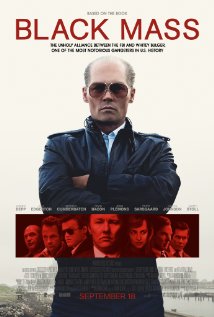
For some reason, organized crime lends itself well to cinematic storytelling. Classics like The Godfather and Goodfellas come to mind, their appeal lying in the allure of pulling back the veil to expose a world that we’d never otherwise see. Black Mass fits squarely within the genre, recounting the exploits of notorious Boston gangster James “Whitey” Bulger. While not without its shortcomings, I found Black Mass compelling, due in large part to a superb performance from Johnny Depp (Mortdecai, Transcendence), one of the most versatile actors of our time.

The film begins in the early 1970s, introducing us to Bulger, a low-level hood navigating the streets of South Boston. Bulger is in clear command of his small group of associates, engendering respect within the community. Loyalty is an essential attribute for any foot soldier, and Bulger inspires such devotion in the brutal, insular enclave known as “Southie.” Bulger operated brazenly, largely because he struck a deal with the FBI to inform on his rivals, shrewdly keeping the Feds at bay while eliminating his competition. From Bulger’s perspective this was not “snitching,” because he wasn’t ratting on any close friends, only his enemies – the Italian Mafia in Boston.

I noticed that the film never really delved into a depiction of Bulger’s criminal enterprise; it only mentioned that he was involved in drugs, vending machines, rackets, etc. Filmmaker Scott Cooper (Out of the Furnace) never shows us Bulger’s operation, and we are told about rather than shown his ascent up the criminal ladder. Joel Edgerton (The Gift) co-stars as FBI agent John Connolly, a childhood friend to Bulger whose loyalty gave Bulger carte blanche in Southie. Connolly essentially acts as Bulger’s eyes and ears in the Bureau, giving him unparalleled sway in South Boston.

I’ve seen some criticism of Depp’s performance, and find it baffling that anyone would find fault with that particular aspect of the film. He was menacing, exuding a chilling presence that emanated from every scene and steely stare. This is the Johnny Depp that I like, not the quirky weirdo from Pirates of the Caribbean or Charlie And the Chocolate Factory. I thought he gave Bulger complexity, and I didn’t think his performance was one-note. I contrasted his depravity with the humanity Bulger showed in relation to his son and mother, which were moments of compassion and sensitivity. However, make no mistake: Bulger was a monster. He would devour anyone, and when he told one character that he’d eat him – I believed it. A few memorable scenes solidified this sentiment, particularly one involving Bulger and Connolly’s wife Marianne. Depp nailed it, and this scene captured both Bulger’s psychosis and Connolly’s weak complicity to perfection.

While watching Black Mass, I couldn’t help but be reminded of 2006’s The Departed, which was loosely based on Bulger. If you’ve seen that film, it may be helpful to think of Depp/Bulger as Jack Nicholson and Edgerton/Connolly as Matt Damon’s character, at least initially. Of course The Departed is a superior film, but I digress. Black Mass’ cast was stellar, and having the likes of Benedict Cumberbatch (The Imitation Game) and Kevin Bacon (Cop Car) in ancillary roles only bolstered the overall weight of the film. I’m a fan of the genre, so I noticed an homage (or rip-off) of the classic scene from Goodfellas when Joe Pesci yanks Ray Liotta’s chain when a joke goes awry. I don’t know if this was intentional or accidental, but it reminded me that although Black Mass is a solid addition to the genre, it isn’t replacing any of our favorites. Depp can flourish in these types of roles (evidenced here as well as in earlier works like Blow and Donnie Brasco) and should take on the task more often. While some aspects of the film could’ve been improved upon from a storytelling perspective, the principals (Depp and Edgerton) really delivered. Grade: A-

The Gift

The best movies make you think about yourself and about life. I enjoy movies that explore some of my personal beliefs and philosophies. For me, what matters most in life is how you treat other people. You can be as wealthy and successful as possible, but if you don’t treat your fellow man with courtesy and respect, your worldly trappings mean nothing. The Gift was an intriguing movie that explored what it means to be a “good person,” and the accountability we must have for our actions.

Jason Bateman (Horrible Bosses 2) and Rebecca Hall (Transcendence) star as Simon and Robyn, a thirty-something couple who have recently relocated to California from Chicago. Simon is a successful executive, while Robyn is between jobs. Grieving a recent miscarriage, the couple is looking for a fresh start not far from where Simon grew up. We are introduced to the accomplished couple as they purchase a beautiful new home, and their energy is joyful and expectant. While shopping for furniture, Simon bumps into an old friend from high school, a shy man named Gordon (Joel Edgerton, Exodus: Gods and Kings). We first notice him in the background through the store’s window, watching Simon and Robyn as they shop. He exudes a creepy awkwardness, and it was painful watching him strike up a conversation with Simon, who barely remembers him.

As Simon and Robyn settle into their new digs, “Gordo” (as Simon calls him) begins to subtly intrude into their lives. It starts innocently enough with a housewarming gift left on their doorstep but eventually escalates to unannounced visits and inappropriate gifts. He seems lonely and relatively harmless, but there is something unsettling about his quiet lurking. Robyn is compassionate towards Gordo, but Simon is unnerved by him and mockingly pokes fun at his social ineptitude. It was particularly troublesome that Gordo always seemed to pop up when Robyn was home alone and Simon was working, a detail that foreshadowed the film’s sinister twist.

The film succeeds in evoking sympathy for Gordo, despite his disturbing behavior. There’s sadness in him, a quiet loneliness he hoped to fill by reconnecting with someone from his past. As the film unfolds, we learn just what kind of person Simon was all those years ago when he and Gordo first knew each other. Robyn discovers that Simon isn’t quite the man she married, as he reveals that he hasn’t changed much since high school after all. We don’t know how far Gordo will go to right the wrongs Simon inflicted on him, but when he exacts his revenge it is a cruel masterstroke.

I enjoyed The Gift immensely. It was a quiet movie that arrived in theaters with little fanfare, but deserved more attention than it received. Suspenseful and thought provoking, it was a unique movie that held my interest throughout. Edgerton not only stars as Gordo, but he wrote and directed the film as well. It was an impressive effort and I appreciated the conflicting emotions Gordo inspired. The storyline was strong and original, a testament to Edgerton’s talent and versatility. Hall and Bateman gave emotionally charged performances, and it was good to see Bateman as a flawed character for a change. Make sure you check for this movie when it comes to Redbox and cable. Grade: A

The Perfect Guy

I like to discuss movies critically, but I consider myself a movie fan more than I consider myself a movie critic. All movies aren’t Oscar contenders, and that’s ok. That being said, I’ve seen so many movies that I can’t help but notice when one doesn’t measure up. When I saw the trailer for The Perfect Guy, I thought it looked like it might be passably entertaining, but it seemed derivative even in that 30-second clip. I’m probably showing my age, but Fatal Attraction will forever be the standard bearer in this genre, because it was just as suspenseful as it was smart. The Perfect Guy was neither suspenseful nor smart, and the only reason why I wasn’t disappointed was because my expectations were low to begin with.

Leah Vaughn (Sanaa Lathan, The Best Man Holiday) is a beautiful, accomplished woman who seems to have it all. Her boyfriend Dave (Morris Chestnut, The Best Man Holiday) is every bit her equal, and they look like a great match. However, as most women in their thirties will attest, there comes a time when you’re ready to start a family, and any person or relationship that doesn’t advance that objective is a waste of time. When Dave reveals his uncertainty about future fatherhood, the pair agrees it’s best to part ways. Fresh out of a two-year relationship, it isn’t long before Leah crosses paths with a very handsome stranger, Carter Duncan (Michael Ealy, Think Like a Man Too).

Carter is everything a woman would want, which is sort of the problem. I’m all for positive vibes, but most things that seem too good to be true usually are. Carter is attentive, doting, romantic, and chivalrous. When he shows up to her workplace unexpectedly, Leah is flattered not frightened – even though she never told him where she worked. The couple moves at lightning speed, and she even introduces him to her parents, despite the fact it’s only been a few weeks. They seem like a match made in heaven until the short relationship implodes in a horrifying instant. While stopped at a gas station, a man approaches Leah while she waits in the car for Carter, who’s inside. He strikes up a conversation about Carter’s classic car, but before Leah can relay the stranger’s admiration Carter mercilessly attacks the man, savagely beating him in a jealous rage.

After this critical plot point, the movie devolved into a hackneyed exercise in predictability. There was little in the way of character development, as Carter had two extremes: angel and maniac, with no shades of gray. There should’ve been a slow build to his insanity, a subtle moment where Lathan’s character begins to second-guess the relationship. When Carter snaps, there’s no doubt that the relationship is over because his actions are so extreme with such little provocation. When Dave and Leah reconnect, it feels contrived, a function of necessity rather than realism. I like Lathan and Chestnut, but at what point are they going to stretch themselves artistically? This movie does not meaningfully add to their repertoire. Ealy typically features as the clichéd “nice” leading man, so I’ll give him credit for doing something different this time around, though the source material was lacking. The Perfect Guy didn’t need to be the perfect movie, but it was not big screen worthy. I know the movie has a built-in audience, and I’m sure they loved it. I certainly did not. Grade: D.

Straight Outta Compton

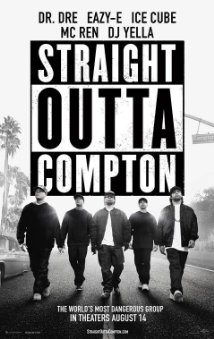
When I saw the trailer for Straight Outta Compton I knew that the film would represent a seminal moment in The Culture. And by The Culture, I mean hip-hop culture, Black culture, pop culture. History has a funny way of changing people’s perception, and I’m glad that my personal recollections of the group NWA informed my perception of the film. For those of you who don’t know, NWA (Niggas With Attitude) ushered in the so-called “gangsta rap” era, introducing us to rap luminaries Dr. Dre, Eazy-E, and Ice Cube. MC Ren and DJ Yella rounded out the group, a collective who expressed a raw, unabashed musical style that hadn’t been heard before. Straight Outta Compton was their debut album, and the film borrows that title as both a reference point and descriptor for its member’s origins. My discussion of the film will be twofold, as I’ll address its cinematic merits first, followed by its significance within The Culture.

Director F. Gary Gray (Law Abiding Citizen, Friday) has crafted a superior biopic. The film was as informative as it was entertaining, expertly incorporating the music that influenced the legendary group’s sound, as well as new music (Dr. Dre’s Compton soundtrack). Gray opens the movie by painting a picture of Reagan-era Los Angeles while introducing the audience to NWA’s charismatic front man Eric “Eazy-E” Wright. Ideally the first few moments of a film will capture your attention, and the opening scene set the tone in its depiction of Eazy narrowly escaping a botched drug deal. I was astounded at the images of a militarized police department, as they drove a battering ram through the front of a “trap” house, demolishing it and nearly killing its occupants. Gray shows us the environment that birthed the group, all the while making the obvious parallel between the LAPD’s tactics and what we’ve seen recently around the country regarding the unrest surrounding young Black men and women and the various police departments who brutalize them.

While Eazy contemplates a life beyond slanging dope, Ice Cube cultivates ferocity on the microphone, penning rhymes in a composition book he carries daily. Meanwhile Dr. Dre moonlights as a deejay at a local nightspot while trying to support a young family despite still living at home with his mother. His musical influences are made of some of the very best soul, funk, and rhythm & blues ever recorded – a subtle reminder that without sampling rap music wouldn’t be what it is today. NWA was formed partly by happenstance, partly by design. Dre was the visionary who crafted the sound, Cube wrote the lyrics, and Eazy had the voice. Eazy was no rapper, and one memorable scene showed how it took a few tries for him to perfect his style and unique cadence. However, their star power was undeniable, and eventually their brand of self-described reality rap propelled them to stardom.

Inevitably the group fell victim to dissension, as manager Jerry Heller (Paul Giamatti, San Andreas) drove a wedge between Eazy and the others by withholding royalties from Ice Cube when he failed to equitably account for the significant writing Cube had done for the group. Cube left the group with Dre eventually following suit, and when NWA unofficially disbanded, things were never quite the same. The members had somewhat mended fences before Eazy’s untimely death from AIDS, but by then it was the end of an era.

The film is almost too grand to effectively summarize, but a few scenes captured the immense cultural impact NWA had on America and on music as a whole. Freedom of speech was essential to the group’s image, as they faced criticism at every turn. Their adoration from fans was met with equal parts disdain from law enforcement, as “Fuck the Police” was emblematic of the frustration of young Black men across America. Gray showed how the Rodney King verdict and subsequent L.A. riots affected the community, validating the song and the maverick spirit that created it.

One aspect of NWA’s criticism that was hinted at but never fleshed out, was the misogynistic nature of their lyrics. Yes, the violent anti-law enforcement lyrics drew ire, but so did the prolific barrage of lyrics that seemed to degrade women. The film portrayed the group as heroes (or anti-heroes, at the least), and I suppose that is to be expected since Cube and Dre have production credits here. I won’t say the portrayal was sanitized, but of course some things were omitted. However, I did enjoy the balanced humanization of the group, particularly a scene in which Dre is comforted after the death of his brother, and another towards the end as they grapple with Eazy’s impending death.

F. Gary Gray brilliantly captured the group’s inception and pivotal musical moments in the recording studio. The performances were above reproach. O’shea Jackson Jr. bears an uncanny resemblance to his famous father, from voice inflection to mannerisms. Jason Mitchell (Eazy-E) and Corey Hawkins (Dr. Dre) infused their roles with authenticity and surprising vulnerability. Mitchell particularly showed a different side of Eazy, as he ruefully realizes that Cube and Dre’s respective stars have eclipsed his own. A few things were glossed over, in my opinion – like the extent to which Eazy fell out with the rest of the group. I remember the diss tracks, and I don’t think they made peace as easily as the film indicated. Nevertheless, this is a small quibble. The movie is a must see for anyone that loves The Culture. I got chills watching Ice Cube in the booth and when I heard him rhyming over Steve Arrington’s “Weak At The Knees” instrumental in an early scene. Some shit you just have to see, period. Not perfect, but pretty close. Grade: A.

Mission: Impossible – Rogue Nation

I used to love Tom Cruise (Edge of Tomorrow). He’s always been a capable actor, but I think people are reluctant to elevate him to the upper echelon of Hollywood elite when it comes to talent. Make no mistake, he’s an undeniable superstar – but that just means he’s popular and his movies do well. I think he’s talented, but his thespian skillset is overshadowed by the perception of him as action star. I credit him with a knack for self-deprecation and an overwhelming commitment to his craft, evidenced by the fact that he’s long performed his own stunts. Action movies are in his wheelhouse, so I was excited to see Mission: Impossible – Rogue Nation (aka Mission Impossible 5).

The franchise began with an emphasis on espionage and has since become more reliant on action. Additionally, there doesn’t seem to be much consistency with characters from one movie to the next, other than Cruise as steadfast superspy Ethan Hunt. This time around the IMF (Hunt’s covert employer) is on thin ice, with its leader William Brandt (Jeremy Renner, Avengers: Age of Ultron) clashing with CIA director Alan Hunley (Alec Baldwin, Aloha) after a mission to recover a nuclear weapon is unsuccessful. The film’s opening sequence details Hunt’s attempt to stop a moving plane from absconding with the deadly missile. Intel reveals that a rogue “nation” known as The Syndicate has stolen the weapon in order to execute terror attacks against Western allies. Complicating matters even further is the fact that the head of The Syndicate, Solomon Lane (Sean Harris, Prometheus) has ties to British Intelligence and the IMF, utilizing disavowed agents from both agencies.

One such agent is Ilsa Faust (Rebecca Ferguson, Hercules), formerly of British Intelligence. She and Ethan both want to stop Lane, but we aren’t sure if she’s friend or foe. One minute she’s helping Ethan escape The Syndicate, the next minute it looks like she’s doing their bidding in an assassination attempt against the Austrian Prime Minister. In one of the movie’s better scenes, Ethan foils the assassination attempt at the opera; deftly battling spies atop a catwalk while the audience watches the performance, completely unaware. That scene reflected all that’s great about the franchise (action, clever plot development, suspense), but unfortunately that level of tension was not maintained throughout the film.

I thought the movie suffered in its third act, when it got a little too smart for its own good. There was one twist and turn too many, and little things just didn’t add up for me. I know that a good spy movie should keep you guessing, but the plot quickly went from simple to complicated, which wasn’t necessary. Ethan Hunt felt like a poor man’s Jason Bourne, and although the action scenes were top notch – I still found myself bored as the movie wore on. The interplay between Ethan and Ilsa was fun to watch, but for me the movie was a bit of a mixed bag. I wasn’t disappointed, but it wasn’t quite as good as I thought it would be. Grade: B


Southpaw

Jake Gyllenhaal (Nightcrawler) is becoming one of my favorite actors, though I’ll admit that I may have been slow to recognize his abilities. I’d always thought he turned in good performances, but it wasn’t until last year’s Nightcrawler that I finally realized how talented he is. When I think about his career thus far, I’m most impressed by his versatility. From Donnie Darko to Brokeback Mountain to Jarhead– he transforms himself completely on screen. In Antoine Fuqua’s latest offering Southpaw, Gyllenhaal is masterful as Billy Hope, a boxer whose life unravels in the wake of tragedy.

Billy Hope embodies the rags to riches bootstrapping ethos of many professional athletes. He overcame a rough childhood in foster care, rising to the pinnacle of his sport as an undefeated world champion. He remains loyal to his childhood friends and his wife Maureen (Rachel McAdams, Aloha), who was also raised in the system. They live in a huge mansion with their ten-year-old daughter Leila, enjoying all the trappings of Billy’s success while remaining true to their humble beginnings.

Trash-talk and boxing go hand in hand, so initially Billy is dismissive when challenged by upstart Miguel “Magic” Escobar, who wants a shot at the title. Billy tries to laugh off Escobar’s assertion that he’s “never been hit by a real man,” but his newfound nemesis is relentless in his provocation. After a particularly nasty insult aimed at Maureen, a brawl between the fighters and their respective camps ensues. Shots ring out in the fracas, and Maureen is fatally wounded. In the aftermath of this devastating tragedy, Billy completely unravels. Consumed by grief, he is incapable of being the support system Leila so desperately needs after the loss of her mother. When she is taken into child protective services, Billy has no one to blame but himself. Will he regain custody? Does he have any hope of resurrecting his career?

Southpaw’s strength literally and figuratively lies with Gyllenhaal. From the physical transformation he endured to mirror a prizefighter to the intonation and dialect he employed in his dialogue delivery – he completely immersed himself in the role. Forest Whitaker (Out of the Furnace) was also reliably effective in his supporting role as a trainer who helps Billy right the ship. However, although I enjoyed Southpaw, I didn’t absolutely love it. At first I couldn’t put my finger on it, but after mulling it over for a few days; I think the movie was almost too straightforward. Writer Kurt Sutter (Sons of Anarchy) needn’t have overcomplicated the story, but its resolution was a bit too tidy. Billy’s entire world went to shit. His wife, child, home, and livelihood were all ripped from him. The manner in which these conflicts were resolved was too streamlined. There were no plot twists, nothing unexpected.

I haven’t told you anything you didn’t already know if you’ve seen the trailer. Gyllenhaal’s commitment to the role was evidenced by his physical transformation, and the boxing scenes were frighteningly realistic. But how are we supposed to believe that a fighter who had been defeated so thoroughly could bounce back so quickly? A good movie, but not a great one. Grade: B+


Magic Mike XXL

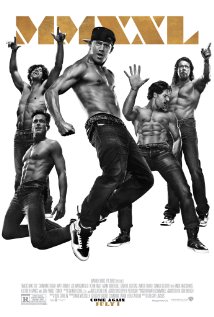
You know my opinion of sequels. Rarely are they a logical or necessary extension of an original movie. Cinematic purpose aside, they are nevertheless entertaining – especially if the original was satisfying. Magic Mike was wildly successful, aimed at a target demographic that showed up in full force for the provocative Steven Soderbergh (Contagion) film starring Channing Tatum (22 Jump Street) and Matthew McCounaghey (Interstellar). Thus I wasn’t surprised when I heard there would be a sequel, although I was mildly disappointed to see that not all of the original cast would be returning.

The plot details of Magic Mike XXL aren’t terribly important, are they? Anyone going to see this movie isn’t concerned with such matters, I’m almost certain. Suffice it to say that the titular Mike has made a post-stripping living for himself designing furniture, while the remaining “Kings of Tampa” (sans McCounaghey and Alex Pettyfer) are still giving the ladies fits on stage. Mike has been somewhat reclusive, and his old friends have to dupe him into a reunion. When they finally reconnect, the guys convince him to go on a farewell tour of sorts, one last big hurrah before parting ways again.

The guys’ swan song will take place at a huge male stripper expo, and they have a long road trip ahead of themselves to get there. Mike thinks they need to liven up their act with new material and gains inspiration after dropping in on old friend Rome (Jada Pinkett, The Women), a club owner who provides a unique experience for women who patronize her risqué establishment. With McCounaghey’s Dallas no longer in the picture, the guys need an emcee for their show, and Rome eventually obliges.

The bulk of the movie depicts the camaraderie amongst the guys while intermittently treating the audience to eye-popping gyrations from Channing Tatum, who is quite obviously the superior dancer and unquestionable star of the film. Tatum doesn’t really “do it” for me, but I can’t deny the heat his performances generated. The audience at my viewing was packed with giddy, squealing women who had a boozy good time howling at the screen. I wondered how they would behave at an actual strip club, since the movie had them acting like they’d never seen a real live man before. What else can I really say about Magic Mike XXL? If you enjoyed the first one; surely you’ll like the sequel. The dialogue and acting faltered at points, but the fraternal chemistry among the cast and sizzling dance routines made the film largely enjoyable. Straight men, this one isn’t for you (Duh). Grade: B


Dope

Seems like those coming-of-age “day in the life of” movies are some of the most memorable. The awkward, pressure-filled years of high school make for entertaining subject matter, and Dope gave me that nostalgic feeling, hearkening back to classic movies like House Party, Ferris Bueller’s Day Off, and Risky Business, where hapless high school students find themselves in a sticky situation. Set against a unique yet familiar California backdrop, the movie was a cool homage to 90’s culture with enough current hipster-isms to be perfectly relevant to today’s times.

Malcolm (Shameik Moore), Diggy (Kiersey Clemons), and Jib (Tony Revolori) are three 90’s-obsessed best friends living in Inglewood, California. In the microcosmic world that is high school, they’re considered geeks – but their love of hip hop from the recent past is ironically as cool as it gets. Malcolm is aware that his story is clichéd: he comes from a single-parent household; never really met his father, and lives in a rough neighborhood. He distinguishes himself by going against the grain in both the company he keeps and their shared avant-garde musical pursuits. Unfortunately, their punk band’s biggest fan is probably the school custodian. Malcolm is college-bound, hoping that his stellar grades and SAT scores will secure him admission to Harvard.

Has there ever been a geek in a movie that didn’t predictably pine away for a beautiful girl presumably out of his league? Nakia (Zoe Kravitz, Fury Road) is the object of Malcolm’s affection, an older girl from the neighborhood who similarly aspires to more than her surroundings. When they cross paths and she casually invites him to a party – Malcolm and his crew know they have to be there. At the party, Malcolm inadvertently gets tangled up with the local dope boy and finds himself in a crazy predicament that threatens all the hard work he’s done to prepare for his future.

I don’t want to spoil too much of the plot, but suffice to say that Dope was a fun ride. The soundtrack featured much of the music I grew up with, and most thirty-somethings and 80’s babies alike will appreciate the song placement as well as the characters’ affinity for the culture. There are some notable names attached to the film, as Forest Whitaker is credited with producing and narrating. Additionally, Pharrell Williams is an executive producer, and his musical influence on the young trio’s aesthetic is obvious. Sure the plot went left a couple of times – but this is not a movie to be dissected. I was surprised to see so many older people of varying backgrounds in the theater – so maybe this film has universal appeal for anyone who remembers their awkward (or awesome) high school days. Dope was dope. Grade: A-

Entourage

When it comes to television, no one does it better than HBO. From iconic series like Sex and the City and The Wire to current shows like Game of Thrones, the venerable network is the standard bearer. One of my favorite shows was Entourage, an HBO series produced by Mark Wahlberg, which aired from 2004-2011. The series was loosely based on Wahlberg, centering on fictional star Vincent Chase (Adrian Grenier, The Devil Wears Prada) and his band of brothers from Queens, NY. Although the series faltered in later seasons, I stuck with it for the duration and greatly anticipated the feature film. I enjoyed the movie and think longtime fans of the show will be pleased; however, it may not resonate as much with new viewers.

The movie begins with an effective synopsis of the main characters, with writer/director Doug Ellin picking up as if we’re tuning in for the latest episode. Vince is rebounding from a Hollywood marriage that lasted about as long as the common cold; Eric (Kevin Connolly, Secretariat) is expecting a baby with his ex Sloan, Johnny Drama (Kevin Dillon, Poseidon) is still carving out an existence as a B-list actor, and Turtle (Jerry Ferrara, Think Like a Man Too) has impressively amassed an empire through Avion tequila. Vince’s sharp-tongued agent Ari Gold (Jeremy Piven, Sin City: A Dame to Kill For) has proven to be the rainmaker we knew he’d be, and all is right with the world. Vince has always fancied himself an artist, and the trappings of fame have never made him compromise his creative integrity. To that end, he’d like to fulfill his dream of being a true auteur by directing and starring in his own film. Personally, I thought it was a stretch for the character – but in the land of Entourage Vince’s dreams are going to come true.

Problems arise when Vince’s movie needs additional financing, and Ari has difficulty securing it from the man holding the purse strings, a Texas billionaire played by Billy Bob Thornton. Ari makes it painfully clear to Vince that he’s overextended and that if the movie flops, both of them are finished in Tinseltown. When their financier’s piss-ant son (played by a pudgy Haley Joel Osment) threatens to scrap the movie, Vince and Ari must find a way to salvage it all. Meanwhile Eric awkwardly juggles a couple of women and Turtle courts MMA fighter Ronda Rousey.

Entourage has always relied heavily on the escapism factor, and that was on full tilt here. Keeping with the series, the movie was littered with cameos, from rappers to actors to athletes. The whole thing was over-the-top hedonism, but it felt good to see Vince continuing his customary lifestyle we’ve come to enjoy. It wouldn’t make sense to make a movie where Vince had fallen off, especially after his character experienced a brief professional and personal downturn in the latter seasons of the show. We’ve seen what it looks like when Vince is down and out, and I don’t think that would’ve made sense for a feature length film.

The movie put a nice neat little bow on the series, and it will be rewarding for fans. However, if you’re going into the movie “cold,” I’m not sure you’ll catch all the references, characters, and inside jokes. You won’t appreciate or fully understand the journey and you won’t be invested in the characters or the rather flimsy plot. Sure, the bawdy, gaudy lifestyle is entertaining, but I don’t think it’s worth the price of a movie ticket. In sum: it’s a must-see for Entourage fans, and a Redbox pick for everyone else. Grade: B+