A Very Harold & Kumar 3D Christmas

Let me begin with the disclaimer that we over here at The Fast Lane do not advocate drug use.  That being said, it’s very clear that A Very Harold & Kumar 3D Christmas was meant to be viewed under the influence.  If you’re sober when watching (as I was), chances are you’ll be more exasperated than amused.  That’s not to say that there weren’t a few laughs, but it was about as stupid as I expected it to be.  This movie is for stoners and 13 year old boys.  Everyone else – watch at your own risk.

This was one of those movies that didn’t really need to be in 3D – but hey, whatever.  When we pick up with the cannabis-loving compadres, it’s obvious that Harold (John Cho, Flash Forward) and Kumar’s (Kal Penn) bromance has tapered off.  Harold is married and Kumar is…well, getting high every waking moment.  His girlfriend has recently dumped him, and he’s been wallowing for months.  When she tells him that she’s pregnant, he’s too high to respond like an adult.  Harold is the exact opposite.  He’s very stable and settled, and his life is quiet and simple, at least until his father-in-law shows up for Christmas.  Humorously portrayed by that menacing dude from the Tarantino movies, this guy is incredibly hard to please.  Upon his arrival he trashes Harold’s Christmas tree because it’s fake.  He brought his own fir tree that he’d grown for 8 years to decorate instead.  While Harold’s wife and father-in-law attend Midnight Mass he promises to decorate the tree.  The fact that his father-in-law grew the tree for 8 years should let you know how crazy he is about Christmas; so decorating the tree is a really big deal.  Harold hopes that if he does this successfully he can finally win the guy over.

Harold and Kumar have been estranged, because Harold thinks that whenever Kumar and weed are around things go tragically wrong.  This is borne out when Kumar shows up on Harold’s doorstep with a Christmas package for Harold that was delivered to his apartment.  They open it and see it contains a jumbo-sized joint.  Harold wants no parts of it, but Kumar sparks the spliff before he can stop him.  In the first of a series of truly ridiculous mishaps, the joint ends up setting the Christmas tree on fire.  Now Harold is tasked with replacing the tree before his wife and father-in-law return at 2:00 AM.  As soon as Kumar reappears, things start to go wrong – which confirms Harold’s recent exclusion of his old friend.

While they’ve lost touch they have each made new friends, though these new buddies aren’t the same.  Harold’s pal is Todd, played by the always hilarious Tom Lemmon (I Love You Man, Reno 911).  Kumar’s buddy is Adrian, who has convinced Kumar to tag along at a party in the city where he hopes to smang a girl he met online who claims to be a virgin.  Exactly. How much more juvenile can we get?  Harold realizes he could get another Christmas tree from the house party, while Adrian tries to score.  What transpires for the movie’s duration is a hodgepodge of misadventure as Harold and Kumar end up fighting off mobsters and dancing onstage with the strangely omnipresent Neil Patrick Harris (How I Met Your Mother), among other things.  All in a mad quest to get a perfect tree on Christmas Eve.

I can’t be mad, and I can’t say that I wasted an hour and forty minutes of my life.  The movie was exactly what I thought it would be.  It never took itself seriously, and shame on me for expecting it to.  Gratuitous, pointless 3D effects were peppered throughout, as well as obvious 3D references in the dialogue.  There were lots of boobs and drugs.  Neil Patrick Harris was funny as always, poking fun at his sexual orientation and generally looking like he was having a good time.  I didn’t have high expectations (no pun intended) to begin with, but I still found the movie a little disappointing.  Just because it’s a stoner movie doesn’t mean that you can just throw anything against the wall and hope it sticks.  Smarter, funnier stoner movies have been done, such as Pineapple Express and the Friday movies.  Just wait for this one to come out on DVD.  That way it’s cheaper, and when you get the munchies – it’s a short walk to the kitchen.

This article first appeared at http://poptimal.com/2011/11/a-very-harold-kumar-3d-christmas-review-stoners-retreat/ and was reprinted with permission.
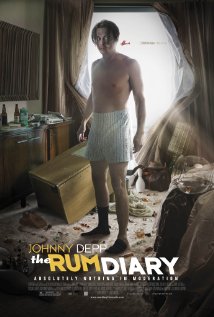
The Rum Diary

I didn’t know what to think of The Rum Diary when I first saw the trailer, but I was intrigued.  It’s based on the semi-autobiographical (but fictional) novel of the same name by famed author and journalist Hunter S. Thompson.  Thompson is a pop culture icon, known for his ardent rejection of conformity and for pioneering “gonzo” journalism.

Johnny Depp (Alice in Wonderland) is always a potential draw for me, though I don’t usually find his quirkiness appealing.  In The Rum Diary he portrays journalist Paul Kemp with a relatable quality not found in most of his roles.  Kemp is in 1960’s Puerto Rico to write for a fledgling newspaper.  He wants to comment on the political turmoil in San Juan, but his editor wants fluff pieces to appease their readership.  Kemp decides to take what he can get, and initially he’s hired for the mundane task of writing horoscopes.

The Rum Diary was patterned after Hunter S. Thompson’s brief time in Puerto Rico when he applied (and was rejected) for a job at a newspaper, but still made friends and acclimated himself to the local area.  Puerto Rico plays like a town where the rum runs freely and following the rules is optional. When Kemp meets a former newspaper employee turned hotshot named Sanderson (Aaron Eckhart, The Dark Knight), he gets a chance to line his pockets and keep his editor at bay.  Sanderson and some other influential but corrupt locals want to develop untouched Puerto Rican soil and need Kemp to insert certain viewpoints in his articles to soften up the public when they hear about the increased taxes they will have to pay to fund the project.  In addition to trying to bridge the gap between his personal and professional spheres, Kemp’s life is complicated by his attraction to Sanderson’s girlfriend Chenault (Amber Heard, Drive Angry), a fetching blonde he meets by chance only to find out later that she belongs to another.

Again, Paul Kemp is loosely patterned after Hunter S. Thompson.  To that end, he’s a raging alcoholic, but quite an endearing chap. Depp is very good as the hapless but earnest journalist trying to do relevant work without selling out.  His time in Puerto Rico is one misadventure after another, as his friendship and arrangement with Sanderson begins to unravel when his affinity for Chenault leads to trouble.  Everyone needs a trusty sidekick, and Kemp’s is a fellow journalist named Sala.  Together they drink and stumble their way through the streets of San Juan, and it doesn’t seem like these reporters ever do much writing.

I don’t really know what to make of The Rum Diary.  I enjoyed it because it was entertaining, and Puerto Rico was an inviting setting tailor made for debauchery.  It was a fun and interesting movie, as I wondered what would become of Chenault and Kemp and whether the newspaper would eventually fold.  However, there was an unmistakable lull in the film, where the viewer wondered just what the hell was going on.  One scene in particular was very trippy, as Kemp and Sala endure a drug-induced stupor.

It’s hard to encapsulate just what this film was all about.  It played like a very interesting “day in the life” of so-and-so type of movie, but I’m not sure if there was a larger point to be made.  I haven’t read the book, but I’ll bet it was a page-turner, if the movie was any indication.  I’m just not sure everyone will like it or “get” it.  From a visual standpoint I thought it was cool and funny at times, but it wasn’t too deep or meaningful.  Fans of the late Thompson may appreciate the manic, boozy feel of Kemp’s tale – but everyone else may be a little ho hum about it.  If you’re a fan of Depp or Thompson or you just want to leer at Amber Heard, check it out.  Otherwise, this will make a nice little flick to catch on HBO in a few months.

This article first appeared at http://poptimal.com/2011/11/the-rum-diary-review-a-boozy-joyride/ and was reprinted with permission.
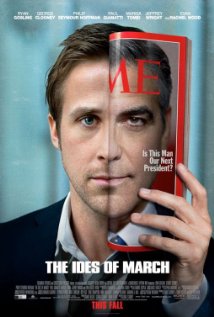
The Ides of March

“Beware the ides of March…”  I’ve always liked the Shakespeare quote from Caesar, an ominous warning of betrayal.  It’s appropriate that the George Clooney (The American) directed Ides of March is named for the quote, as the movie is similarly characterized by the betrayal and cold ambition found in Shakespeare’s play.

Ryan Gosling (Drive), Philip Seymour Hoffman (currently in Moneyball), Marisa Tomei (The Lincoln Lawyer), and Paul Giamatti (most recently of The Hangover II) comprise a highly-acclaimed cast that is the best collection of actors I’ve seen in a while.  Clooney is Democratic governor Mike Morris, an ambitious contender for the White House, especially if he can win the Ohio primary that looms ahead.  An integral part of Morris’ campaign is his campaign manager and aide, Stephen Meyers (Gosling).  Meyers is a sharp young gun with political savvy beyond his years.  He is calculating and shrewd, and will tell you that he’s done more at his age than most of his older counterparts.  However, it is Meyers’ strong ego that leaves him susceptible to overtures from the opposition.  Morris’ opponent is a more seasoned Democrat, a representative of the status quo, while Morris (much like President Obama) has been anointed as the symbol of hope and change.   Stephen has truly bought into Morris’ image and thinks he is backing a winner.  As he tells another character, he is “drinking the kool-aid.”  The campaign is moving in the right direction until Stephen gets a call from Tom Duffy, campaign manager for Morris’ opponent.  Duffy tells Stephen that he’d like him to switch sides and that he should attach himself to a winner and look at the big picture.  Stephen ultimately declines, but let the whole thing linger on longer than it should have.  Instead of maintaining an impenetrable silence, he allowed for the possibility of uncertainty and cast Morris in a vulnerable light at a critical hour of the campaign.

While managing the campaign, Stephen crosses paths with a young volunteer named Molly (Evan Rachel Wood, True Blood) whose father happens to be the head of the Democratic National Convention.  They begin an intimate relationship that leads Stephen to discover that he and the governor share more than a similar ideology.  Meanwhile, Stephen tells Morris’ senior campaign manager Paul (Hoffman) about his exchange with Tom Duffy.  His admission is met with an impassioned diatribe on the virtue of loyalty, after which he is quickly dismissed from the campaign.  At first blush it seems that Stephen will be a victim of his own ego, but he still has an ace up his sleeve with Molly – who is carrying a secret that could derail the entire campaign.  It’s ironic that while Paul was reminding Stephen of the importance of loyalty, he had no idea that Stephen had been displaying great loyalty to the governor by cleaning his dirty laundry even while his own position within the campaign grew more and more tenuous.

After Stephen is fired he behaves vengefully and emotionally, almost validating the overture.  But you don’t get to where Stephen has gotten without having a fighter’s mentality.  He goes into survival mode and begins to play the game from within, angling to revive his role in the campaign and to leverage what info he has against the man he once believed in.

Ides of March was a pretty good political drama.  I’ve seen better, but it was a solid movie and an impressive directorial effort from Clooney.  I really feel that he captured the idealistic buzz that hums in a Democratic campaign, the enthusiasm and liberalism.  I chuckled at the Shepard Fairey-inspired prints modeled after Obama’s iconic ‘Hope’ poster, but otherwise I thought the campaign depiction was realistic.  Ryan Gosling continues to prove that he’s one of the best young actors around.  He is earnest and real in everything I’ve ever seen him in, and I am always endeared to his characters, whether he’s a criminal in Drive, a drug addict in Half Nelson, or a lovesick suitor in The Notebook.  Clooney was effective as the duplicitous Morris and of course it’s no difficult task for him to be the charming candidate.  The supporting cast was very good, and I should mention that Jeffrey Wright (Source Code, Cadillac Records) also made an appearance.  Another great actor in a pretty good movie.  I didn’t like the very last scene of the movie, but I enjoyed it overall. 8 out 10.

Drive

I see you Ryan Gosling.  And I am not mad at all.  2011 is shaping up to be quite the year for Gosling.  He was in the heartfelt Crazy, Stupid, Love earlier this year alongside Steve Carell.  Next month he will star with George Clooney in the political thriller The Ides of March.  But it’s his current feature Drive that’s got me so intrigued.  What a unique, cool movie.  It might not satisfy everyone’s cinematic tastebuds, but I thought it was so nice I had to see it twice.

I never heard of director Nicolas Winding Refn (what a name) before this movie, but the cinematography was amazing. L.A. was shot beautifully, the night sky slick, cool and foreboding while the daylight shots were warm and sun-drenched. Certain cities add a distinct feel to a movie, if filmed with a deft hand.  Drive reminded me of other dark tales woven in the City of Angels, like Collateral and Heat (both directed by Michael Mann).  Of course I’m not saying this guy is as good as Mann, but he made L.A. look cool and sexy. And isn’t it? Anyway, Drive is appropriately titled.  The movie opens with Gosling’s character pulling a job for some unknown boss. He is a getaway driver, a Wheel Man.  He’s not involved in the heist/murder/random illegal act that requires flight, but he is the man who will make sure you get away cleanly.  If you follow his guidelines.  There’s a five minute window. He won’t be armed and he won’t participate – but he’ll drive.  Once those 5 minutes are up – you’re on your own.  We’re introduced to Gosling as a methodical, deliberate, solitary figure. Clearly adept at his trade, he doesn’t say much and casts a mysterious shadow.  We learn that he’s managed to also make a legit career of his driving skills, as he is a stunt driver in movies.  If Our Driver’s professional life seems dangerous and exciting – his personal life is decidedly more tranquil.

Again, Gosling is a solitary figure.  He doesn’t have much in the way of companionship, other than his boss on the movie set, Shannon.  That changes when he befriends his neighbor Irene (Carey Mulligan, Wall Street: Money Never Sleeps) and her young son Benicio.  Irene sort of looks like Tinkerbell with her baby face, pixie haircut, and sweet disposition.  She and Gosling have a timid chemistry, and there are a lot of scenes where they just sort of stare at each other and blush quietly.  These scenes didn’t bother me, but I know some other viewers found it plodding.  Things get more interesting when Shannon approaches Gosling with the opportunity to race on a professional circuit, in a stock car.  By the way, I keep calling him Gosling because his name is never revealed. When the credits rolled he was listed simply as ‘Driver.’  Anyway, Shannon secured financial backing for the stock car from Bernie (Albert Brooks) and Nino (Ron Perlman, Hellboy), two underworld figures who probably have their hands in all kinds of chit.  Meanwhile, although Irene and Gosling have become fast friends and he is becoming a pseudo big brother/father figure for Benicio, she makes it clear early on that his father (her husband!), a dude named Standard, is in prison.  When she finds out that he’s getting released soon, we can only wonder what this will mean for her burgeoning relationship with Gosling.  Surprisingly, Standard just seems grateful that Gosling was a friend to Irene in his absence. He wants to atone for his misdeeds and just live a normal life with his family.  Unfortunately, it never works out that way, does it?  Some gangsters to whom he owes protection money want him to pull a job to satisfy his debt.  When he refuses, they beat him to a pulp and threaten to return for Irene and Benicio if he doesn’t comply.  It is here that our reluctant hero emerges.  Our Driver feels a kinship with Standard and a certain affinity for Irene and Benicio.  He agrees to be Standard’s Wheel Man for the job, on the condition that the job satisfies any remaining debt and that Irene and Benicio can live in peace.  That’s the plot for you, in a nutshell.

Drive had the emotional weight of a character study, but there wasn’t enough dialogue for me to call it that.  The entire movie felt stripped down, much like the main character. It was slick and atmospheric; thanks to the 80’s sounding score that permeated most of the movie and the way Gosling filled every frame he was in.  I don’t find him to be attractive in the most traditional sense, but my goodness the camera really loved him in this movie.  The word swag is dead, but I have to say that his was on a hundred, thousand, trillion in this movie.  His demeanor was even-keeled initially, with just the hint of rage lying beneath the surface.  He’s a criminal, but he’s only the getaway driver. Initially we have to wonder if this is an indication that he’s soft in some way, but those doubts are quickly put to rest as Gosling begins to stomp and thrash his way through the movie.  I thought the plot and script were interesting, though not entirely unique.  Very slick and stylized, with the violence of Tarantino minus all the dialogue. If you don’t mind letting your movies simmer a while before they come to a fantastic boil – this is one to see.

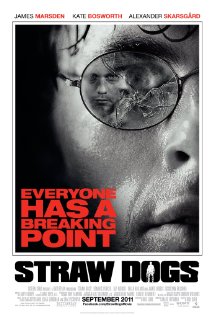
Straw Dogs *spoiler alert*

I looked forward to Straw Dogs for a few reasons.  First off, it looks like my kind of movie: dark, unsettling, and potentially delving into some real human emotion and touching on some  intriguing psychological themes.  Secondly, it features a nice piece of man candy in Alexander Skarsgard, better known as vampire Eric Northman on HBO’s True Blood.  I like Kate Bosworth (Blue Crush) and James Marsden (X-Men: The Last Stand) too.  So it stands to reason I would have enjoyed Straw Dogs, a remake of the 1971 thriller of the same name which featured Dustin Hoffman.  Well, I didn’t dislike it but I can’t say I really enjoyed it either.

David and Amy Summer have relocated temporarily to Amy’s hometown in Mississippi for a reprieve from Hollywood.  David is a screenwriter and Amy is a modest television star.  Her father has recently died and they need to settle some things with his home.  At the local bar they meet Amy’s old high school flame Charlie, a tall handsome former football star that time has forgotten.  He and his cronies remember Amy well, and they haven’t changed much.  David is clearly out of his element, surrounded by hyper-masculine drunken good old boys who admire his Jaguar and wonder why his shoes have no laces.  Amy is every bit as lovely as she was in high school, and her fancy Hollywood lifestyle and husband stand in stark contrast to her humble beginnings.  It’s almost as if her selection of David as a mate is a rejection of Charlie and his way of life.  It sounds like a bit of a stretch, but Charlie makes it clear that he still has a thing for Amy.  His lascivious stare and inappropriate gestures are obvious, though David does nothing to discourage it.  In fact, he hires Charlie and his gang to patch up the roof of the barn next to their remote property.  His reasoning is that Charlie is an old friend of Amy’s, so why not give him some work.  This proves to be a decision that has devastating consequences.

Tensions rise out at the house, as Charlie and company start working.  They are already drooling over Amy, lamenting missed opportunity with her while inwardly snickering at her choice of man.  There is no excuse for their leering, but she doesn’t help matters by jogging around in barely-there shorts without a bra.  She complains to David, who tells her to dress more appropriately.  This scene is a bit of foreshadowing David’s inability to protect and defend his wife.  When the family cat is found hanging by its neck in the closet, Amy demands that David take action.  He seems reluctant to point the finger at Charlie and his gang, though it’s unlikely that anyone else could be responsible. Instead of confronting the men, David seems as if he is still looking for acceptance from them.  Instead of proving his manhood by sticking up for his wife and making her feel safe; he seeks to prove it by showing this group of goons that he’s one of them.  When they invite him to go hunting, he accepts.  Unbeknownst to David, the hunting excursion is really a ruse to get David to leave Amy unattended at the house.  While David roams about in the woods, Charlie and another crony invade the Sumner home and victimize his wife.  These are men that went to high school with Amy, they are not strangers.  They view her as an unattainable object, one that has transcended their current station in life.  I think it is just as much about David as it is Amy.  They don’t view him as a man.  They don’t respect his relationship with his wife and they question his ability to protect her.  Violating Amy is a twisted assertion of their manhood, and a cruel thing to witness.  Even more unsettling than Amy’s rape was the aftermath.  Amy doesn’t tell him what has happened, and he has no idea that his wife was violated by the same men he has refused to confront.  Now that David was duped into hunting and embarrassed, he is ready to fire Charlie and his men.  Amy calls him a coward, and we as viewers know why.  She can’t expect him to know intuitively that she was raped, but he’s done nothing to inspire confidence up until this point.

When David fires Charlie the next day, the stage is set for everything to come to a violent head.  When the local town hothead (James Woods) and former high school football coach comes looking for his daughter’s mentally-challenged would-be boyfriend on the Sumner property – things turn nasty when David refuses to give him up.   This was the final act of the movie, the big payoff.  I enjoyed seeing Charlie and his fellow brutes get their comeuppance, but the final scene did not undo my previous frustration.  Why is David more protective of a stranger he barely knows than he was of his own wife?  Straw Dogs had the potential, but something fell short.  I do think it captured the almost imperceptible delineation between football and religion in the South, and the simplistic but happy way of life found beyond the bustling metropolis.  Something was missing though. Perhaps the original is more rewarding.  I think I’ll cue up the Netflix…

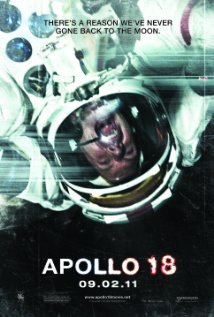
Apollo 18

Historical fiction has an artificial authenticity that has the potential for excellent storytelling.  It makes the audience wonder, could this really have happened?  Where does fact end and fiction begin?  Apollo 18 had all the potential to be a provocative, conspiracy-driven movie, but instead it failed to deliver.  There were many more yawns than thrills.

The movie begins by telling us that the last officialU.S.mission to the moon was Apollo 17 in 1972, but that two years later a covert lunar mission took place, the details of which have been secret until now.  Footage was recovered from the landing, and that footage is the basis for the movie.  The movie is shot “home video” style, adding a supposed air of realism.  This usually works, except that the actor portraying Pilot Ben Anderson is so incredibly handsome that he looks more like a leading man than a real American astronaut.  Anderson and two other astronauts make a trip to the moon, purpose somewhat unknown.  The men can’t tell their families about the mission, and there will be no heroic widespread welcome for them upon their return.  They seem content with anonymity, secure in the belief that they are serving their country.  Two pilots will actually traverse the moon, while the third pilot remains aboard another vessel.  It takes a long time for anything remotely interesting to happen in this movie.  Sorry, just the sight of them walking on the moon was not cool enough for me.  There was a constant sense of foreboding, but that wasn’t enough to stave off my boredom.  Things finally got interesting when the two astronauts’ exploration of the moon revealed a set of foreign human footprints that do not much their space boots.  Next they discover a crashed Russian space vehicle.  They had no knowledge of Russian lunar activity, so they instantly are on high alert.  Fearing the Russians may be prowling the moon at that very moment, they continue investigating.  Deep inside a crater they find the corpse of a Russian cosmonaut.  The whole time that they’ve been on the moon they have been hearing an odd screeching noise, some sort of feedback over the radio waves.  They wonder if the strange noise could be related to the cosmonaut’s demise.  They discover that a moon rock collected the day before seems to have a life of its own, and later one of them is seemingly attacked by one of the rocks, as it turns into an extra-terrestrial spider and imbeds itself in the astronaut’s body.  When they re-board their vessel, Anderson attempts to extract the foreign object from his compatriot’s body.  It appears to have turned back into a rock, similar to the one that they collected before.  While all this is going on, Houston has reassured them that the feedback noise is not much cause for concern, and they aren’t sure what to make of Russian presence on the moon.

I’m going to end the re-cap there, because those are the highlights.  To sum it all up, the Department of Defense sent the three astronauts to the moon as sacrificial lambs on an ill-fated recon mission.  When they become infected by the extra-terrestrial spidery moon rock thingies, they are prohibited from returning to Earth and are left to die in space.  Ok, what did we learn here? Not much. The astronauts were able to confirm that the Russians were there and that there is something on the moon that doesn’t take kindly to visitors.  Was that worth sacrificing three American lives?  It doesn’t seem like it.  The payoff was weak, and it took an eternity to get there.  I was dumb enough to think that The Blair Witch Project was real at first, and fortunately I didn’t make that mistake here.  Apollo 18 had a great concept that could have made for a thought-provoking, eerie and unsettling movie.  Instead, it was a boring, tedious affair resulting in a disappointing conclusion.  I knew that I was supposed to feel sorry for the characters…but I just didn’t care.  And the arachnid moon rocks?  Lame! Save your money!

This article first appeared at www.poptimal.com and was reprinted with permission.
The Change-Up

I’m a huge hip hop fan. The once great rapper Nas once said, “No idea’s original, there’s nothing new under the sun.”  He wasn’t the first to express that sentiment, but it’s one with which I agree.  That’s what I thought of when I saw the trailer for The Change-Up, the latest in a long line of “switcheroo” comedies.  Oh, you know the formula.  There was a spate of such movies in the 80s with offerings like Vice Versa and 18 Again!  We’ve even seen this formula just couple of years ago with 17 Again, starring Zac Efron.  It’s hard to come up with something completely original, that’s why when I see innovative movies like Inception, I lose my mind.  But I digress.  Lots not talk about what The Change-Up isn’t; let’s talk about what it is.

Best buddies Mitch (Ryan Reynolds, Green Lantern) and Dave (Justin Bateman, Horrible Bosses) couldn’t be more different.  Mitch is a single Ladies’ Man with very few responsibilities.  He’s an on again/off again actor whose days consist largely of jerking off and smoking weed.  That might be fun for a 20 year old, but a grown adult male should have higher aspirations.  In contrast, Dave is a settled family man.  He’s married with three children and is completely devoted and responsible.  While hanging out one drunken night, they each lament their lifestyles.  Dave didn’t goof on his 20s like Mitch.  He was working his way through school and stepping up to the plate after having his first child.  He envies Mitch’s swinging single lifestyle and the endless parade of women.  Mitch is content with his life, but he admits that it would be nice to come home and be surrounded by people who genuinely care about you.  While relieving themselves in a fountain, they verbalize their wishes.  In a moment of movie magic, their lives are swapped.

When Dave awakes the next morning, it is Mitch that dwells within him.  Similarly, Dave’s spirit inhabits Mitch’s body.  With an important acting audition approaching for Mitch, and a big deal looming at the firm for Dave, the switch couldn’t have happened at a worse time.  Luckily Mitch makes it through the meeting and Dave survives the audition.  Swapping lives is full of potential pitfalls for each guy, from a tempting young associate at the firm for Dave to indiscriminate sexual encounters for Mitch.  Of course things aren’t all bad.  Mitch infuses Dave’s life with a carefree attitude, and Dave brings a degree of levity to Mitch’s haphazard lifestyle.  The problem is that Dave has to make sure his marriage is in a better place than he left it.  The trappings of success have taken the love and passion out of their relationship, and he’ll have to figure out how to get it back before it’s too late.

The Change-Up is what it is.  What is original? Hell no. Was it funny? Yes, for the most part it was.  It had the appropriate balance of humor and heart to make for a passable day at the movies.  The lead actors are likeable and charismatic and there were enough laughs to keep you satisfied.  I’m sure married men can relate to the partial surrender that comes along with marriage and kids, and what good is suffering if you can’t play it for laughs?  I heard plenty of chuckles in the theater.  You may have to temper your expectations a bit, but I thought The Change-Up was pretty funny and worth checking out.

This article first appeared at www.poptimal.com and was reprinted with permission.

Horrible Bosses

The great thing about the movies is that we get to see things that would NEVER happen in real life.  No matter how fantastic, far-fetched or unrealistic the scenario – film can make it happen.  More than that, there is often something about film that really portrays the human condition.  Comedies in particular most often embody the “everyman” quality to which most people can relate.  Horrible Bosses is one such movie.  Even if your boss isn’t horrible, we’ve all had a job that we’ve hated at one point in our lives.  The movie perfectly depicts the sheer hell of an unpleasant workplace, and the main characters are they types of Average Joes we can all root for.  The movie tells the story of three friends with bosses that are so hellacious that the only way they can live a peaceful, happy life is to get rid of them.  Permanently.

Before we can see what gives rise to the ultimate act of employee vengeance, we need to see just how bad things have to be for an employee to actually murder his boss.  Friends Nick (Jason Bateman, Couples Retreat) Kurt, (Jason Sudeikis, Hall Pass), and Dale (Charlie Day, Going the Distance) don’t just dislike their bosses, they endure daily torture.  Kurt actually liked his original boss, but when he dies and the man’s cokehead son (Colin Farrell, Pride and Glory) takes over the company, things take a turn for the worst.  Nick’s boss is Dave Harken (Kevin Spacey), a heartless a-hole and merciless dictator.  Part of the reason Nick has remained at the company for so long is because he assumes that he’s in line for a big promotion.  Like many worker bees, Nick eats crap at the job because he thinks it’ll pay off in the long run.  But when Harken absorbs the new position into his already existing responsibilities, giving it to no one, Kurt reaches his limit.  Harken is so mean that he wouldn’t even give Nick a few hours off to visit his grandmother on her deathbed.  Lucifer himself would have to give the nod to Harken.

What’s nearly as terrible as a Cokehead Cretan for a boss or the meanest S.O.B. in the world? How about a Maneater?  At first blush it seems that Dale’s horrible boss isn’t so bad.  What straight man wouldn’t mind being complimented by an attractive woman at work, even if she’s your boss, right? Wrong.  It’s not just inappropriate, it’s illegal.  Jennifer Aniston as Dr. Julia Harris takes things to a new level.  Despite the fact that Dales is engaged, Julia repeatedly makes sexual advances towards him at work, threatening to tell his fiancé that they “sealed the deal,” unless he actually goes through with it.  While performing a dental procedure on him the first week he was hired, she sedated him and posed him in lascivious positions.  As a matter of fact, I think she actually slept with him while in that state.  That’s rape, not exactly a laughing matter although it is played that way in the movie.

You might ask, why don’t they just quit?  The movie addresses that.  While discussing that very possibility at the local bar, they run into an unemployed old friend who has resorted to giving hand jobs in the men’s room to make ends meet.  That scares them enough to not go quitting all willy-nilly.  Plus Harken tells Kurt that if he quits he’ll essentially make sure that he’ll never work in this town again.  Who can afford to start from scratch at their age?  Not many people.  So, while the initial idea to eradicate the higher ups started in jest, things quickly take a serious turn and the guys hire Jamie Foxx to help them pull it off.  What follows is a pretty funny attempt to commit the perfect crime in order to live a life of happiness.  It’s not very realistic, but the actors have great comedic timing and it works for the most part.  An SNL alum, Sudeikis could probably do this in his sleep.  Jason Bateman continues his career resurgence and also has a great rapport with the other actors in the movie.  Finally, Kevin Spacey and Jennifer Aniston were hilariously mean and raunchy.  I’ll bet they had a lot of fun making this movie.

Horrible Bosses had a lot of funny moments.  I’d say that it was on par with the Hangover 2, but not as funny as Bridesmaids, in my opinion.  There weren’t a lot of gross-out moments, and I appreciated that.  Things got a little silly at one point, but it didn’t detract from the overall comedic value of the movie.  Is it the can’t miss comedy hit of the summer? I wouldn’t say all that, but it’s pretty damn funny and has a good cast.  Well worth the cost of admission.

This article first appeared at www.poptimal.com and was reprinted with permission.

X-Men: First Class

I’ll admit it: I’m a complete movie dork.  When I first saw the trailer for X-Men: First Class, I literally felt my heart race.  The movie was released nationwide on July 3, but I contemplated buying tickets a day early. I enjoyed the first X-Men movie, but had been disappointed by a couple of the sequels.  This latest addition seemed a bit different, and I was intrigued from the start.  The trailer teased me with previously unseen images like a young Professor Xavier with a head full of hair, ambling about with his pal Magneto. What?! I was sold.

First Class details the inception of the X-Men, a ragtag band of mutants helmed by the brilliant, young Charles Xavier (wonderfully played by James McAvoy, Wanted).  The movie presumes that viewers will be familiar with characters already, but it is not necessary to have seen any of the previous X-Men movies.  However, your viewing experience will be enhanced if you bone up on its predecessors before seeing First Class. The movie begins in a concentration camp where we see a young Magneto (real name Erik Lehnsherr) being separated from his parents.  His angst reveals a curious reaction:  the ability to bend metal.  As he cries in anguish, the gate separating him from his family buckles under the force of his will.  This feat is observed by the watchful eye of Sebastian Shaw (Kevin Bacon), a high level Nazi.  Seeking to harness young Erik’s power for his own purposes, he spares the boy’s life and summons him to his office, where he commands him to move a coin on his desk.  Only a boy, he does not fully understand the source of his power.  In a move that will forever shape Erik’s existence, Shaw produces Erik’s mother to spur him to action.  I won’t tell you exactly how a Nazi uses a Jewish boy’s mother as leverage against him, but use your imagination.  It isn’t pretty.  This early tragedy shapes Eric’s psyche and becomes the defining moment in his life.  He was not “normal” to begin with; how can he ever be normal now?  The movie moves forward to 1963, where Erik is in his 20s and has not forgotten the tragic events of his youth for one minute.  He is on a mission to find Sebastian Shaw and exact a measure of revenge.  It is the driving force within him.  Having mastered his powers, he will not be denied.

Shaw, a mutant himself – is now a nefarious nuclear arms dealer who has positioned himself in the middle of what is historically known as the Cuban Missile Crisis.  He wants to playAmericaandRussiaoff one another in hopes of starting a nuclear war whose aftermath will only be survived by mutants, allowing them to control the globe.  Meanwhile, theU.S.government has enlisted the help of Charles Xavier to understand the mutants who threaten international security.  James McAvoy infused Charles Xavier with a heretofore unseen charisma and panache.  We’re accustomed to Patrick Stewart in the role – older, serious, benevolent and wise.  I got a kick out of watching Xavier “spit game” to young women while his buddy Raven (Mystique) looked on.  First of all, Mystique goes on to become a villain, and I had no idea that she and Charles were once allies and friends.  Drawn together by their common abnormality, they displayed a familial kinship that reveals much about the circumstances that would shape these complex characters.  In their quest for Shaw, Charles and Erik cross paths and agree to work together – though they have very different agendas.  Charles wants to protect humanity, while Erik is wise enough to know that humans will turn on you in a minute.  He is concerned with avenging what happened to his mother, and nothing more.

I’ve said enough about the plot and won’t discuss it further.  There are too many details, and you have the gist of it.  I’d rather spend the remaining space discussing how the film revealed the circumstances that gave rise to characters with which we are already familiar.  Magneto (Michael Fassbender, Inglourious Basterds) Charles, and Mystique (Jennifer Lawrence, Winter’s Bone) were very layered characters.  The movie dismantled the dichotomy between “hero” and “villain,” in my opinion.  Yes, Magneto will go on to become a diabolical, evil character.  But he was not always that way.  He was shaped and molded into a monster and had very little chance of becoming anything else.  Why protect a world and a species that detests you?  Charles was always “good,” but is there always honor in turning the other cheek?  Is that wise or foolhardy?  Ironically, it is Charles that teaches Magneto how to harness his power, and there are at least two scenes in the movie where they literally risk their lives for one another.  It’s amazing that they will go on to be mortal enemies.  Particularly powerful is the scene that finally reveals Charles’ hallmark paralysis.  I won’t spoil it for you.  Mystique and Magneto develop a bond because it is he who accepts her in her natural form, even more so than Charles.  She does not have the luxury of concealing her mutant abilities unless she exerts energy in changing into human form.  Magneto does not reject her blue skin; he embraces it.  With him she truly finds a home, and viewers can see the manner in which her allegiance was formed.  I was fascinated by all of these storylines, and that is why you would be disadvantaged if you were totally unfamiliar with the franchise or comic book before seeing First Class.  But unless you’ve been living under a rock, I assume you’ve seen at least one X-Men movie.

I enjoyed the way actual historical news footage of President Kennedy was interspersed in the move, and I appreciated the wardrobe of the 1960s as well.  I know that’s a weird thing to say, but mod fashion was a signature of the 1960s, and the filmmakers got it just right.  I’d be remiss if I left you thinking that the movie was perfect, because it was not.  The beginning tragic scene with Young Magneto and his mother failed to resonate with me as it should have.  Maybe that was my fault, I don’t know – but it didn’t do what it should have done: really move me.  I got that I was supposed to be moved, but I wasn’t.  Additionally, when the other viewers in my theater first saw Kevin Bacon, they laughed LOL. I don’t know why, I guess we weren’t expecting it.  It was kind of like oh he’s in this? *snicker*  He did a great job, but that was just everyone’s intial reaction.  Sorry Mr. Bacon.  Also, this film should in no way be compared to The Dark Knight, as some are suggesting.  Totally different movies…let The Dark Knight be. No one in this movie can sniff Heath Ledger’s performance and let’s just leave it at that.  All that being said, I give a ringing endorsement to X-Men: First Class. Grade: A-

This article first appeared at www.poptimal.com and was reprinted with permission.


Jumping the Broom

Sabrina Watson (Paula Patton, Just Wright) can’t seem to catch a break.  She’s young, beautiful, smart and successful.  The only thing missing from her perfect life is the perfect man.  When she meets Jason Taylor (Laz Alonso, Miracle at St. Anna) in a fortuitous accident, things seem to be looking up.  After a whirlwind romance, he proposes to her and they plan to marry on Martha’s Vineyard before moving toChina for Sabrina’s job.  There’s only one small problem – The Watsons and theTaylors have never met.  I’m sure any married couple can tell you that when you marry someone you’re not just marrying them; you’re marrying their family too.

Jumping the Broom is as much about the importance of family as it is about finding true love.  Jason and Sabrina don’t know each other very well, as they’ve only dated for six months before tying the knot.  Jason has met Sabrina’s parents, but his family remains a mystery until they show up for the nuptials.  When we first meet Jason’s mother (Loretta Devine, For Colored Girls) it’s no surprise that he was hesitant about introducing her.  She’s testy and rude and was determined to dislike Sabrina from the start.  Sabrina texted his mother that she was looking forward to meeting her (instead of calling personally), and Mama Taylor proclaims “Strike One!”  I’ll admit that a personal phone call may have been more appropriate, but did she really commit a cardinal sin here?  Mrs. Taylor undoubtedly loves her son, but that warm embrace turns smothering, and as time goes on she exposes Jason as a coddled Mama’s Boy who can’t find his own voice.  Sabrina’s mother (Angela Bassett, most recently of Notorious) is more refined and polite, but she’s a different brand of shrew.  She’s good at keeping up appearances, but she has a few secrets of her own, including a marriage on the rocks.  TheTaylors arrive on the Vineyard, including Jason’s uncle, cousin and his mother’s best friend.  The Watsons arrive as well, including Sabrina’s father, cousin and aunt.  At first I thought screenwriters Elizabeth Hunter and Arlene Gibbs portrayed some of the characters as caricatures, because NOBODY is that blatantly jealous, petty, and negative. But when I thought about it again, there are usually at least one or two relatives that can never seem to be happy for you, even when they should be.  When Jason’s mother pokes her nose in the Watson’s family business and exposes a long-held secret, the wedding is in jeopardy.  Does Sabrina really want to marry a man whose mother is determined to hate her?  Will Jason stand up to her and find a backbone?  If a man can’t tell his mother “no,” before the wedding, what’s going to change afterwards?  Mama Taylor must decide if she wants to gain a daughter-in-law or lose a son, the choice is simple and difficult at the same time.

Laz Alonso and Paula Patton did a fine job with their performances, and they had a natural chemistry.  I think Paula Patton should continue to refine her abilities, but she held her own in scenes with Angela Bassett, whose performances are usually above reproach.  Romeo Miller, DeRay Davis, Tasha Smith, and Meagan Good were effective in their supporting roles, but I have to give the nod to Mike Epps (Lottery Ticket) as the comedic voice of reason for his bitter sister who could not seem to loosen the maternal grip on her son.  I enjoyed the movie and found it heartwarming, but there were a few cringe-worthy bits of dialogue.  As the fish-out-of-waterTaylors arrived on the Vineyard, they passed a few boats.  Those boats have nothing to do with the slave trade, but upon seeing them a character remarked that he feared being shipped back toAfrica.  After finding out that Jason and Sabrina would be moving toChina another asked, “Do they even allow Black people inChina?”  I find jokes like these trite, exasperating, and humorless.  I know the writers wanted to contrast the Taylors and Watsons, but that contrast didn’t have to be so sharp.  I guess if you highlight the divisions between the families so pointedly, it makes it all the more sweet when everyone kisses and makes up in the end.  At the end of the day, I enjoyed the movie and would encourage those viewers who dislike Tyler Perry not to draw any comparisons to some of his films.  It was a pleasant outing at the movies that reinforced the importance of love and family, and what could be more appropriate on Mother’s Day weekend?  Check it out.

This article first appeared at www.poptimal.com and was reprinted with permission.