Prom

The year was 1997. What should have been an unforgettable night ended up being an unmitigated disaster.  Oh yeah, my prom was unforgettable alright, but it was for all the wrong reasons.  My dress was an amateur creation, a homemade mess that bore no resemblance to the picture I’d given my aunt to use as an example of what I wanted.  My date was the first available guy I could find, some kid who worked at a shoe store at the mall.  He was an underclassman, but it was the best I could do.  The night ended in tears.  Like I said, it was unforgettable.  I understand that the prom is a big deal, so I was curious to see the Disney movie titled, quite simply: Prom.

The movie opens with a quick glimpse into the lives of several students at anIllinoishigh school.  The senior class is all abuzz with excitement.  High school seniors tend to mentally “check out” around spring break, as prom and graduation approach, and after those college acceptance letters start rolling in.  The movie is told primarily through the eyes of Nova, a high-achieving “most likely to succeed” type of kid who gets good grades and is very involved in school activities.  Nova is consumed with the prom. As chair of the prom committee she has been carefully crafting decorations for a magical “Starry Night” to send the senior class off with a bang.  Nova doesn’t have a date, but she hopes thatBrandon, also on the prom committee, will eventually ask her.  When he offhandedly suggests that they carpool together, she half-heartedly accepts.  All around the school, boys are coming up with creative and romantic ways to ask that special someone to the prom.  Here is where fantasy comes into play, because high school boys are simply not that sensitive, creative or romantic.  You would think they were extending marriage proposals with all the effort they were expending.  When resident jockTylerasks his cheerleader girlfriend to the big dance, he does it in the shed where the newly completed prom decorations are housed.  He set up a picnic with candles, but when he forgets to blow one of them out before they leave, all of the decorations go up in flames.  Nova is devastated, and the prom is in jeopardy.  The principal decides to force the school’s rebel without a cause to give Nova a hand, or else he won’t graduate.  Said rebel is named Jesse, and he was reprimanded earlier for cutting class.  Jesse hates the idea of prom, and only views it as a stupid reason for vapid kids to stand around in the gym listening to a lame DJ while drinking punch.

It turns out that Jesse has a sensitive side, and the reason he cuts class is so that he can pick his little brother up from school while their mother works overtime at her job.  Despite his rough exterior, he is actually kind – and he begins to see the prom through Nova’s eyes.  Although he thinks it’s silly, he appreciates the dedication she puts into making it special and even begins to buy into the idea himself.  Movies about high school tend to depict its characters in clearly-defined, rigid stereotypes.  This is somewhat realistic, if you think about it.  High schoolers tend to adhere to the social pecking order.  To that end, Prom is no exception.  There is The Overachiever, The Jock, Ms. Popularity, The Bad Boy, and finally: The Shy Kid.  The shy kid here is Lucas, and underclassman who can’t work up the nerve to approach Simone, his crush.  Unbeknownst to Lucas, Simone has a past withTyler, whose own prom date situation is in jeopardy.  Will he ever work up the nerve to ask her out?  I’m sure you’re waiting for that answer with baited breath (insert winky face here).

All jokes aside, Prom was a sweet little movie.  I definitely was not part of Disney’s target audience, but I’ll admit that it was not the unwatchable teeny bopper vehicle that I anticipated.  It is definitely not in the same league of classic 1980s high school movies like Pretty in Pink or The Breakfast Club, but it adequately captured the jittery unfamiliarity all teens experience as they navigate their way to young adulthood.  Take the ‘tween in your life to check it out – you won’t be disappointed.

This article first appeared at www.poptimal.com and was reprinted with permission.

The Lincoln Lawyer

Matthew McConaughey almost falls into my guilty pleasure category.  It’s the ultimate backhanded compliment to call someone or something a guilty pleasure.  Sure you enjoy it, but isn’t there something about it that’s wrong?  Why else would you need to feel guilty?  Aside from being obvious eye candy, McCounaughey doesn’t bolster his resume or fortify his acting chops by taking roles that are too cutesy.  The occasional romantic comedy is fine, but movies like Fool’s Gold and Sahara were largely forgettable.  The first time I saw him in A Time to Kill I was impressed, so I know he’s got it in him.  Having said that, his recent turn in The Lincoln Lawyer was a step in the right direction and I was pleasantly surprised by how much I liked it.  The reviews appeared mixed and it didn’t fare too well at the box office, so I was skeptical.  Fortunately, a slick script, notable performances, and an above average cast made for a very enjoyable movie.

McCounaughey stars as Mick Haller, a silver tongued defense attorney who conducts business from the back of his Lincoln Town Car.  I was reminded of Training Day because like Denzel Washington’s Alonzo Harris, Mick Haller cruises the L.A. streets like a badass in an old black car.  A surface comparison, for sure – but you get the point.  Mick wheels and deals, keeping it barely above board and raking in the dough along the way.  His trusty driver Earl helps him maintain his street cred, as he negotiates with the likes of junkies and renegade bikers.  He knows everyone around the courthouse, and his ex-wife (Marisa Tomei, The Wrestler) is a prosecutor.  One of the courthouse grunts gives him a hot lead on a wealthy Beverly Hills client, and it sounds like a cant-miss case.  The accused is Louis Roulet (Ryan Phillippe, recently of MacGruber), a rich young man with a wealthy mother and a potentially nasty penchant for brutalizing women.  He was arrested for attacking a woman in her home after meeting her at a bar earlier the same night.  He claims that the woman solicited him for sex, but when he showed up at her apartment he was knocked unconscious, and now he’s being framed so that she can shake him down for money.  He refuses to plead to a lesser charge or serve any jail time, so Mick is forced to represent him zealously (as he should anyway. Sorry, that was the lawyer in me).  It is clear from the outset that Roulet is entitled and narcissistic.  I’ll clue you in that those personality traits aren’t uncommon in psychopaths.  Mick ignores the red flags and carries on, but eventually things start to smell a little fishy.  For starters, the courthouse grunt that put him on to the case lied about the circumstances.  It turns out that Roulet asked for Mick specifically…now why would he do that?  The answer is to manipulate his own attorney, which means there is more to this story.  It’s not unbelievable that a hooker would hatch a scheme to swindle some money to leave her lifestyle behind.  It’s also not unbelievable that a rich spoiled brat would be arrogant enough to think he could get away with anything, but where does the truth lay?

When I first saw the trailer for The Lincoln Lawyer, it reminded me of Fracture, which came out a few years ago.  Anthony Hopkins and Ryan Gosling starred in that one, and it also involved a young lawyer, a grisly crime, and a bit of cat and mouse gamesmanship.  I think The Lincoln Lawyer was much better, and the cast was very good.  William H. Macy did a nice job as Mick’s affable investigator who is one step away from figuring it all out.  The script had enough twists and turns to keep me interested without frustrating me.  If there’s one thing I hate, it’s bad writing.  I also hate cheesy performances, but thankfully McConaughey didn’t hit me over the head with his syrupy southern drawl or take his shirt off unnecessarily.  He ably portrayed Haller as cocky and brash, but when things went south for his character he was able to tap into the desperation, panic, and frustration one would feel if their career and life were in jeopardy.  He won’t be winning any awards for this performance, but who cares. It was very good movie, and one of the better ones I’ve seen in a while.  I saw Limitless first, but The Lincoln Lawyer was better.

Limitless

My favorite movies are the ones that I can relate to, for whatever reason.  When I saw the trailer for Limitless, I was immediately intrigued by its premise of reaching your untapped potential.  We all fall short of our ideal selves, it’s only natural.  We’re only human, after all.  Bradley Cooper (The Hangover) begins as an Everyman but transforms into Superman.

Cooper is Eddie Morra, a fledgling writer mired in mediocrity.  Despite being signed to a book deal he has yet to write one word of his first novel.  He resides in a cramped, meager apartment in New York City, a non-descript speck amidst the hustle and bustle of the metropolis.  He has an ex wife and an ex-girlfriend, with whom he remains friends.  Her name is Lindy, and it’s not clear why they broke up or why such a girl (played by Abbie Cornish) would even be attracted to him in the first place.  In the first act of the movie we are introduced to Eddie’s life and the reason why he’d be desperate to change his circumstances.  Things change when a chance encounter on the street reunites him with his former brother-in-law, a sketchy Euro-looking guy named Vernon(Johnny Whitworth, 3:10 to Yuma).

Vernonconvinces him to grab a drink and tell him about his book.  Eddie looks like crap, and his progress on the book is pathetic. Vernonoffers him a translucent little pill, telling him it’s an early sample of an FDA approved drug called NZT. It’s not on the market yet, butVernontells Eddie that the pill would allow him to use 100% of his brain rather than the very small portion that we use on a daily basis.  Eddie is skeptical but pops the pill eventually.  Immediately he notices that his powers of perception are heightened.  He almost feels like a stranger in his own body.  He is “high,” but completely focused and lucid.  He is able to disarm his landlord’s bitchy girlfriend by using suddenly learned expertise in human psychology and behavior.  He can recall anything he’s ever learned, heard, or read.  That’s the magic of NZT.  It doesn’t make you know things that you never learned, but it allows you to access anything you’ve ever known, even if only a fleeting memory.  Seduced by the possibility of greatness, he visitsVernonand asks for more.  He’ll do anything for it, so whenVernonasks him to pick up his dry cleaning and grab some food, he happily obliges.  He returns to find thatVernonhas met an untimely demise.  After calling 911 he realizes that the NZT may be in the apartment, which had been ransacked byVernon’s killer.  He finds the NZT just as the police arrive, and is able to make off with a large quantity.

Over the next couple of weeks Eddie’s appearance and life change dramatically.  He gets a haircut and works out maniacally.  He finishes his book in 4 days and re-negotiates a lucrative new deal.  His editor is salivating.  Math becomes useful and he has cultural appetites.  He can learn a foreign language in a few days.  During this time Eddie borrows 100K from a loan shark, makes some tactical financial investments and increases his money five times over.  He’s on the front page of the gossip rags as the new kid on the block shaking up Wall Street.  In this capacity he draws the attention of wealthy magnate Carl Van Loon, played here by the legendary Robert DeNiro.  Van Loon is intrigued by Eddie but also mistrustful of him.  He commissions him to broker a deal, but in the midst of all this Eddie is beginning to suffer from negative side effects from the NZT.  He blacks out after periods of intense activity and his health seems to be in jeopardy, in more ways than one.  He’s being followed by a mysterious man who obviously knows about the drug or feels threatened by Eddie in some way.  After becoming the toast of the town, Eddie must face the possibility of losing everything when he runs out of NZT.

Limitless is my first time seeing Bradley Cooper in a starring role.  I think he is sympathetic and believable as a guy who gets in over his head.  Director Neil Burger displays a high octane, frenetically stylized cinematography to almost nauseating effect.  It was a rush, for sure.  Towards the end of the movie things got a little far-fetched for my liking, but the majority of the movie relied on its very provocative premise.  DeNiro is always fun to watch, but I can’t say this role was anything noteworthy.  Having said that, I still enjoyed seeing him on the screen how could I not? Despite a few missteps, Limitless is a wild ride definitely worth checking out.

This article first appeared at www.poptimal.com and was reprinted with permission.

The Adjustment Bureau

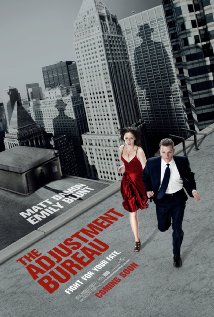
I’ll admit that I’m biased towards a certain type of movie.  Certain themes resonate with me.  I like concepts of fate and destiny, and I love the idea of two people being soulmates who are destined for each other.  On another note, Matt Damon is my absolute favorite actor of this generation.  Having said all that, it was a no-brainer that I thoroughly enjoyed The Adjustment Bureau.

Damon stars as David Norris, a hotshot young politician with a bright future.  So far his career is off to a great start, and everything is going according to plan.  But whose plan is it?  We all have a destiny.  We also have free will.   David probably thinks that he has largely been in control of his own life.  He made choices, took certain action, and reaped the benefits or suffered the consequences.  Not quite.  If you believe in a higher power you may believe that your story has already been written.  That someone out there has a plan for you and you have a destiny.  If this is true, what happen when your “plan” changes?  In the movie, The Adjustment Bureau is the name given to a mysterious group of five men who monitor the world.  Are they benevolent or nefarious?  That depends on your perspective.  On the one hand they are guardian angels, but on the other hand they are manipulative and self-serving.  When I say they monitor the world, I don’t mean that they make you decide whether or not to get cheese on your burger.  They don’t sweat the small stuff.  But major life decisions like who to marry or where to go to college or what dreams to pursue and what dreams to discard – they have an influence.

As it relates to Matt Damon’s character, it’s easy to see why the Bureau would have an ierest in controlling the life of a young, charismatic, increasingly influential politician.  His Kennedyesque appeal seems almost fateful.  The Adjustment Bureau works at the behest of The Chairman, a Godlike figure who is responsible for crafting a plan for each and every one of us.  He can change the plan, but we can’t.  The Bureau has allowed certain tragedies to befall David, in an effort to mold him into the sort of man who would be driven to make the choices they need him to make.  They don’t absolutely remove all free will, but they go pretty far.  For example, David lost his mother and brother at a young age, and these early tragedies made him lonely.  He grew into a man who craved adulation, favor, and assurances from people.  He is bolstered by applause and the spotlight.  It drives him, and explains why he is suited for politics.  However, things go awry when David threatens to deviate from the plan.  What was supposed to be a chance encounter with a woman named Elise in a bathroom ends up being a defining moment in his life.  The plan is in jeopardy, and the Bureau will stop at nothing to make sure that David stays on track.  When he meets Elise after a disappointing election defeat, her whimsical, carefree personality is just the inspiration he needs for an irreverent speech that winds up propelling him to great political heights.  At least that’s what’s supposed to happen.  David is supposed to meet Elise once, be inspired – and then move on, never to see her again.  When he bumps into her again after a glitch in the plan allows their paths to cross for a second time, all bets are off.  David and Elise were supposed to be together in an earlier version of his plan, but The Chairman changed it at the last minute.  Because they were once destined to be together, David and Elise are drawn together and have an undeniable chemistry.  The Bureau can’t allow them to be together because Elise fills a void in David’s life.  If he had her love, he wouldn’t need the adulation and roar of the crowd that politics provides.

Matt Damon was perfectly cast and his scenes with Emily Blunt displayed a yearning that made me believe they really were in love with each other.  I also enjoyed Anthony Mackie as Harry, the lone member of the Bureau who acts like more of a guardian angel  than puppet master with a voodoo doll.  I could see how this movie may not appeal to everyone, because it is heavy on the love story element.  I don’t want to reduce it to a love story, because I thought it was thought-provoking as well.  I really liked it; you should catch it before it leaves theaters.

I Am Number Four

When I saw the trailer for I Am Number Four, I was hooked immediately.  It reeled me in with the hint of suspense and a promise of great special effects.  Was this guy a mutant like the X-Men, does he have “super powers,” what’s going on?  I was intrigued by the little I knew of the plot: someone or something is hunting this kid and those like him.  Three have been killed already, and he is number four.  Break out the popcorn, I’m ready.

Number Four (played by gorgeous newcomer Alex Pettyfer) is “John,” a young man from another planet who travels from city to city with his guardian Henri (Timothy Olyphant, A Perfect Getaway) as they dodge evil aliens known as “Mogadorians.” The Mogadorians have driven them from their home planet of Lorien and destroyed their people.  The movie’s strength is not in the back-story, which is muddled and somewhat unoriginal.  That’s ok, I’m not nitpicking; but the concept of evil aliens who have destroyed an entire people and/or home planet is nothing new, whether it’s been done in Transformers or Superman.  Perhaps I’d appreciate the back-story more if I’d been able to read the book on which the movie is based, because something felt lost in the adaptation.  The writers seemed to be making it up as they went along, maybe because they spilled out the details all at once and it just seemed contrived.  Luckily for them, what happens in the present is more important than what happened in our characters’ past.  The movie opens with John and Henri having to leave town after John’s secret identity is revealed.  His supernatural abilities include otherworldly agility, strength, and speed.  He also seems to have a blue light force within, somewhat reminiscent of Gambit from X-Men.  Every time one of his nine remaining brethren is killed he knows intuitively, and that means he is one step closer to being killed himself, as they are being hunted in order.  When another Lorien is killed, a symbol becomes painfully etched on his leg, one for each death.  When he gets his third brand, he knows that Number Three is dead, and since the secret is out that John isn’t “normal,” he and Henri must find a new town and new identities.  They arrive in the ironically named town ofParadise,Ohio and try to blend in without raising any suspicion.  Meanwhile, the Mogadorians are tracking their scent and will not rest until the six remaining Loriens have been eliminated.

When they settle in their new town, things are somewhat predictable, from a cinematic standpoint.  John is the proverbial fish out of water, The New Kid.  Then there is The Bully, who of course has beef with John because of The Girl, a popular and pretty blonde named Sarah.  This all looks familiar, but again – I don’t mind because Number Four is endearing and unassuming and I’m rooting for him.  Actress Dianna Agron (Glee) ably portrays Sarah as a calming new presence in John’s life, providing respite from the danger and solitude he usually deals with.  Making matters more interesting is the fact that another from Lorien is following him, along with the Mogadorians.  Eventually this stranger meets up with John, revealing that she is Number Six.  Her powers are similar to John’s, but also different.  John has powers of tele-kinesis, while Number Six can resist flame, among other things.  Together they have a final showdown against the Mogadorians, as they try to save not only the residents ofParadise, but all of humanity.

I could see how some would dislike this movie.  There are better movies of this same type that have been done before; but I was entertained throughout, and I didn’t have many expectations beyond that.  Pettyfer in this role reminded me of Hayden Christensen’s turn in Jumper, which was similarly flawed but entertaining.  I Am Number Four set audiences up nicely for a sequel, and I enjoyed the special effects and action sequences as Number Four and Number Six battled it out.  If you like this genre, you won’t be disappointed.  I give it a solid B.

This article first appeared at www.poptimal.com and was reprinted with permission.
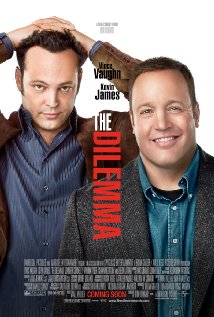
The Dilemma

When I first saw commercials for the The Dilemma, starring Vince Vaughn (Couples Retreat) and Kevin James (Grown Ups), I didn’t have high expectations.  I expected the sophomoric humor that usually characterizes these actors’ respective film choices.  What I got instead was a very funny, surprisingly thoughtful movie about friendship and loyalty.

Vaughn stars as Ronny Valentine, an ambitious small business owner with a loving girlfriend and a seemingly great life.  Ronny’s best friend Nick (James) is also his business partner, and the two have an exciting new opportunity with Chrysler to design an energy efficient muscle car.  Ronny and Nick’s significant others Beth and Geneva, played by Jennifer Connelly (He’s Just Not That Into You) and Winona Ryder (Black Swan) also get along well, and the two couples seem to be madly in love.  Vince Vaughn and Jennifer Connelly had a wonderful chemistry together, so much so that I actually felt lonely watching them on screen.  That’s how happy they seemed! Anyway, things get interesting when Ronny decides he wants to propose to Beth and begins scouting locations.  While checking out some botanical gardens, he spies Geneva with another man (Channing Tatum, Dear John).  Ronny and Nick are in the midst of the deal of a lifetime with Chrysler, and any distraction would jeopardize their lucrative opportunity.  Furthermore, Ronny wants to marry Beth, and it’s crucial that the deal go through.  Nick is already high strung and very nervous about being able to hold up his end, and if his marriage crumbles his mind most certainly won’t be on his work.  When Ronny cautiously tells Nick that he has something he’d like to discuss with him, he flips out.  He tells Ronny that they don’t have time to discuss anything personal with the deal on the line.  Here is the dilemma in question.  Should Ronny tell his best friend that his wife is cheating on him, even though they are in the midst of a business deal that would change their lives? Or should he wait until they close the deal to break the news?  Ronny complicates matters further when he confrontsGeneva and she admits to the affair but promises to end it and to tell Nick the truth after they close the deal.  Can he trust her to keep her word, or is he being a terrible friend?  Feeling hampered by the circumstances, Ronny does his best to protect his friend without spilling the beans.  When he finds out thatGeneva hasn’t ended the affair, he tries to get evidence to use against her, butGeneva is holding a trump card of her own.

The Dilemma was a pleasant surprise.  It wasn’t all slapstick and cheap laughs.  Vince Vaughn and Kevin James are hilarious, but the movie struck a good balance of humor and thoughtfulness.  In one heartfelt scene, Ronny is at his wit’s end.  Everything is crashing down around him.  His relationship is suffering, because he’s had to lie to Beth because he didn’t want to tell her about Geneva’s cheating without telling Nick.  The Chrysler deal is in jeopardy, and most importantly his friendship is in trouble.  When he finally tells Nick, will he be angry that Ronny didn’t tell him sooner?  If he waits for Geneva to come clean, will Nick be angry that Ronny knew and didn’t say anything?  Ronny begins talking out loud to God, saying that if God is teaching him a lesson, he doesn’t want to learn it.  He doesn’t want to lose his best friend.  It was a touching scene that struck a chord with me, and a poignant moment amidst all the laughs.  I’m not saying The Dilemma is a classic or one of the funniest that Vince Vaughn has done.  It’s not, at all.   But director Ron Howard (Angels & Demons) is certainly no slouch, and his sure hand lends weight to the movie.  I give it a solid B.

This article first appeared at www.poptimal.com and was reprinted with permission.

Black Swan

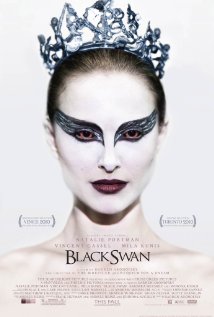
 I like a good mind f*ck every now and then. You know what I mean. Something that leaves you asking, what just happened?  Black Swan was a bewitching film, both stunning and unsettling in its narrative. Natalie Portman (Brothers) was a revelation. At times I wanted to console her character Nina Sayers; other times I wanted to grab her by the shoulders and shake some sense into her.  I know that “Beautiful Dark Twisted Fantasy” is already taken, but it aptly describes Black Swan.

Portman as the aforementioned Nina is an emotionally frigid, socially sheltered perfectionist and ballerina. Yeah. She’s got issues.  Despite her obvious emotional frailties, I found Nina oddly endearing.  She was sympathetic, even when her actions belied something more sinister.  Let me back up for a second.  The movie begins from the inner sanctum of the ballet.  Nina has been named as a replacement for an aging ballerina as lead dancer, or Swan Queen, in an adaptation of Swan Lake.  Director Thomas Leroy (Vincent Cassel) is the man whose job is to extract the most from his dancers, both physically and emotionally.  It is the latter aspect that eludes Nina.  She has mastered the technique but is unable to tap into an inner sense of abandon.  Her emotional repression is furthered by a domineering mother, played by Barbara Hershey.  Nina and her mother, a former ballerina herself, have a bizarre relationship.  She smothers Nina with inappropriate coddling and displays of affection.  Because of this stifling behavior, Nina hasn’t developed sexually or socially, and this shortcoming is reflected in her dancing.  She is unable to tap into a more visceral, sensual place because she lacks those experiences.  Thomas tries to get more out of her, but he is equal parts predator and teacher.  He encourages Nina to explore a darker side.  She has mastered the technique of the White Swan, who is pure and virginal, which mirrors her own character.  But the Swan Queen must be able to embody elements of the Black Swan as well.

The titular Black Swan is represented by Mila Kunis (The Book of Eli), as Lily.  Nina’s joy at being named Swan Queen is short-lived, when Lily shows up.  As a ballerina, Lily is Nina’s opposite.  She is dark and sensual, completely free when she dances.  This is what Thomas wants to see from her.  Desperate to please him and live up to her mother’s expectations, Nina’s fragile psyche begins to weaken.  She envies Lily, yet is intrigued by her.  Thomas encourages Nina to get in touch with her inner evil twin.  Specifically, he instructs her to touch herself when she goes home.  It is here that I must give it to Ms. Portman.  Because she did in fact follow his instruction, and it was an amazing scene.  That sounds perverted, but let me explain.  (Obviously) masturbating is an intensely personal act.  It was an uncomfortable scene for me to watch, because I felt like a voyeur.  That is a testament to Portman, because if it was hard for me to watch, imagine how hard it was to perform.

I don’t want to reveal too much more about the movie; but it was a sexy, scary experience that left me confounded. In a good way.  Director Darren Aronofsky (The Wrestler) crafted a beautifully disturbing work of art that excited you one minute and scared the hell out of you the next.  I enjoyed the exposition of the ballet world as a competitive, draining atmosphere that can cause a fragile ego to disintegrate.  Nina is both infatuated with Lily and threatened by her.  Couple this with her tenuous grip on reality, and the possibilities are mind-bending, as Aronofsky deftly shows us.

As for Natalie Portman, she’s one hell of an actress.  She trained for this role for over a year, preparing as a real ballerina would.  She performed some very difficult sexual scenes, including one with Mila Kunis.  So much of the movie was focused on her, from the harsh, up close camera angles to the script that called for her to lay herself emotionally bare and vulnerable.  I applaud every aspect of her performance.  It was deeply moving and intricate in its psychological detail.  The movie had a dark and unsettling feeling that will linger with you for a bit.  If you don’t mind a little head rush, this is one to see.

The Tourist

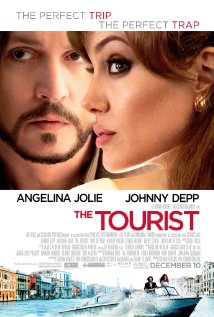
Some ideas are good on paper, but when the scenario actually plays out – the result is disappointing. Like whoever thought of putting the peanut butter and the jelly in the jar together instead of keeping them separate.  That’s how I felt about the not-so-dynamic duo of Angelina Jolie and Johnny Depp.  They certainly seem hot enough to melt the screen independently, so surely if they joined forces the result would be sizzling, right? Eh. Sometimes I think two like beings actually repel one another.  The Tourist may have been nice to look at, but it sure wasn’t fun to watch.

The Tourist is a stylish movie that does a good job of fooling you with pretty scenery, from the always lovely Jolie to the beautiful European setting.  However, once you get past the fancy façade, The Tourist falls flat.  Window dressing does not a good movie make.  Jolie stars as Elise, a mysterious woman who is introduced in the film as the glamorous subject of police surveillance.  We don’t know if she is an undercover officer or the criminal subject of an investigation.  We learn that she is meeting her lover, a man named Alexander Pierce.  Instead of showing up, Pierce leaves a note for her with specific instructions.  She is to pick a stranger with his same basic physical characteristics, and pretend that the stranger is him.  Ostensibly this is to throw her police followers off the trail.  We don’t know if she is in cahoots with Pierce in some criminal enterprise or if she’s just doing a job.  Enter Depp as Frank, the hapless American tourist who has the misfortune of being in the wrong place at the wrong time.  When he stumbles upon the beautiful Elise, he protests only mildly that she seems to have the wrong guy.  The police aren’t the only ones interested in Pierce.  It seems that he stole a couple billion dollars from a gangster named Reginald Shaw, who of course will move heaven and earth to get it back.  Now everyone is after Pierce (Frank), including the police and Shaw.  The police learn early on that it’s a case of mistaken identity and that the tourist whom Elise has latched onto is an innocent American schoolteacher named Frank Tupelo, not a billionaire thief named Alexander Pierce.  At some point they become involved again because Elise can’t seem to get rid of Frank.  That’s right.  Initially she was all over him when she needed everyone to think that Frank was Pierce, but now she is trying to ditch him.  What I’ve described so far may sound intriguing, but let me spare you the trouble.  The Tourist never really found its identity; it was a mishmash of genres – none of which really worked.  The plot was a nonsensical cat and mouse story that underwhelmed me and left me feeling a bit cheated.  There was a continuous veiled attempt to ratchet up suspense, but the payoff was extremely disappointing.  Johnny Depp is always charming, and Angelina Jolie is breathtaking – but it takes more than star power to make a good movie.  I was left with more questions than answers.  Why does Frank go along with Elise so willingly, even after nearly getting killed?  Is Elise really Pierce’s girlfriend or was she undercover the entire time?  At one point the police actually abandon their investigation of Pierce because all he did was steal from a gangster and he has “good taste in women,” so really they should just tip their hat to him. What?

I don’t know what’s worse: the fact that two such talented actors were grossly misused, or the fact that they both signed up for this dud.  The Tourist has plenty of panache, but it was all flash and no substance.  If you want to watch a smart, sexy, well-paced caper type of film I suggest you dust off The Thomas Crown Affair, a movie that had a little substance to go with all the style.

For Colored Girls

Sometimes it’s best to go into a movie with no pre-conceived notions and no expectations.  Just be willing to absorb whatever is put in front of you.  That was my mindset when viewing For Colored Girls, the film adaptation of poet Ntozake Shange’s critically-acclaimed stage play, For Colored Girls Who Have Considered Suicide When the Rainbow is Enuf.  Originally performed in 1975, the play touched on powerful recurrent female themes, including rape, abortion, and domestic violence.  These are the issues that Tyler Perry is tasked with bringing to life in For Colored Girls, a movie with big shoes to fill.


Let me start by saying that Perry does a commendable job.  I have been underwhelmed by most of his offerings, the last of which was the dreadful Why Did I Get Married Too?  Here he had rich material with which to work, rather than his own musings and I think that made all the difference. I know that was the ultimate backhanded compliment, but I do hope that Perry has turned the proverbial corner and that For Colored Girls will be remembered as a new beginning for him as a director.  Although I came into the theater without having read Shange’s work or having seen a performance of her renowned play, I at least knew what to expect in terms of style. I knew that the movie was based on a series of poems, so I was prepared for the lyrical soliloquies when the characters periodically veered into expository monologues.  I suppose some viewers might view this as a pretentious trick, but you have to consider the source material.  The uninterrupted stream of consciousness was necessary to adequately portray each character’s pain and it made the movie seem more cohesive.


So now you know what the movie is about, but what is it REALLY about?  For me it was about finding the underlying strength innate in all of us, even when another person (i.e. your mother, your lover) or life in general seems hell-bent on destroying you.  Sometimes a person destroys you all at once.  We see this in the character portrayed by Anika Noni Rose (Dreamgirls), when she is the victim of date rape.  Other times a person or thing can chip away at your psyche, destroying you bit by bit, slowly and over time.  This is exemplified in a few of the characters, most notably those portrayed by Kimberly Elise (The Great Debaters) and Thandie Newton (2012), who gave the two most powerful performances of the film.  Elise portrayed Crystal, a battered woman who remained steadfastly supportive of a man (Michael Ealy, Takers) who served his country bravely, but is now psychologically broken, suffering from some type of post traumatic stress and unable to find employment.  As we know (or should know), the ability to provide for his family is directly tied to a man’s feelings of adequacy.  Take that away and you may have some dark days ahead.  In the presence of his two young children, Ealy’s character is abusive and domineering, a drunken tyrant who turns to alcohol to assuage his feelings of worthlessness.  Instead of leaving an abusive partner whom she refuses to marry,Crystal remains in the relationship, with devastating consequences.  Kimberly Elise gives a heart-wrenching performance, but I think she needs to branch out more in the future.  The victim role is a fleshy one, but she has shown time and again that she can thrive in such a role.  It’s time to broaden your repertoire Ms. Elise; I’d like to see what else you’re capable of.


Turning to Thandie Newton, her character Tangie exemplified the manner in which women often look to sex to fill a void within.  Tangie has a rough exterior, but you realize that she uses sex as shield to paradoxically keep men at bay to avoid experiencing any real intimacy with them.  The last time she allowed herself to be vulnerable was probably during her childhood, when her mother forced her to get a back alley abortion after she was quite possibly impregnated by the father who molested her while her mother stood idly by.  Whoopi Goldberg played her mother, a religious zealot who favors Tangie’s younger sister Nyla.  Her favoritism drives a wedge between the two sisters, who already hail from a dysfunctional household.  Eventually through self-examination and a frank conversation with Phylicia Rashad’s character Gilda, a matronly caretaker of sorts, Tangie makes a breakthrough.


For Colored Girls was beautifully directed, and I must tip my hat to Mr. Perry.  He was given outstanding source material, but the vision you see on screen is his alone, and he should be credited for it.  As unflinching as I have been in my criticism of him in the past; I must be equally effusive in my praise of him now, although my praise is measured.  Each “colored” girl (actress) represents a color of the rainbow, and Perry used a subtle touch (for once) as he incorporated the corresponding colors throughout the movie.  I am also a big fan of the intersecting storyline format, which was employed here.  With the exception of Whoopi Goldberg, the others actresses gave wonderful performances, from Kerry Washington (Lakeview Terrace) to Loretta Devine (Crash).   For me personally, Whoopi’s performance did not resonate as much as the others.  I felt like I was looking at Whoopi, not a woman struggling with the aftermath of her own broken childhood while mothering two very different daughters.


Known for his one dimensional characters and storytelling, For Colored Girls was a marked departure from previous Tyler Perry movies.  I hope it is a sign of bigger and better things to come, and I hope that you go into the theater with an open mind.  If so, you will find a deeply moving, rich movie filled with layered performances.  Despite its somber tone, it was not too “heavy” or depressing, and it was not a “downer.”  I say try this gem on for size – you may like the fit after all.

This article first appeared at www.poptimal.com and was reprinted with permission.
The American

The American is aptly titled.  The titular George Clooney is the sole domestic offering in this art-house flick.  More suited for a European audience, I believe this film will disappoint the average moviegoer.

The movie begins with an assassin named Jack (Clooney) inSweden.  He has just finished making love to a pretty young woman when they venture out for a walk across the snowy landscape.  Suddenly he comes under fire from an unseen sniper.  Jack shoots back, killing his attacker and another would-be assassin.  Leaving no witnesses, he also kills his lover as collateral damage.  This opening scene may lead you to believe that the movie was exciting and filled with action.  Instead, the next hour and change was a methodical, subdued look into the solitary existence of an assassin.

Under strict orders from his boss, Jack heads to a tiny Italian town to hide out and wait for instructions about the next job.  When he finally hears from The Boss, he’s told that he won’t even have to pull the trigger.  All he has to do is make the tool.  He meets with the client for whom he is making the tool, a female assassin with strict instructions.  While working on the weapon he befriends a local priest named Father Benedetto and falls in love with a beautiful prostitute he meets at a brothel.  Her name is Clara, and she shares the most intimate contact with Jack, who remains stoic with everyone else he encounters.  Jack’s days are spent ritually exercising, and occasionally venturing out into the town.  There was very little dialogue for an extended period of time in the movie.  For example, we spent several minutes watching Jack make the weapon.  I didn’t mind, but I could definitely see how some would find this boring.

I really shouldn’t recount any more of the plot, because it was secondary to the character.  The American was a character study of a lonely man in a reviled line of work, and the reticent but assured steps he takes towards withdrawing from the life he’s always known and opening himself to real love and a meaningful human connection.  It was a very slowly-paced film and not exciting by any stretch of the imagination.  There were some tense scenes, especially when another Swedish hitman finds Jack inItaly.  But the action was more understated, if that makes any sense.  The entire movie had a classy, subdued and very European feel.  We Americans tend to blow stuff up to get our point across.  The attention span is short.  For those reasons, I don’t think most people will appreciate the pacing or character development.  There were some suspenseful moments, as Jack tries to extricate himself from his employer while finishing this last job.  Although his final assignment seems to be a simple one, there is something amiss with his femme fatale client.  The movie kept me guessing as I watched the world from Jack’s perspective.  Always suspicious of what is lurking around the corner, startled by sudden noises and ready to react in an instant.  It is a deeply personal conversation with Father Benedetto that encourages Jack to close the door on his murderous past and begin anew with Clara, who also yearns for a life with meaning.

Upon further consideration, I really enjoyed The American.  Initially I was put off by its ending, after having sat through such prolonged periods of inactivity.  It was such a quiet movie, but I think its strength lies in its silence, as it magnified Jack’s solitude and lonely existence.  I applaud George Clooney for taking a risk.  He had to know that a movie like this wouldn’t be popular with American audiences (I know it is currently number 1, with a paltry 16 million – but that won’t last).  Maybe that’s why the studio did the old bait and switch with its advertising.  If you look at the movie poster for The American, you’d think Clooney was a 007 wannabe.  I’m sure many viewers expected a lot of action with him as a slick superspy.  These people will be disappointed.  But if you don’t have ADD, it’s worth checking out.  I enjoyed the understated quality of the movie, as well as Clooney’s nuanced performance.  It won’t please everyone, but The American was a very good film.