Logan

There are two approaches to comic storytelling, in my humble opinion. On the one hand there’s the campy, corny perspective popularized in the 1980s and exemplified by the Superman franchise. These kid-friendly tales espouse the virtues of truth, sacrifice and justice. There’s always a ‘moral’ to the story, and the protagonist always strives to do the right thing. However, if you examine some of these other heroes’ backstories, you’ll see that they have rich, dark, troubled pasts that lend themselves to more layered, complex storytelling.

I admit that I was ignorant about Wolverine’s super powers. I thought Logan, the venerable X-Man, was invincible and immortal, but I was mistaken. He has healing powers, which have significantly slowed his aging process – but he is not ageless. This was readily apparent when the film opens and I see Hugh Jackman’s weary, lined face and salt & pepper hair. In his sixth reprisal of Wolverine, Jackman (Pan) is at his hulking, menacing best. Set in the near future, Logan is a far cry from previous X-Men movies. The tone is bleak, with director James Mangold (The Wolverine) depicting a dystopian future for mutants. Logan is off the grid, living in the shadows. His health is ailing, each step a lumbering effort.

Logan works as a chauffeur of sorts, if you could imagine Ray Donovan as an Uber driver. He’s fine flying under the radar until a woman named Gabriela (Elizabeth Rodriguez, The Drop) approaches him asking that he drive her and her little girl Laura (Dafne Keen) a few states over. He’s reluctant, but there are some nefarious corporate types in pursuit of the wayward pair. Gabriela and Laura are privy to some damning information that could prove costly for an international pharmaceutical company. The company’s actions have deadly ramifications for mutants, who have been driven underground. It turns out Laura is not your average kid, inheriting special abilities from her long lost father, none other than Logan.

Logan’s plot was a solid one, not overly complicated or nonsensical, as is oft the case with comic book movies (see the last Avengers installment). X-Men’s mutants and the response to them have always served as a proxy for our own societal ills, and that theme remains present in Logan. To that end, Charles Xavier (Patrick Stewart, Christmas Eve) makes an appearance, but in keeping with the bleaker tone, this time his benevolence is couched in grizzled cynicism. Like Logan, he’s seen better days, as he deals with his own failing health and the emotional aftermath of a catastrophic mutant event to which he and Logan allude. Their bond is unwavering though, and together they try to get Laura to safety while evading her pursuant goons.

I have no real criticism of Logan. The plot was simple yet effective, and the role is a familiar one for Jackman, the quintessential embodiment of Wolverine. As he sliced and eviscerated his way through foe after foe, I was reminded of why I go to the movies. To feel this rush of excitement. Laura made for an even more impressive adversary than Logan, and their scenes together were amazing. This movie is not for the faint of heart, and it would be a mistake for parents to ignore its R rating. Comic book movies are best when they depart from the cheesy mass appeal and opt for a darker turn, as Marvel has done here with Logan. You won’t feel happy after this movie, but you sure will have enjoyed it. Grade: A.

Get Out

Watching horror films requires a certain degree of masochism, if you think about it. Why would anyone want to experience pure fear and terror? Yet something about that sensation is so deliciously awful. The first horror movie was released in 1896, and we’ve been paying people to scare the crap out of us ever since. When I saw the trailer for Get Out I wasn’t sold, but eventually the collective groundswell of enthusiasm swayed me and I began to look forward to it. Comedian/actor Jordan Peele (Keanu) does not disappoint, crafting a smart, unsettling film that taps into an undercurrent of fear unique to the Black experience.

Get Out features a young interracial couple, Chris (Daniel Kaluuya, Sicario) and Rose (Allison Williams, Girls). They are still in the honeymoon phase, and their differences haven’t caused any problems…yet. However, trouble looms when Rose decides it’s time to introduce Chris to her family, who is unaware that he is Black. Chris is sort of an everyman figure for Black audiences. His fears and vulnerabilities are our own. His experiences are relatable, both on a small and large scale. In one scene he is peppered with ignorant questions from Rose’s family and friends, as they expect him to speak on the entire Black experience rather than for himself. It’s clear that he is on display, regarded like an animal in a cage in one moment and like wild game in another. An insidious air of foreboding hangs over the film, creating a palpable sense of tension only heightened by the realism of Chris’ dread.

Why does this movie work? Quite frankly because White people can be scary. There are still parts of the country where the color of your skin can be a deadly liability. I know that Black men still have to be cognizant of their surroundings if they are in certain areas with a mate of a different race. I like that Get Out depicted many of the micro-aggressions with which we have to contend so often. Whenever Black folks attempt to engage in thoughtful discourse on such topics, we are often accused of playing the “race card,” and I think Peele deftly avoids this charge with tight, cogent writing, dramatizing these situations in a palatable yet jarring fashion. I hope that White audiences’ curiosity is piqued, as some are perhaps taken aback at the notion that they are the scary ones!

Horror isn’t my favorite genre, but good writing transcends category. Get Out didn’t resort to cheap thrills; instead Peele expertly tapped into the realism of his setting and subject matter. It reminded me of the classic horror films of the 70s and 80s, very atmospheric, complete with a perfectly disturbing score. At one point the film had notably garnered an astounding 100% fresh rating on Rotten Tomatoes, which is well deserved. I say that not because Get Out is the Movie of the Year, but because it works extremely well as a cinematic experience, and its structure and pacing were flawless. I’ve been fortunate over the past several months to have seen many diverse representations of Black film, and I hope the trend continues. The strength of any great movie starts with the story, and Peele’s got a winner on his hands. Grade: A.


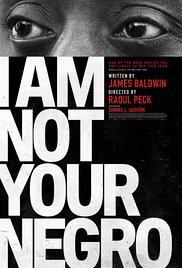
I Am Not Your Negro

Politics are an inescapable aspect of our lives, now more than ever. It would be rather difficult not to have an opinion on any number of prevailing issues. Therefore, when celebrities weigh in on social and political topics, I don’t begrudge them their opinion. The collective public response is often an admonishment to “stay out of politics” or “stick to acting,” etc., but do art and politics mix? I Am Not Your Negro answers yes, and quite beautifully.

James Baldwin – for the uninitiated – was a 20th century luminary noted for his writings and political activism. He rose to prominence in the 1950’s, espousing a political consciousness that captivated the White intelligentsia and paragons of Black history alike. Baldwin did not separate artistry from politics; they were part and parcel of his very being. I Am Not Your Negro begins with Samuel L. Jackson’s resonant baritone, his familiar voice a befitting conduit for Baldwin’s poignant musings. Awash in color, the film had an uncommon beauty not typically found in documentaries. Its rich aesthetic was a provocative contradiction of the brutality it depicted, as the film highlights the abject cruelty of a not-so bygone era.

Baldwin’s consciousness was awakened on foreign soil, as he observed the violence visited upon Black Americans from afar while living in France. Disenchanted with a racist America, he’d long since fled to Paris where he found the same artistic refuge as fellow wayward expatriates Josephine Baker and Nina Simone. While he missed nothing about America, he longed for his mother and siblings, and he missed the soul of Harlem. Ultimately it was a photo that brought Baldwin home, the image of a young Black woman being heckled mercilessly as she integrated a school in North Carolina. We can see why the photo struck Baldwin so powerfully: the girl’s face is pained but stoic, her slight frame surrounded by a sea of faces seething with rage and hate. This theme is the foundation of I Am Not Your Negro, an unabashed revelation that hypocrisy is as American as apple pie.

The film is loosely intended to carry forth Baldwin’s untold artistic vision intertwining the stories of Malcolm X, Martin Luther King, and Medger Evers. The film dances around these three narratives in disjointed fashion, splicing current events throughout the film. Director Roul Peck brilliantly draws a parallel between the police brutality of the Jim Crow era and the impetus of the Black Lives Matter Movement today. Baldwin was Black and he was proud, but he was accessible to White America because he did not hate them. He explored the way Blackness had to be packaged to make it palatable, and Peck masterfully uses cinematic examples to underscore Baldwin’s profound speech. Hollywood is rife with the stereotyping and marginalization of which Baldwin spoke, and the film was comprehensive in its discussion of film and media’s effect on the collective psyche of Black and White Americans alike.

Art inspires, but at times it can make us uncomfortable. Let me state the obvious that this film is not for everyone, and the title alone is enough to keep some viewers away. It is not a call to arms, but rather an attempt to rouse the consciousness and to demand that White America to take an unflinching look in the mirror. Powerful and provocative, I Am Not Your Negro is one of the better documentaries I’ve seen. Grade: A.


Live by Night

Bless his heart. Ben Affleck really tries, but he just doesn’t have it in him. The highest praise I can give him is to say that occasionally his films don’t disappoint (see Argo and The Town). He was serviceable in last year’s The Accountant, and he doesn’t bring an otherwise good movie down with his presence – but that’s about as complimentary as I can be. Live by Night looked to be a decent enough bit of escapism, but ultimately its mediocrity rendered it wholly ineffective.

Affleck stars as Joe Coughlin, a petty thief who finds himself unwittingly caught between two warring criminal factions in Prohibition era Boston. Irish boss Albert White and Italian kingpin Maso Pescatore are rival bootleggers who are at a virtual stalemate after mounting casualties on either side. Both men take a run at Joe, who prefers to remain neutral and above the fray. All along Joe has been having an affair with White’s girlfriend, his lover and accomplice. This never turns out well, and just as White closes in, Joe is nabbed on a botched heist, landing himself in prison on a three-year sentence.

He emerges from prison with a fresh mindset. Seeking to insulate himself from the lurking White, he aligns with Pescatore, agreeing to oversee his rum running operations down in Tampa. In Florida he meets Graciela (Zoe Saldana, Star Trek Beyond), sister to a local bootlegger with whom he partners. Joe and his best friend Dion soon corner the market; not so much avoiding the war in Boston as moving it to a sunnier locale. Joe’s business isn’t built for longevity, and if his foes don’t bring about his demise, the changing political climate may prove just as fatal.

Live by Night had potential, but ultimately it was clichéd and derivative. Visually it was slick, with a lush, glamorous setting but there was little substance. I’ve seen better episodes of Boardwalk Empire and Magic City. Affleck wrote and directed the movie, and for the first time I can say that I think he’s had a misstep in those roles. The aforementioned Argo and The Town were very good, but the trend does not continue here. It felt like Affleck inserted obligatory elements gleaned from other films of the genre and time period, leaving us with something thoroughly unremarkable. Zoe Saldana’s indistinct accent faded in and out, a detail right on par with the rest of the movie. Not a horrible movie, but not really worth seeing in theaters either. Perfect for Redbox. Grade: C

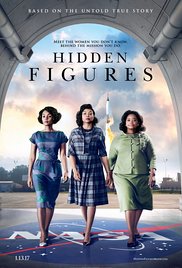
Hidden Figures

There’s been a lot of talk of “making America great again.” At this point I’m sickened at the mention of the phrase, which is nothing more than a dog-whistle for white nationalists and racists. America has always been comprised of great people, even if their shameful treatment at America’s hands did not reflect their greatness. Making America great again mustn’t involve returning to an era where diversity and equality were completely ignored. Films like Hidden Figures are necessary now more than ever, a reminder of how far we’ve come in our recognition of things like wage equality, and an example of art as an informative teaching tool. The climate fostered by the new administration is not one conducive to artistry, but as long as we make our voices heard and support films like Hidden Figures, these stories will continue being told.

The film gives a biographical account of pioneering African American mathematicians Katherine Johnson (Taraji P. Henson, No Good Deed), Dorothy Vaughan (Octavia Spencer, Bad Santa 2), and Mary Jackson (Janelle Monae, Moonlight); three women who were integral to NASA’s early efforts at putting a man in space. Now we have terms like ‘intersectionality’ to describe the ways in which multiple forms of discrimination conflate with one another, but during the Jim Crow era in which these brilliant women found themselves – no one particularly cared about the disparities they faced. They were more likely to be resented than valued for their intellect, but still they pressed on.

Visually, the film was vibrant, its cinematography harkening back to a dichotomous time in our history, the bright veneer and genteel wholesomeness of poodle skirts and milkshakes belying an ugly reality of discrimination and brutality. Pharell’s score grounded the film and kept it humming along, while supporting turns from Kevin Costner (Criminal) and Kirsten Dunst (The Two Faces of January) rounded out a notable cast. I don’t typically go for the “feel good” movies, but for once I enjoyed a heartwarming story.

The three stars have wonderful camaraderie and chemistry with each other, and themes of sisterhood and solidarity are prevalent throughout the film. I was inspired by the protagonists’ unapologetic confidence and brilliance.Through sheer excellence Katherine forced a seat at the table, her calculations proving critical to NASA’s quest to put an American in space. Their story is a thoroughly American one, an inspiring example for girls and boys alike. Boldly resilient, these women forged a path for all women and represent the best of America – which doesn’t need to be made great again. Grade: A

Fences

Oscar Bait. Perhaps you’ve heard the phrase, which refers to movies that transparently use trite ploys in an attempt to snag that iconic gold statue reserved for Hollywood’s best. As perfect example, look no further than a film like The Butler, which was shamelessly littered with a host of notable actors, from Robin Williams to Jane Fonda. While Fences also boasts a laudable cast, it is not to be mistaken as Oscar bait. Adapted from playwright August Wilson’s critically acclaimed play, it features actor/director Denzel Washington (The Magnificent Seven) in a starring role and behind the camera for the third time. The part is a familiar one for Washington – a reprisal of the Broadway turn that earned him a Tony. Perhaps it was his comfort in the role that resulted in a tour-de-force performance, one of the best of Washington’s career.

Fences is set in the 1950s, giving a glimpse into the small world of Troy Maxson, a hardworking family man who thanklessly toils away as a sanitation worker to provide for his loving wife Rose (Viola Davis, Suicide Squad) and their teenaged son Cory (Jovan Adepo, The Leftovers). Troy’s simple, salt-of-the-earth nature belies a brash, booming personality that consumes any space he occupies. He is a constant source of joy and begrudging amusement for Rose and best friend Bono (Stephen Henderson, Two for One), who also works on the garbage truck. Troy has an adult son Lyons from a previous marriage, and he and Rose care intermittently for his brother Gabriel (Mykelti Williamson, The Purge: Election Year), who suffered a head injury during the War and became subsequently disabled. These players set the stage for the story and establish the foundation for Troy’s life.

Fences cannot be dissected thoroughly enough in this space, so I will just touch on the themes from the film that struck me as most memorable. When we first meet Troy it’s clear that he feels boxed in by life. He has frequent joy, but overall he feels frustrated and bitter about his current station, particularly when he ponders the lack of opportunity for growth at work or any prospect of financial prosperity. Home is a source of contentment because he loves his devoted wife, but home also represents the confining reality of missed opportunities. Sometimes life is a result of things you’ve made happen, and sometimes life seems like something that just happens to you whether you like it or not. Troy, who once had aspirations of playing baseball in the Negro leagues, is filled with bitterness and regret at the dreams that never came to fruition.

The better the film, the more I feel that I can write about it, so I’m forced here to give short shrift to many aspects of Fences that are worthy of further discussion, including the dynamic between father and son, selfishness and its resultant betrayal within a marriage, and the emotional, psychological underpinnings that give rise to it all. Ms. Davis has already won a Golden Globe for her performance, and she is in excellent company here. Washington seems to reserve his directing talents for only the richest African American stories (see Antwone Fisher and The Great Debaters), and Fences continues that trend. This is a must-see for Denzel Washington fans, and doesn’t that include just about everyone? Grade: A.


Lion

Stranger than fiction. Sometimes real life events are so incredible that they seem like works of fiction. I’ve had a few moments in life where I found myself in the middle of something epic. But those were just moments. Imagine a life that rivals some of the greatest stories you’ve ever heard. Such a life belongs to Saroo Brierley, an Indian-born Aussie from humble yet extraordinary beginnings.

Lion begins with a window into the world of Saroo (Sunny Pawar, Love Sonia), an impoverished, adorably resilient five-year-old boy. He and his older brother Guddu supplement their mother’s meager income by panhandling on the streets of their small enclave, a tiny village in India. I was transported to another world, both morally and culturally. Saroo’s learned resourcefulness was a byproduct of the apathetic environment in which he lived. Yet his spirit was one of innocence and joy.

In my travels to Indonesia, I witnessed firsthand how those with the least have the most love in their hearts. It shines forth like a beacon, and that’s the quality young Saroo radiated into the world. All is well until one fateful day threatens to snuff out that little light. While waiting at a train station for his brother to return from securing work, Saroo inadvertently becomes trapped on a train and whisked hundreds of miles away. He disembarks in the congested city of Calcutta, where he does not speak the language and cannot describe his home. Lost in a shuffle of insidious indifference, Saroo fends for himself in a manner no child should have to. Danger lurks around every corner, as he narrowly escapes one pitfall after another.

Through sheer serendipity, Saroo finds himself at an orphanage, where a new family is eventually brokered. In yet another seismic shift in his life, he is adopted by an Australian couple, John (David Wenham, Goldstone) and Sue Brierley (Nicole Kidman, Secret in Their Eyes). This time the change is one that brings peace and healing, as John and Sue give Saroo the love and security he so desperately needs, filling his childhood with joy once again.

Fast-forward 25 years and Saroo (Dev Patel, Chappie) is a fresh-faced young man coming into his own. He has a girlfriend Lucy (Rooney Mara, Carol) and has nestled into a secure life. But no matter how wonderful things have become, Saroo can’t escape the nagging memory of the life he once knew. He longs to find the mother and brother whom he believes never stopped searching for him. Hampered by poverty and a deficient local infrastructure, it was virtually impossible for Saroo to have been reunited with his family after he came to be stranded in Calcutta as a child. Now that he is an adult, he embarks on the emotional journey to find his family. Saroo is torn between wounding his adoptive parents and satisfying his own longing to reconnect with a forgotten part of himself, toiling away in frustration in an effort to pinpoint the area in which he grew up.

I frequently extoll the virtue of film’s ability to illicit emotion and remain with the viewer long after watching. The most powerful films feel like an emotional investment. As I’m oft to repeat, the beauty of film as an artistic medium lies in its ability to transcend outward differences and to convey the profound depth of the human experience. With all that’s going on in the world, it’s nice to experience something good about the human condition, to connect with another story on an emotional level. Lion was a beautiful film, and I felt deeply moved and emotionally invested in what I was watching. One of the year’s best.

Grade: A+

Moonlight

I find myself increasingly relying on social media as a means to hear about new film, television, and music. In this age of the 24-hour news cycle, information flies fast and furiously each day, especially when it comes to pop culture. Last month on Facebook I began to see chatter about Moonlight, a film I’d admittedly never heard of. The movie poster alone caught my attention, and when I saw it featured omnipresent, emerging star Mahershala Ali (House of Cards, Luke Cage), I was sold. The trailer was stunning, and many critics have hailed it the best film of the year, with it earning an impressive 98% fresh rating on Rotten Tomatoes. However, as much as I wanted to love Moonlight (and I like it a great deal), I was ever so slightly disappointed in light of its overwhelming praise.

Movies are traditionally structured in three acts, and writer/director Barry Jenkins adheres to this axiom quite literally. In Moonlight he tells the story of Chiron (pronounced sha-rone), a young Black boy coming of age in a tough part of Miami. In addition to limited financial resources, Chiron’s single parent upbringing is further strained by his burgeoning sexuality. The ‘first act’ of the film depicts Chiron’s formative years. Dubbed “Little” by his peers, Chiron is quiet and withdrawn, but opens up under the benevolent eye of Juan (the aforementioned Ali), a local drug dealer. Hoping to fill the void of Chiron’s absentee father, Juan and Little form a bond built on nurturing acceptance and love. The film shines here in its beautiful depiction of this bond between man and child. Juan and his girlfriend Teresa (portrayed wonderfully by Janelle Monae) are Little’s only solace.

The film skips ahead, picking up with “Little” when he is about 16, and at this stage of his life he uses his given name, Chiron. The events that transpire during this period would go on to shape his early adulthood as he timidly, awkwardly explores his sexuality. This would also prove to be a volatile period in his life as the violence and bullying around his identity intensifies. His mother is a non-factor, battling demons of her own. Naomie Harris (Spectre) masterfully portrays a woman ill equipped to tend to her child, her addiction precluding any meaningful efforts at love and stability.

In the film’s final act, Chiron has become a young man. His life experiences have ostensibly hardened him, but the outward trappings of masculinity belie a gentle spirit, hiding the same little boy who shared his vulnerabilities with Juan and Teresa. The film’s strength was in its emotional exploration of powerful themes involving masculinity, self-actualization, and the human condition, bolstered further by the performances of its young actors at three distinct stages of life.

Unfortunately, I thought the narrative faltered in its final act, a frequent criticism of mine, but a pronounced observation regarding Moonlight. The film’s ending was anti-climactic and disappointing. I understand that the same level of conflict cannot be sustained throughout a film, but the final impression of Chiron should’ve been more definitive, in my opinion. The ending didn’t negate the film’s emotional impact, but it muted its effect. After being satisfied with about 75% of the film the only question left at the end is, “Is that it?” Grade: Revised to A-

Allied

As a self-professed cinephile, I try to be a student of film. Admittedly I’m not as well versed in the finer points of film history and avant-garde genres as some others, though I pride myself on at least knowing the masters, from Kurosawa to Kubrick. Moreover, I try to view the classics such as Citizen Kane and Casablanca (I enjoyed the latter more than the former). The films of yesteryear give a glimpse of the glamor of Old Hollywood, replete with dashing leading men and captivating leading women. Allied harkens back to that golden era in its stars Brad Pitt (The Big Short) and Marion Cotillard (Macbeth), two spies who fall in love amidst the danger and turmoil of World War II.

Pitt stars as intelligence officer Max Vatan, whom we first meet parachuting into the middle of the Moroccan desert. Cotillard features as spy Marianne Beausejour, Max’s mission cohort who has been laying the groundwork for his arrival. Posing as husband and wife although only having just met, I was enchanted by the delicate dance between characters, Marianne taking the lead as a compliant Max deferred to her expertise. Having to play the role of lovers (of course) leads to real feelings between Max and Marianne, but their focus is razor sharp – and in one scene Max reminds the audience that even though he is maintaining an outward charade, he cannot afford to let his guard down, as any momentary lapse in judgment could not only cost him the mission, but their lives.

It’s tempting to glance at this film and compare it to Mr. & Mrs. Smith, another film in which Pitt and his female co-star are featured as married spies. That would be a mistake, as any comparisons are superficial. Allied is a far superior film, though to be fair both movies have their place. Not purely a love story, Allied should appeal to an array of viewers with its air of romance and intrigue. Writer Steven Knight (Burnt, Locke) punctuates the story with suspense and danger, equal parts action and love story. Pitt and Cotillard’s chemistry is undeniable, both organic and intentional. Pitt hasn’t been this magnetic on screen in years, and veteran director Robert Zemeckis (Flight) depicted every detail beautifully, effectively capturing every passionate, dangerous moment between the two sizzling leads. In one unforgettable scene Max and Marianne make love in the middle of a sandstorm, the swirling sands rocking their car to and fro as they reach their pique within.

I can’t find a single fault with Allied, a well-acted, well-written, beautiful film with something for everyone: action, suspense, love, and mystery. Stylish and atmospheric, it was reminiscent of a bygone era but will undoubtedly appeal to contemporary audiences. This was one of the better films I’ve seen in 2016. Grade: A.


The Accountant

In life, I’ve found that it’s fine to have preferences, but that you should remain open-minded. You just never know when your tastes may change. I used to prefer Matt Damon to Ben Affleck. Comparisons between the two have been inevitable, as they’re best friends who emerged on the Hollywood scene in tandem. Damon always seemed to be the superior actor, and I still think that holds true. However, I don’t like Matt Damon as much as I once did. And Affleck lately has just seemed…cooler. The Accountant looked like a smart action thriller, and I was drawn in by the titular character’s backstory. Unfortunately, it was just an average movie, and my mini-streak of duds continues.

Affleck (Batman v. Superman) stars as Christian Wolff, an accountant with the uncanny ability to crunch numbers better than a calculator. He has a beautiful mind, one that is suited perfectly for his chosen profession. Through flashback we learn that Christian was born with a high functioning form of autism that gifts him with amazing intellectual abilities while rendering him socially inept. His father refuses to coddle him, teaching him instead to defend himself to the literal death through relentless combat and martial arts training. His compulsive need to finish tasks lends itself well to this borderline abusive instruction. Fast forward to present day, and Christian’s unique upbringing and skill set have led to a lucrative career “uncooking” the books for some of the world’s most notorious criminal enterprises.

If you consort with international criminals, chances are you won’t go unnoticed for long. Eventually Christian draws the attention of Treasury Agent Ray King (J.K. Simmons, Whiplash) who pinpoints his identity with the help of junior agent Marybeth Medina (Cynthia Addai-Robinson, Arrow). When Christian lands a high-level corporate client, the Feds become even more invested in his activities, and King and Medina turn up the heat. Working alongside young accountant Dana Cummings (Anna Kendrick, Mike and Dave Need Wedding Dates), Christian becomes entangled in a web of danger in the pursuit of millions of missing dollars for their mysterious new client. Soon their lives are in jeopardy, but who’s calling the shots?

I enjoyed the sight of Affleck stomping his way through would-be foes shocked that a pencil pusher was kicking their ass. However, the plot was a muddled mess. My need for things to make sense wouldn’t let me ignore the seemingly pointless series of events that were strung together and called a storyline. Although the plot strengthened the film in its establishment of Christian’s backstory, it faltered miserably as the movie wore on, and any “twists” fell woefully short. Affleck was effective for the most part, though his performance could easily be panned as a caricature. Jon Bernthal (Sicario) makes an appearance, and though his presence usually enhances a film, here it was just more evidence of a poor storyline. Wait for this one on Redbox. Grade: C+