Jonah Hill

War Dogs

People often say that money is the root of all evil. False. The love of money is the root of all evil. I actually enjoy the tales of the wealthy, if for nothing more than the aspirational motivation I get from seeing a world I normally couldn’t witness. Whether it’s Wall Street or The Big Short, tales of the perils of wealth and excess fascinate me, and I love the story of a good “come up.” When I saw the trailer for War Dogs, which was inspired by true events, I was instantly hooked and wanted to learn how these upstarts cornered the market on international arms dealing.

Miles Teller (Fantastic Four) and Jonah Hill (Sausage Party) star as best friends David Packouz and Efraim Diveroli. The year is roughly 2006, and David is disenchanted with life. He can’t hold a steady job and is eking out a living as a masseuse. When he reconnects with Efraim, his old friend hasn’t changed a bit. He’s as obnoxious as ever, but seems to be doing well for himself. He started out buying seized illegal firearms from law enforcement and reselling them online. He’s moved on to small government contracts, selling weapons and ammunition to the U.S. government. One would think the world’s greatest military wouldn’t need to resort to buying small amounts of weaponry from individual gun purveyors, but blame the cronyism of the Bush Administration. Amidst allegations of nepotism against Dick Cheyney, Congress introduced legislation requiring the government to entertain offers from small companies. War is big business, and Efraim is cashing in.

He offers David a role in his company, and the pair embarks on a new course beset by dangerous greed. They attack the gun-running business with tenacious fervor, undeterred in the pursuit of lucrative government contracts. Efraim doesn’t mind playing fast and loose with the law if it keeps the money flowing, and David acquiesces. When trade legislation threatens a deal to export beretta handguns from Italy to the Middle East, the “war dogs” drive the guns through hostile territory themselves. Hill is superb as the brash, rotund Diveroli, delivering a performance reminiscent of his role in The Wolf of Wall Street. Efraim is the loveable asshole, and Hill infused his interpretation with quirks that made the character feel real.

Teller is serviceable as Packouz, though not as impressive as his co-star. I find his performances somewhat uneven, but his work in films such as Whiplash evinces great ability. Darker characters tend to be more nuanced and complex, and so Jonah Hill had more to work with, in many respects. His character’s duplicity allowed for a more layered performance, compared to Teller’s. Nevertheless, both actors had an abundance of chemistry and played to each other’s strengths. Director Todd Phillips (The Hangover) is a master at capturing the fraternal dynamic between friends, and that ability is on display here. You can’t help but root for David and Efraim, yet that feeling is tempered by the clear white male American privilege from which they both benefitted, all while nearly running afoul of the law. War Dogs was insightful and entertaining, due in large part to an entertaining, compelling story and an anchoring turn from Jonah Hill. Grade: A-
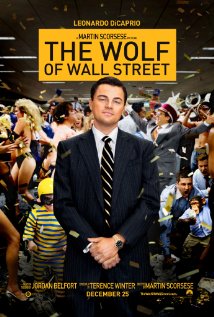
 

The Wolf of Wall Street

“Life should not be a journey to the grave with the intention of arriving safely in a pretty and well preserved body, but rather to skid in broadside in a cloud of smoke, thoroughly used up, totally worn out, and loudly proclaiming “Wow! What a Ride!”  There are few among us whose lives embody the words of famed journalist Hunter S. Thompson, but some people come close.  Jordan Belfort was such an individual, setting Wall Street ablaze in the early 90s like a real life Gordon Gekko on crack.  No, really.  On crack.

Belfort (Leonardo DiCaprio, The Great Gatsby) began humbly, learning the ropes as a rookie stockbroker at a modest Wall Street firm under the tutelage of senior broker Mark Hanna (Matthew McCounaghey, Dallas Buyers Club).  Hanna’s words of advice would form the blueprint for Belfort’s lifestyle, with Hanna advising him on everything from drug usage to a schedule for self-pleasuring.  Belfort did well for himself, a natural salesman gifted with a silver tongue.  That gift of gab would serve him well after his first brokerage house folded and he found himself selling penny stocks in a Podunk “firm” off the beaten Wall Street path.  It’s a huge step down at first glance, but Belfort quickly realizes an untapped gold mine.

Soon, Belfort was suckering pitiful souls out of their investment in a pump and dump scheme that left him with eyes on even bigger sights.  He recruited a handful of buddies back home, various hustlers in their own right.  With a trusted core in place, he opened his own firm called Stratton Oakmont, applying all that he’d learned to much bigger fish.  Dealing exclusively with wealthy investors, their profits increased even more and they were making money hand over fist.  Raucous office parties including hookers and cocaine were not uncommon, and capitalist hedonism ruled the day.

The film chronicles Belfort’s meteoric rise and subsequent fall from the precipice of a lifestyle filled with sex, drugs and a never-ending supply of money and women.  Scorsese effectively pulled back the curtain, exposing a lifestyle that few of us will ever witness.  Belfort’s indifference about the lives he ruined took a backseat to his zealous pursuit of the almighty dollar.  It was a familiar motif, with greed serving as faceless antagonist.  Eventually Belfort will burn out, and if the law doesn’t get him, the drugs will.

DiCaprio’s character was abhorrent, but there was a devil-may-care affability that I found likable – at least initially.  If you like to root for the bad guys in movies, it’s one of many reasons you’ll love this film.  DiCaprio has the astounding ability to immerse himself in a role so deeply that I don’t even see him anymore.  He was Jordan Belfort.  Although Belfort’s professional judgment was morally bereft, DiCaprio showed the duality of the character through the loyalty of his personal relationships – particularly his friendships.  Enter Jonah Hill (This Is The End) as Donnie Azoff, Belfort’s neighbor who observes his lifestyle and wants in.   Hill is really a gifted comedic actor, evincing versatility with a perfect balance of humor and levity.  From Superbad to Moneyball, his range is impressive and was on full display here.

Belfort’s story was the inspiration behind 2000’s Boiler Room, and comparisons to that movie and others of its ilk such as Wall Street are nearly inevitable.  Where Wolf surpasses its predecessors is in its deft storytelling, courtesy of Terrence Winter (Boardwalk Empire, The Sopranos) and Belfort’s source material.  Furthermore, Martin Scorsese hasn’t missed a beat as a filmmaker.  The same man that brought us seminal classics Goodfellas and Casino nearly 20 years ago is just as adept behind the camera now as he was back then.  In fact, The Wolf of Wall Street reminded me of Goodfellas in many ways, from the immediate narration of its protagonist to the hallmark Scorsese score.

The film was unquestionably a vehicle for DiCaprio’s talents, but the supporting performances were nearly as strong, with impressive turns from the aforementioned Hill and Margot Robbie (Pan Am), who smoldered as Belfort’s mistress turned second wife Naomi.  I initially resisted the prevailing notion that DiCaprio was one of the preeminent actors of our generation, but I’m beginning to agree.  His resume tells no lies, and this performance ranks right up there with the likes of his turn in The Departed, although he did not receive an Oscar nomination for that role.  He’ll certainly receive one here, and he couldn’t be more deserving.  He and Scorsese are every bit the tandem that Scorsese and DeNiro once were, and this pairing might be their best.  Grade: A.

This post first appeared at Poptimal and was reprinted with permission.

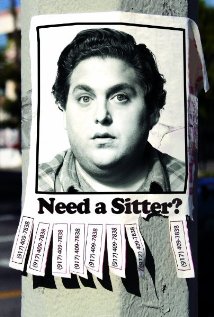
The Sitter

Sometimes you just want a movie to do what it’s supposed to do.  It doesn’t have to be the greatest movie ever made; it just needs to do its job.  If it’s a horror flick –  just make me jump a few times and be at least mildly frightening.  If it’s a love story – just make me shed a tear or two, and we’re good.  That being said, The Sitter was a movie that did its job.

I’m an 80’s baby so when I saw commercials for The Sitter I immediately thought of Adventures in Babysitting, the 80′s movie about a babysitter’s wild night out with the kiddies.  In The Sitter our reluctant hero and sitter is Noah Griffith, played by Jonah Hill (Get Him to the Greek).  Hill looks rather slim nowadays, but very recently looked like this.  Not that it matters one way or another, it’s just weird to see such a drastic difference in his appearance.  Noah is a lovable loser type of guy who is living with his mother after flunking out of school.  He has a “girlfriend,” Marisa, exceptt instead of a life partner she’s more like a selfish boss who allows Noah the privilege of answering her every beck and call.  Their relationship is one-sided in every respect, and Noah is essentially a doormat.  His parents are divorced, and his dad hasn’t paid alimony or child support in years, despite owning a thriving jewelry store.  Noah loves his mother and wants to see her happy, so he volunteers to babysit for his neighbors so they can take her out for a blind date with a friend.  Little does he know this routine act of kindness will end up being a life-changing experience.

When Noah meets the kids for the first time we can tell that this will be an interesting experience.  The eldest boy Slater (Max Records) is about 13, followed by the adopted Rodrigo (Kevin Hernandez) who is roughly 11, followed by Blithe (Landry Bender), an adorable girl of about 8.  Slater is melancholy and anxious, dependent upon pills to get through the day.  Rodrigo has pyromaniac tendencies and is equipped with a GPS device to prevent him from running away too far.  Blithe is obsessed with the ‘celebutante’ world of reality TV and acts like she’s 8 going on 21.

Noah has a DUI on his record, so he is prohibited from using the family car while babysitting.  That goes out the window almost immediately when he gets a call from Marisa asking him to bring her some coke to a party in the City.  It’s an absurd request, and she asks as if coke the cocaine was as easy to get as coke the cola.  She promises that she’ll give him some nookie if he brings it to the party, so he foolishly agrees.  He has to get the yayo from a dealer named Karl (Sam Rockwell, Iron Man 2), so he takes the three kids and rolls out in the minivan.  Predictably, Slater is anxious about their outing, Blithe is excited, and Rodrigo is just menacing.  It should be no surprise that a night of babysitting would go downhill shortly after taking the kids to a drug den – and that’s exactly what happens.

This precocious bunch doesn’t exactly follow directions, so when Noah instructs them to wait in the car, their obedience is short-lived.  Rodrigo ends up swiping some drugs from Karl, and before Noah can return the package it gets destroyed.  When Karl notices that the drugs are gone, he tells Noah that he has a couple of hours to return it or give him $10,000.  Meanwhile, Marisa still expects him at the party, and the kids need to be tucked in their beds by the time their parents get home.  Making matters worse is the fact that Rodrigo likes to run off from time to time.

The movie largely follows Noah and the kids as they try to get the money to pay Karl while seeming to get in one scrape after another.  Noah runs into a former classmate who finally opens his eyes to the fact that he’s a good guy who deserves better than Marisa, who only seems to care about getting the coke that Noah promised he’d bring.  Through all of the mishaps, Noah manages to bond with the kids and realizes that they are more than just little pains in the rear.  Slater suffers from anxiety because he’s pretending to be someone that he’s not.  Rodrigo misbehaves because he’s never had structure and stability and is afraid to trust his new family.  Blithe idolizes celebrities because she hasn’t learned to be herself and love who she is on the inside.  So, at the end of the day what began as the night from hell ended up being a learning experience that changed several lives for the better.

The Sitter worked because it had the right mix of humor and heart.  It wasn’t corny or overly sentimental, and the laughs were timed perfectly.  Jonah Hill has shown time and again they he’s a great comedic actor.  The R rating lets you know that just because there are kids in this movie doesn’t make it a ‘kid’ movie; it’s not.  The kids use and hear foul language, and obviously cocaine is an essential plot element.  That being said, leave the kids at home with the sitter and go check out The Sitter, a comedy that did what just what it was supposed to do: make you laugh.

This article first appeared at http://poptimal.com/2011/12/the-sitter-review-it-just-works/ and was reprinted with permission.