This is The End

Dawn of The Planet of the Apes

By the time we arrive at the third installment of a trilogy, I usually think the whole concept has “jumped the shark.” I found 2001’s reboot of Planet of the Apes supremely underwhelming, failing to live up to the intriguing, subtle social commentary of the Charlton Heston (The Order) original. I don’t think it was a hit with audiences either, and maybe that’s why it was ten years before someone thought to make a sequel, giving us 2011’s effective installment featuring James Franco (This Is the End). The trailer for Dawn of the Planet of the Apes promised a shift in storytelling, and since the second edition was entertaining, I was fairly optimistic.

Dawn opens in a post apocalyptic future, where a simian flu has ravaged the planet. Juxtaposed with this doomsday scenario is a bleak forecast whereby apes have evolved higher than what could’ve been imagined – thanks to man’s insatiable need to take technology past its moral end. Years of primate experiments have created a highly intelligent species of ape. The dwindling human population coupled with the rise of the apes has shifted the balance of power between species, with humans trying to restore the power grid after most of the world has been wiped out. A sizable community of apes have established themselves in the outskirts of San Francisco, living perhaps as early humans once did.

Their establishment of a moral code evinces their keen intelligence, serving as a fascinating sociological exercise in evolution and development. We met Caesar (Andy Serkis, The Hobbit: An Unexpected Journey) in the last Apes movie, and he is featured again in Dawn of the Planet of the Apes as the unquestionable leader of his tribe. He is everything one would desire in a leader, human or otherwise. He is patient, slow to anger, and governed by a sense of right and wrong. When a small band of human survivors surprisingly confronts the apes, Caesar reacts with prudence rather than fear. This puts him at odds with the other apes, namely best friend and secret nemesis Koba (Tony Kebbell, The Counselor), an ape that lacks Caesar’s favorable impression of mankind.

Circumstances dictate that humans and apes collide when it becomes clear that man needs the resources of Caesar’s territory to ensure its survival. Thus the stage is set for a standoff of Darwinian proportions. Malcolm (Jason Clarke, White House Down) compassionately leads the human explorers, but he answers to Dreyfus (Gary Oldman, The Dark Knight Rises) who is much more skeptical about the possibility of striking a peaceful understanding with the apes. With a nod to the jingoism and xenophobia of the current climate, the film depicts the fear we as humans (read: Americans) harbor toward those that are different from us.

While the movie was somewhat predictable in its story arc, I appreciated the parallel between Caesar and Shakespeare’s Caesar, as well as the humanization of these computer-generated characters. There was obviously a conscious shift in storytelling to feature the perspective of the apes more centrally, foregoing the human outlook and aligning the viewer with Caesar from the outset. Who can deny man’s incessant need to assert his dominance over others? History alone has taught us this. I found Dawn of the Planet of the Apes to be vastly entertaining, and in a sea of heretofore summer mediocrity, it stands out as worthwhile summertime fare – at least for now. Grade: B+

This article first appeared at Poptimal and was reprinted with permission.
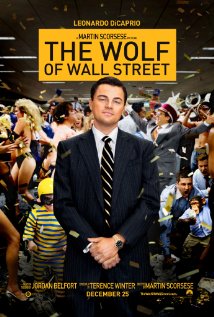
 

The Wolf of Wall Street

“Life should not be a journey to the grave with the intention of arriving safely in a pretty and well preserved body, but rather to skid in broadside in a cloud of smoke, thoroughly used up, totally worn out, and loudly proclaiming “Wow! What a Ride!”  There are few among us whose lives embody the words of famed journalist Hunter S. Thompson, but some people come close.  Jordan Belfort was such an individual, setting Wall Street ablaze in the early 90s like a real life Gordon Gekko on crack.  No, really.  On crack.

Belfort (Leonardo DiCaprio, The Great Gatsby) began humbly, learning the ropes as a rookie stockbroker at a modest Wall Street firm under the tutelage of senior broker Mark Hanna (Matthew McCounaghey, Dallas Buyers Club).  Hanna’s words of advice would form the blueprint for Belfort’s lifestyle, with Hanna advising him on everything from drug usage to a schedule for self-pleasuring.  Belfort did well for himself, a natural salesman gifted with a silver tongue.  That gift of gab would serve him well after his first brokerage house folded and he found himself selling penny stocks in a Podunk “firm” off the beaten Wall Street path.  It’s a huge step down at first glance, but Belfort quickly realizes an untapped gold mine.

Soon, Belfort was suckering pitiful souls out of their investment in a pump and dump scheme that left him with eyes on even bigger sights.  He recruited a handful of buddies back home, various hustlers in their own right.  With a trusted core in place, he opened his own firm called Stratton Oakmont, applying all that he’d learned to much bigger fish.  Dealing exclusively with wealthy investors, their profits increased even more and they were making money hand over fist.  Raucous office parties including hookers and cocaine were not uncommon, and capitalist hedonism ruled the day.

The film chronicles Belfort’s meteoric rise and subsequent fall from the precipice of a lifestyle filled with sex, drugs and a never-ending supply of money and women.  Scorsese effectively pulled back the curtain, exposing a lifestyle that few of us will ever witness.  Belfort’s indifference about the lives he ruined took a backseat to his zealous pursuit of the almighty dollar.  It was a familiar motif, with greed serving as faceless antagonist.  Eventually Belfort will burn out, and if the law doesn’t get him, the drugs will.

DiCaprio’s character was abhorrent, but there was a devil-may-care affability that I found likable – at least initially.  If you like to root for the bad guys in movies, it’s one of many reasons you’ll love this film.  DiCaprio has the astounding ability to immerse himself in a role so deeply that I don’t even see him anymore.  He was Jordan Belfort.  Although Belfort’s professional judgment was morally bereft, DiCaprio showed the duality of the character through the loyalty of his personal relationships – particularly his friendships.  Enter Jonah Hill (This Is The End) as Donnie Azoff, Belfort’s neighbor who observes his lifestyle and wants in.   Hill is really a gifted comedic actor, evincing versatility with a perfect balance of humor and levity.  From Superbad to Moneyball, his range is impressive and was on full display here.

Belfort’s story was the inspiration behind 2000’s Boiler Room, and comparisons to that movie and others of its ilk such as Wall Street are nearly inevitable.  Where Wolf surpasses its predecessors is in its deft storytelling, courtesy of Terrence Winter (Boardwalk Empire, The Sopranos) and Belfort’s source material.  Furthermore, Martin Scorsese hasn’t missed a beat as a filmmaker.  The same man that brought us seminal classics Goodfellas and Casino nearly 20 years ago is just as adept behind the camera now as he was back then.  In fact, The Wolf of Wall Street reminded me of Goodfellas in many ways, from the immediate narration of its protagonist to the hallmark Scorsese score.

The film was unquestionably a vehicle for DiCaprio’s talents, but the supporting performances were nearly as strong, with impressive turns from the aforementioned Hill and Margot Robbie (Pan Am), who smoldered as Belfort’s mistress turned second wife Naomi.  I initially resisted the prevailing notion that DiCaprio was one of the preeminent actors of our generation, but I’m beginning to agree.  His resume tells no lies, and this performance ranks right up there with the likes of his turn in The Departed, although he did not receive an Oscar nomination for that role.  He’ll certainly receive one here, and he couldn’t be more deserving.  He and Scorsese are every bit the tandem that Scorsese and DeNiro once were, and this pairing might be their best.  Grade: A.

This post first appeared at Poptimal and was reprinted with permission.