Author: T_Dot_Lane

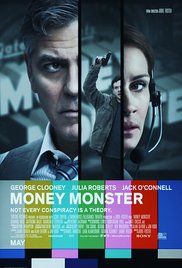
Money Monster

There are many ways to tell a story, and one of the great things about film is that it offers the freedom to explore a range of narratives. A sweeping epic may unfold at a leisurely place over the course of two hours. A movie that takes place in a single day will be presumably action-packed and fast-paced, as there is little time for character or plot development. Money Monster promised a glimpse into a day in the life of two men on a particularly harrowing day for both.

George Clooney (Hail, Caesar!) stars as Lee Gates, a Jim Cramer type of character who mixes buffoonery with financial advice on his own cable show. I was amused to see the typically suave Clooney bounce around like a ham-handed carnival barker, flanked by two ‘dancers’ in costume like a bad rap video. Julia Roberts (Secret in Their Eyes) is Patty, his calm and cool producer who helms the ship, making it hum like a well-oiled machine. Gates has a duplicitous, opportunistic aura, sort of like a cross between a car salesman and a stockbroker, with more style than substance. When one of his tips to invest in a company called IBIS proves disastrous, disgruntled viewer Kyle Budwell (Jack O’Connell, Unbroken) exacts his own brand of justice by taking over the television studio during a live broadcast.

An unhinged protagonist is familiar cinematic territory, whether our anti-hero is robbing a bank or holding hostages. Common themes are desperation and a nearly suicidal level of commitment. Kyle is armed with a detonator and makes Lee wear a vest rigged with explosives. He blames the loss of his life savings on the TV host, whose offhand prediction cost him dearly. Dominic West (Genius, The Affair, The Wire) is featured as Walt Camby, IBIS’ shady CEO who claims an unforeseen glitch in his company’s financial algorithm caused the stock to take a hit. At first Kyle’s ire is directed solely at Lee, but Gates is able to pass the buck on to Camby, whose explanation for the massive loss is questionable at best.

Jodie Foster (Elysium) marks her return to directing here, and quite naturally I had high expectations for such an acclaimed collection of Hollywood’s elite. I won’t use the word disappointed, but Money Monster was more decent than memorable. I enjoyed the subplot involving supporting characters as they worked to uncover the truth behind Camby’s questionable geo-political business dealings, but for the most part the tension and tautness wasn’t there. Perhaps the fault lies in the script, as I thought Foster’s direction within the tight confines of the television studio was effective. The small space added to the air of desperation, but overall the film wasn’t something that stayed with me. Sometimes a day at the movies is just a passable one, and while that’s enough for some – others may want a little more. Grade: B
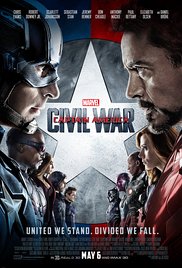
Captain America: Civil War

Marvel is only competing with itself at this point. A favorite at the box office and in fans’ hearts – the comic titan sits alone atop the superhero landscape, and it’s not even close. I personally don’t care for each installment (Thor 2, Avengers: Age of Ultron were rather lackluster), but overall Marvel boasts the most compelling, cool superheroes – both on the small screen (Daredevil, co-starring Punisher and Elektra) and big screen alike. Captain America: Civil War assembles an assortment of our favorite superheroes in a unique way, and for once the plot was not bogged down with confusing, unnecessary details.

The film opens with the Winter Soldier (Sebastian Stan, The Martian), Captain America’s (Chris Evans, Avengers: Age of Ultron) familiar bestie/nemesis from his last solo film. The Winter Soldier’s brainwashing was neutralized when we last saw him, but he is easily triggered, or ‘activated’ into becoming a killing machine once again after hearing a sequence of certain code words. The movie flashes back to 1991, where we see him executing a mission involving the theft of what appears to be a chemical agent. We also see a brief scene involving a young Tony Stark (Robert Downey, Jr., Avengers: Age of Ultron) and his parents before their untimely demise, also in 1991.

In the present day, half of the Avengers thwart a plot to steal biological weaponry in Nigeria, resulting in significant but inevitable collateral damage. This has become a disturbing recurring theme with the Avengers and other superheroes, and the U.S. government and other global nations are fed up. The Secretary of State (William Hurt, Race) proposes to Stark that the Avengers and other individuals with special abilities submit to the control and discretion of a United Nations panel which would govern when and where they could execute any life-saving missions, surrendering their autonomy in an effort to avoid unnecessary casualties. Stark particularly feels guilty about his role in the inadvertent killing of a promising young student in Sokovia, so he’s primed to be on board with the Secretary’s demands. Captain America, however, doesn’t want to be hampered in his efforts to execute his patriotic duty and save whomever he can, whenever he can.

The stage is set for a civil war, as Iron Man, Black Widow, War Machine, Spider-Man, and Black Panther agree that the UN should hold sway over them and other superheroes. Diametrically opposed are Captain America, Falcon, Winter Soldier, Hawkeye, Scarlet Witch, and Ant-Man. I mentioned Black Panther, who makes his debut here. When the African nation of Wakanda is threatened by an act of war in response to their efforts to curtail the Avengers’ deadly global overreaching, a new superhero is thrown in the mix. Chadwick Boseman (Get on Up) emerges as T’Challa, also known as Black Panther. He swears vengeance on whoever is responsible, aligning himself with Iron Man in pursuit of the Winter Soldier.

The common themes running through Civil War were vengeance, loyalty, and guilt. It was guilt that drove Iron Man to vehemently advocate for what Captain America believed to be a dangerous chilling effect on their collective autonomy and his own very raison d’etre. It was vengeance that fueled Black Panther and Iron Man, in an explosive final act. Finally, it was loyalty that was either doggedly adhered to (Captain America and War Machine) or painfully questioned as new allegiances were formed. We don’t often see this plethora of ‘supes’ in one film, and of course there is just an initial WOW factor as this bomb ass hodgepodge occupies the same space. The humor injected into the dialogue was well timed and not forced. The introduction of new characters like Black Panther and Spider-Man (I’m referring to new actor Tom Holloway as our friendly neighborhood arachnid) was seamless. The storytelling was simple, yet strong. In short, Captain America: Civil War lived up to the hype – and what more could we ask for? Grade: A.

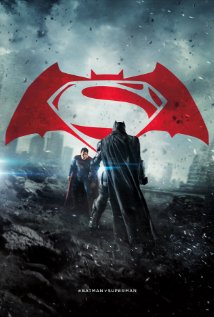
Batman v. Superman: Dawn of Justice

Ever since Ben Affleck (Gone Girl) was announced as the next iteration of the Caped Crusader, movie buffs and fan boys alike have been waiting with baited breath to behold this epic clash of titans in Batman v. Superman. Most fans have maligned Affleck’s selection, but I reserved judgment. Affleck’s career experienced a brief downturn during the J-Lo era, but I thought he rebounded nicely as early as 2006 with Hollywoodland. I like Ben Affleck and if anyone tells you he’s what’s wrong with this film – they are mistaken.

I looked forward to this, cautiously optimistic about what director Zac Snyder (300, Sucker Punch) would do with the franchise after taking the helm over from Christopher and Jon Nolan (The Dark Knight Rises). Batman v. Superman begins with the familiar exposition of the murder of Bruce’s parents, Thomas and Martha Wayne. We then move forward to the recent past, and the inception of Batman and Superman’s mutual disdain. When one of Superman’s epic battles leaves an avalanche of destruction in its wake, including the decimation of one of Wayne Enterprises’ properties, Bruce is furious. Meanwhile, Clark Kent (Henry Cavill, The Man From UNCLE) is none too fond of Batman, bristling at the cavalier vigilante who has won Gotham’s heart by taking the law into his own hands. To be clear, Batman doesn’t trust an alien with god-like abilities; conversely Superman thinks the billionaire is reckless and should be contained.

The stage is set for battle, after a young Lex Luthor (played by a terribly miscast Jesse Eisenberg, Now You See Me) pits the two against one another. Luthor and LexCorp have weaponized kryptonite, in the event that Superman ever needs to be neutralized. After Congress denies his request for government approval, he moves forward with another plan, hoping that the two heroes will take each other out. The plot was a little thin, and I was never emotionally invested in any outcome for either hero. When Batman and Superman finally square off, it is laughably apparent just how overmatched Batman (a mere mortal) is when facing a real superhero with powers beyond a utility belt. Only with the tried and true trick of kryptonite can he keep pace with Superman. Affleck clearly bulked up for the part, which makes sense – but why was he a slow, lumbering oaf with little agility and quickness? It looked as if even the likes of Daredevil could handily dispatch Batman.

I thought the movie was just ok. It wasn’t as horrible as the blogosphere is making it out to be, but it was rather underwhelming, plagued by poor casting and an underdeveloped, nonsensical plot. Eisenberg was miscast as Luthor. Instead of a criminal mastermind, Lex Luthor seemed like a bratty, petulant teen – hardly a worthy foe to a much more mature Batman or Superman. Batman seemed slow, and the fight sequence wasn’t as jaw dropping as I expected. One scene involves Superman 1) retrieving some kryptonite and 2) using it to kill something; how is this even possible?! There were some cool, entertaining moments, but they were few and far between. Moreover, I don’t really like the way Wonder Woman (Gal Gadot, Triple 9) was incorporated. The character wasn’t properly integrated in the storyline. Perhaps she was supposed to be mysterious, but I never felt like I understood her motivations or history.

Lastly, I just can’t get the Nolan’s interpretation of Batman out of my head. It was just a superior trilogy, and I don’t particularly care for what Snyder has done thus far. I’m still curious to see what Ben Affleck can do in the role, whenever he gets a solo Batman film. I thought he looked the part, but I would like to see more in the future. Superman is just a boring character to me, and Henry Cavill didn’t do much to change that opinion. Superman has all the power and none of the personality, easily distracted like a simp when Lois Lane (Amy Adams, American Hustle) is in danger. Corny! The cinematic edge still goes to Marvel, and all this movie did was make me anticipate Captain America: Civil War even more. Grade: C

Triple 9

I like to remain open-minded about my film experiences, and sometimes I take a more cerebral approach to my cinematic choices by occasionally venturing beyond my comfort zone. But when all else fails, stick with what you know. When I saw the trailer for Triple 9, I knew this was my type of movie. Reminiscent of movies such as Training Day and Street Kings, Triple 9 promised a gritty look into the seedy world of corrupt law enforcement and the criminals to whom they are indebted. Featuring a talented cast including the likes of Chiwetel Ejiofor (Secret in Their Eyes, The Martian) and Kate Winslet (Steve Jobs), my curiosity was sufficiently piqued. It looked like the type of movie to fly under the radar, and sure enough my theater was sparsely populated.

I often say that movies are won and lost in their opening and closing sequences, and Triple 9 started with a literal bang and never let up. It begins in the back of a van, without about six men gearing up for what appears to be some type of tactical mission. Are they cops? A swat team? Bank robbers, or all of the above? They expertly execute a bank heist with precision, targeting only a singular safe deposit box. As they flee the scene of the crime and peel off their masks, we see that most of them are actually cops. They are lead by Michael Atwood (Ejiofor), ex-military private security, police officers Marcus Belmont (Anthony Mackie, The Night Before), Franco Rodriguez (Clifton Collins Jr., Transcendence), ex-cop Gabe Welch (Aaron Paul, Breaking Bad) and his brother Russell (Norman Reedus, The Walking Dead). The crooked bunch are working at the behest of the Russian mob, controlled by a very sinister Kate Winslet (Steve Jobs) as Irina Visalov, wife of an incarcerated Russian mobster.

Irina and Atwood’s relationship grows increasingly volatile after she ups the ante and insists they pull off another heist, this time from a Homeland Security facility – a nearly impossible feat. In a cruel stroke of genius, Rodriguez has a plan to divert local law enforcement’s attention while they pull of the job. When an officer goes down in the line of duty, his fellow brothers in blue respond immediately, citywide. Just as 187 is the police code for murder, 999 (triple 9) is the code for officer down, or in distress. If they can pull off a Triple 9, they can square things with Irina and walk away with a big payday. Stuck between the law and the mob, these crooked cops have their work cut out for them, leveraged to the hilt.

I enjoyed this movie for the simple reason that it was entertaining. There were some issues with pacing, as the movie wore on in its final act, but overall I enjoyed it because several scenes were nothing short of an adrenaline rush. The performances were mostly good, with Mackie and Ejiofor particularly bringing a convincing and conflicting emotionality to their roles. Winslet was as I’d never seen her, unnerving and vicious. The script faltered a bit here and there in terms of realism, but I mostly thought it was solid. You could say this was a poor man’s Training Day, and it won’t be remembered, but hey, I liked it! I give it a solid grade of: B

The Hateful Eight

Tarantino. Scorsese. Lee. Fincher. Nolan. These are some of my favorite filmmakers, and I hold their work up as a measuring stick by which I judge others. Regarding Quentin Tarantino, I’ve been a fan since 1997’s Jackie Brown. His catalogue is varied, but his unique trademark is stamped on each film. He has a penchant for dialogue, frequently utilizes strong female protagonists (see the aforementioned film and Kill Bill), and rarely shies away from controversy. From his gratuitous usage of the n-word to his characters’ oft-displayed bloodlust – the polarizing director sparks rigorous debate in cinematic circles. When I saw a commercial for The Hateful Eight I couldn’t discern what it was about, but I noticed some stylistic similarities to Django Unchained and was sufficiently intrigued.

The eighth (how appropriate) film from Tarantino finds a bounty hunter named John Ruth (Kurt Russell, Furious 7) transporting an outlaw for execution across a frozen, unsettled 1870s Wyoming into the town of Red Rock. The outlaw may be a woman, but she’s no lady. In fact, the surly Daisy Domergue (Jennifer Jason Leigh, The Jacket) is quite a handful. Through swirling, snowy winds they traverse America’s heartland, the brash Ruth determined to claim the reward for his felonious charge. Traveling via stagecoach, Ruth and his driver O.B. (James Parks, Django Unchained) happen upon a hitchhiking Major Marquis Warren (Samuel L. Jackson, Chi-Raq), a Black former Union soldier on his way into Red Rock with bounty of his own.

The first half hour of the film is very dialogue-driven, and although these early moments establish the dynamic between characters, some viewers may find it difficult to keep their eyes open. The language is coarse and both Domergue and Ruth address Warren disrespectfully, as would’ve been expected during the time. Eventually the rag-tag party picks up yet another wayward traveler – this time the new sheriff of Red Rock Chris Mannix (Walton Goggins, Django Unchained), who is stymied by the impending blizzard on the way into town. He boards the stagecoach and the quintet continues on, but not without stopping at Minnie’s Haberdashery on the way.

When our party arrives at Mininie’s, things take a much more interesting turn. There they meet three other gentlemen who appear to be simply enjoying the warm refuge of shelter and whiskey. Now that the gang’s all here, we have our original group of five, plus three haberdashery patrons including Jon Gage, Oswald Mobray, and simply “Bob.” This dour ensemble comprises “The Hateful Eight,” and they must wait out the blizzard before heading to Red Rock. John Ruth is particularly suspicious of his newfound company, guarding against anyone trying to liberate his prisoner. When one of the gang ends up dead, Tarantino masterfully transitions to a whodunit, and the storytelling shifts into high gear.

Tarantino’s greatest strength lies in his superior storytelling, and he used flashback to effectively break up the action and keep viewers engaged. Once his characters are all assembled at Minnie’s Haberdashery, the setting becomes fixed. In order to hold the viewer’s attention, the dialogue and action must be compelling. It’s challenging to have your characters confined to one place, but the static setting allows the performances to shine through. I was pleasantly surprised that the film only got better and better as it wore on, cresting with each successive moment and culminating brilliantly.

If I had any criticism of The Hateful Eight it would be that it started too slowly. Furthermore, I grew a bit tired of the gratuitous usage of the n-word. Yes, it’s historically accurate to place the word within the context of this movie; no – we don’t have to hear it every two seconds. One can achieve sufficient realism and authenticity without assaulting our eardrums at every turn. That aside, Tarantino is masterful at what he does, and The Hateful Eight was a worthy addition to his stellar filmography. I believe it deserves the recognition it has received during Awards season. Grade: A

The Revenant

Leonardo DiCaprio (The Wolf of Wall Street) is at an interesting stage of his career. He’s been turning in critically acclaimed performances since 1993’s What’s Eating Gilbert Grape, with no obvious missteps in his impressive catalogue. He has been nominated for an Academy Award for acting four times, though he has never taken home a golden statue. It’s becoming somewhat of a running joke that he hasn’t won; and it shouldn’t be. After viewing The Revenant, I can say that he’s turned in arguably the performance of his career, and hopefully that elusive award is within his grasp.

DiCaprio stars as Hugh Glass, a weather-beaten trapper traversing the brutal frontier of 1820’s Midwestern America. We meet Glass and his fellow men as they fend off an attack from Native Americans, their party whittled down to just over a dozen men. This early scene sets the tone, as the men are equally vulnerable to both the harsh landscape and its native inhabitants. Glass faces an early challenge from fellow trapper John Fitzgerald (Tom Hardy, Mad Max: Fury Road), who doubts his navigational abilities and questions his leadership quite disrespectfully. He insults Glass and his teenaged son Hawk (newcomer Forrest Goodluck), whose Pawnee mother was murdered when he was just a boy. Captain Andrew Henry (Domhnall Gleeson, Ex Machina) acts as peacemaker, leading the decimated outfit while deferring to Glass as the more seasoned frontiersman.

While exploring the dense forest, Glass spies a pair of bear cubs. The mother isn’t far behind, and before he can fire a musket, she pounces viciously, instinctively protecting her young. The relentless grizzly slings a helpless Glass to and fro, mauling him mercilessly. This is the scene you’ve probably heard about, and it was incredible. Director Alejandro Inarritu (Birdman, 21 Grams) had me riveted, effectively employing creative camera angles and use of sound to transport the viewer alongside DiCaprio. We see, hear and feel what he does. As the beast heaves in and out the camera lens fogs with condensation, the fear primal and palpable.

After surviving the brutal attack, Glass’ men stitch him up as best they can. Realizing it’s impossible to carry him on a makeshift stretcher while climbing a steep, snowy mountain ridge, they agree that Hawk, Fitzgerald and a young trapper named Bridger (Will Poulter, The Maze Runner) will stay behind with the ailing Glass.  I don’t want to reveal too many spoilers, but if you simply consult the definition of revenant, you can deduce what happens when Fitzgerald is left to care for Glass. According to Merriam Webster, a revenant is one that returns after death or a long absence.

Inarritu has crafted a stunning film.  He extracted every ounce of ability from DiCaprio, down to the bone marrow. I’ve never seen an actor give so much of his body to a performance. Much in the way a prizefighter gives his body to his craft, DiCaprio completely immersed himself in the role of Hugh Glass. He was tender, vulnerable, physically and emotionally spent under the sheer weight of what he was called to do. He caught the flu several times while filming, consumed raw bison liver, and slept in an animal carcass. We’re accustomed to seeing actors transform themselves physically for roles, but this was different. DiCaprio didn’t alter his physique, but he endured tremendous physical hardship, and his performance was a revelation.

The landscape was ironically beautiful yet brutal, a brilliant juxtaposition Inarritu depicted masterfully. In one scene the snow swirled like interplanetary dust, one breathtaking scene of many. Moreover, I don’t usually pay attention to sound in film, but here it added to an overall feeling of visceral authenticity. Glass faced deadly internal and external conflict, battling the elements, animals and indigenous people alike. Inarritu harkened back to a period in American history influenced by the transcendentalism espoused by the likes of Thoreau and Emerson, capturing an aesthetic that belied the occasionally spiritual relationship between man and nature.  I could blather indefinitely about this film, a work of art. The Revenant is the first must-see film of 2016. Grade: A


The Big Short

My primary motivation in going to the movies is entertainment; but every now and then you learn something. I typically avoid movies that cover mundane industries/topics with which I’m not familiar, but occasionally movies can be entertaining AND insightful. The Big Short chronicles the 2008 economic crisis that occurred after the housing market “bubble” burst and several financial institutions collapsed. I don’t understand the finer points of banking, investing, or real estate – but writer/director Adam McKay (The Other Guys, Step Brothers) crafted an immensely informative, funny, and entertaining docudrama that wasn’t as inaccessible as I initially thought.

There were only a handful of people who foresaw the housing crisis, a few “weirdos” and outsiders who knew what no one else did. Christian Bale (Exodus: Gods and Kings) stars as Dr. Michael Burry, an offbeat hedge fund manager who took a closer look at the housing market and discovered that the industry was being propped up by risky sub-prime mortgages made to undesirable prospective home buyers. He predicted that eventually these people would default on their mortgages and the industry would collapse with devastating repercussions. He then bet against the housing market, making the rounds to several financial institutions that were all too happy to take his money.

The film is narrated by Jared Venett (Ryan Gosling, Gangster Squad); a fast-talking Wall Streeter whose suspicions are aroused when he gets wind of what Burry is doing and wants in. A misdialed phone number leads him to Mark Baum (Steve Carell, Foxcatcher), an irascible hedge fund manager working under the umbrella of Morgan Stanley. He’s initially skeptical, but after independently researching the housing market himself, he follows Vennett’s lead and bets against the market as well. Dr. Burry predicts that it will take about 5 years for the bubble to burst, and his inkling is spot on. He’s so far ahead of the prevailing wisdom at the time that it nearly costs him his job – but he never falters in his conviction. Rounding out the prescient bunch are small-time investors Charlie Geller (John Magaro, Unbroken) and Jamie Shipley (Finn Wittrock, Noah), who stumble across Vennett’s inside scoop by happenstance.

The Big Short was a humorous, yet appropriately sobering depiction of the financial crisis. McKay deftly incorporated levity in his storytelling, making the nuanced material much more palatable to the audience. By using humor and splicing the film with actual pop culture moments from the time period, he made the subject matter accessible, breaking the “fourth wall” throughout the film. One of the highlights was his use of celebrity cameo appearances to explain particularly complex financial concepts. Actress Margot Robbie, celebrity chef Anthony Bourdain, and singer Selena Gomez hilariously interjected timely explanations, effectively breaking up the underlying monotony.

In addition to a strong script and effective storytelling, the film was bolstered by brilliant performances – particularly from Steve Carell and Christian Bale. Carell’s range is incredible. The intonation of his voice was completely different, and I was extremely impressed. Between this and his work in 2014’s Foxcatcher, Carell is showing that his abilities far transcend the comedic realm. Bale was nearly as impressive, and the entire cast was superb. Unlike other films depicting the same events, The Big Short was uniquely refreshing in its pairing of humor with crisis. I never felt that McKay was making light of a tragedy, and it takes considerable skill to execute that technique. The Big Short took a mundane, confusing topic and made it lively and accessible, which was no small feat. It was definitely one of the better movies of 2015. Grade: A

Chi-Raq

Spike Lee has been one of my favorite filmmakers since 1989’s School Daze. His earlier career reflected a steady ascent, with Lee giving us classics like Jungle Fever, Do The Right Thing, and Malcolm X; the latter widely considered his best work to date. No stranger to controversy and never afraid to challenge the white power structure, Lee’s career hasn’t always been as commercially successful as it is culturally relevant. I’ll always give Spike a fair shot, so even though the trailer for Chi-Raq left me skeptical, I respect his intentions as an auteur and wanted to see the film for myself.

You’d have to have been living under a rock for the past couple of years not to hear about the gun violence plaguing the city of Chicago. Like many major cities, Chicago is a dual-sided metropolis. On the one hand the likes of Oprah Winfrey and Barack Obama called it home. It boasts the “Magnificent Mile,” a renowned street dotted by high-end retailers and fine restaurants. On the other hand, it was home to one of the most notorious housing projects in the nation, and the fatalities reported in any given weekend could rival reports from Iraq, hence the macabre moniker “Chi-Raq.” There are significant cultural, psychological and social observations worth exploring about Chicago, and film could be a useful medium in tackling the deeply complex issues afflicting the city and its residents. Lee seemed like the perfect director for such a task, given his track record of political consciousness – but I’m not sure the casual movie fan will understand his artistic approach.

Rather than a documentary (like his prior work in 4 Little Girls) or a dramatic, original call to action (Get on the Bus) using real life events, Lee chose a unique way to portray Chicago. Chi-Raq is an adaptation of the ancient Greek play Lysistrata, a comedy depicting its female protagonist’s brilliant plan to end the Peloponnesian War through celibacy, by imploring women to freeze all the men out of their bedrooms in a call to arms to end the suffering. Applying this satirical theme to modern day Chicago, the story is paralleled through local Chicago rapper and gangbanger Chi-Raq (Nick Cannon, Roll Bounce) and his girlfriend Lysistrata (Teyonah Parris, Dear White People). Chi-Raq is the stereotypical rapper: young, arrogant and ignorant. Ambitiously striving to transcend his environment through music, his violent behavior illustrates how he remains a product of it.

Chi-Raq’s scenes play out musically, delivered in a lyrical, sometimes rhyming cadence. Samuel L. Jackson (Avengers: Age of Ultron) features as Dolmedes, a fourth wall breaking narrator who frames our perception of Chi-Raq, furthering the action and reminding us that the film’s participants are in dire straits. The film served as a critique of our government and current political climate and a plea to members of the Black community to end our collective apathy demonstrated by misguided thinking like the “stop snitching” movement. Ultimately, I doubt that Lee’s film is accessible in a worthwhile way to the average viewer. Some may misinterpret his farcical approach, given the serious subject matter. Intellectuals and “progressive” types comprise his most likely audience – and they aren’t the ones killing each other.

Although I don’t think Lee crafted a completely successful film, it was not without its bright spots. Teyonna Parris as Lysistrata had more screen time than any other character, and she was captivating throughout. The cinematography was rich and colorful, and some scenes perfectly captured the city’s beauty. Nick Cannon was serviceable as Chi-Raq, though it was hard to take him seriously at times. I understand that the film is a satire, but there were some very cringe-worthy bits of dialogue I couldn’t ignore. All in all, it was a mixed bag for me. Again, I appreciate what Spike was trying to do with the film, but I’m not sure it’s accessible to average viewers in a way that makes it a worthwhile cinematic undertaking. Grade: C

Creed

I think it’s great to introduce an old classic to new audiences with a “reboot,” provided the original legacy isn’t cheapened in the process. When I heard about a movie called Creed that was going to revive the Rocky franchise by featuring the son of Apollo Creed, I had mixed opinions. These things can go either way: corny or rather cool. I was optimistic the film could be entertaining, primarily because director Ryan Coogler and Michael B. Jordan (both of Fruitvale Station) were reuniting to infuse the franchise with new blood.

Jordan (Fantastic Four) continues his Hollywood hot streak as Adonis Johnson, son of Apollo Creed. Young Adonis was the product of infidelity, and his famous father was killed in the ring before his birth. Orphaned and understandably frustrated, he found himself fighting often in the juvenile detention center where we are introduced to him as a troubled adolescent. In a benevolent turn, Apollo’s widow Mary Anne (Phylicia Rashad, Good Deeds) rescues Adonis and takes him into her home. Fast forward a few years later, and despite the trappings of privilege and stable employment, Adonis retains his innate love of fighting. A self-taught boxer, he makes his bones in Mexico fighting amateur opponents on the weekends. Finding that no one will train him in any of the local California gyms, “Donnie” seizes his destiny by heading east after quitting his job.

Donnie touches down in the City of Brotherly Love, hoping to train under the tutelage of Rocky Balboa (Sylvester Stallone, The Expendables 3) his late father’s former foe turned best friend. Rocky is a Philadelphia legend, but his career has long been over and he isn’t looking to train anyone. Adonis bides his time, joining a gym made famous by Rocky and Mickey, his legendary trainer. Eventually Rocky takes an interest in the younger Creed after observing his patience, dedication and earnestness. He latches on to Rocky almost immediately, endearing himself to the elder man by affectionately calling him “Unc.” Adonis is a raw, unpolished talent but shows great potential, making the most of his first legit professional contest by earning victory. He fights under his mother’s last name of Johnson, refusing to rely on the famous surname of a father he never knew. When he lines up a high profile title bout against a fading champion, Adonis sees his chance for greatness – as long as Balboa is in his corner.

Director Ryan Coogler continues to impress, masterfully weaving a feel-good story of triumph sure to resonate with audiences. Adonis Creed is a likable underdog, much like Rocky Balboa decades ago. Tough, yet sensitive – he never gives up on his dream and pursues it with dogged tenacity. Coogler crafted a fitting homage, and the little references and clever nods to 1976’s Rocky were not lost on me. I spent my childhood in the city of Philadelphia, and I’ve never seen it so glorious and inspiring. That’s a testament to Coogler’s cinematography, and the young director clearly did his research. From Adonis’ girlfriend Bianca (Tessa Thompson, Selma) explaining the local slang, to depiction of the city itself – Coogler showed an impeccable knack for realism and deft storytelling. The audience in my theater audibly cheered throughout the film, yet Coogler didn’t sacrifice authenticity just to please viewers. When Creed needed to win, he did. When he needed to get his ass kicked, he did.

The fight choreography was superb, and the final bout of the film was simply electrifying. When that iconic theme music sounded, my heart pounded! If I may compare Creed with Southpaw, another boxing movie released earlier in the year, the former surpasses the latter in storytelling and realism. The final scene was framed like an HBO match, and the commentary enhanced it tremendously. Stallone was at his most endearing, like a familiar old friend, his visage well worn but kind. Jordan has undeniable star power. Forgive me if this reads like hyperbole, but the pairing of Coogler and the charismatic Jordan may one day rival the likes of DiCaprio/DeNiro and Scorsese in terms of sheer chemistry. Creed wasn’t terribly complex or original, but there was beauty in its simplicity and I can’t find a single thing wrong with it. Grade: A.

Spectre

I don’t always need to be “sold” on a movie to see it. Even if the film seems questionable, if a favorite auteur is attached then they’ve probably built up enough cachet for me to patronize the film in spite of a mediocre trailer or tepid reviews. Mind you, this logic only applies if a movie looks at least ok, or average – I’m not willfully seeing a stinker. I’m a self-proclaimed Bond enthusiast, so I’ll pretty much see the latest edition in the franchise, even if it looks rather underwhelming. Spectre looked promising, but I may have just been distracted by the initial excitement of another Bond movie; and while I mostly enjoyed the film, I don’t think it’ll be remembered as one of the better Bond movies.

The 24th installment of the venerable franchise opens with a nail-biting sequence in Mexico City as Bond hotly pursues a man on foot, darting across rooftops before commandeering a chopper. This is what we’ve come to know and love: an action-packed beginning to set the tone, followed by an iconic backdrop of womanly silhouettes as the opening credits spill across the screen. Daniel Craig (Skyfall) was suave as ever, and if there’s a man who looks better in a suit – I haven’t seen him. Bond has always been a bit tongue in cheek in terms of action and relative invincibility, but the casting of Craig seemed to usher in a less campy, grittier approach to the franchise. In Spectre, there were a few times when the action sequences were comical in their implausibility.

Never afraid to defy authority or venture off the beaten path, in Spectre Bond is unsurprisingly on the outs with his superiors at MI6, and his antics in Mexico City don’t win him any favors. The “double 0” program is in jeopardy, and there’s been a new addition to MI6 in the form of C, an official who wants to end the program by merging various intelligence agencies, thereby eliminating the need for agents in the field like James. However, Bond proves his usefulness after following the trail he picked up in Mexico City, which leads him to Spectre. Spectre is a conglomerate of international criminals responsible for various global atrocities and assorted crimes. It’s helmed by Franz Oberhauser (Christoph Waltz, Horrible Bosses 2), a shadowy figure affiliated with other notorious villains from Bond’s past like Le Chiffre, featured in 2006’s Casino Royale. Oberhauser is very familiar with James, and the true nature of their relationship isn’t readily apparent.

The film follows James Bond as he tries to dismantle Spectre by thwarting Oberhauser, who has strategically engineered terror attacks in key places across the globe in an effort to persuade foreign governments to invest in anti-terrorism measures from which he can profit. Certain plot elements bore similarity to the last Mission: Impossible movie, and while I appreciated the overall simplicity, I found the plot ironically nonsensical. I won’t elaborate by revealing any spoilers, but suffice it to say the movie didn’t coalesce in a satisfying way. The supporting players were capable, but Bond movies are a vehicle for Daniel Craig primarily – and it seemed like maybe his heart wasn’t in it at all times. Upon exiting the theater I overheard some moviegoers discussing Craig’s disdain for the franchise now, and I thought how unfortunate it is that he’s ready to move on from the iconic role. He was a refreshing departure from previous archetypes, but if he’s “over it,” perhaps it is time to move on. That Bond magic was noticeably absent. Grade: B-