Author: T_Dot_Lane

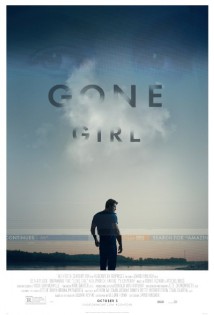
Gone Girl

Movies provide a familiar comfort for me, even if the subject matter isn’t warm and fuzzy. Thrillers in particular give me a nice buzz of excitement, and they’re my favorite. When I saw the trailer for Gone Girl, I was drawn in by the promise of a suspenseful thriller and thought: my kind of movie. David Fincher has been one of my favorite directors for a long time. From Se7en and Panic Room to his remake of The Girl With the Dragon Tattoo, Fincher has proven time and again that he’s a 21st century master of suspense – no disrespect to the late great Alfred Hitchcock. With Gone Girl, he’s simply outdone himself.

I hadn’t read Gillian Flynn’s novel of the same name, and I went in to the movie ‘cold.’ My opinions are solely based on Fincher’s dramatic interpretation and Flynn’s adapted screenplay. Fincher masterfully manipulated the viewer’s emotions by crafting a very specific perception of the main characters and in the sequential narrative he wanted to tell. The movie opens with no pretense, quickly establishing the essential plot. It’s the day after Independence Day, and Nick Dunne’s wife Amy (Rosamund Pike, The World’s End) has gone missing. Nick (Ben Affleck, Runner Runner) and his twin sister Margo (Carrie Coon, The Leftovers) don’t seem too broken up about her disappearance, though people admittedly express grief and anxiety in different ways. Nick does the “right” things after noticing signs of a struggle at their home by informing the authorities, and he co-operates with their investigation, at least initially.

As the film unfolds, my opinion of Nick began to shift – and this was a testament to an outstanding screenplay from Flynn and flawless direction from Fincher. While people grieve differently, at some point the shock wears off and real emotions come out. That never happened with Nick, and I assumed that he must’ve had something to do with his wife’s disappearance. Circumstantial evidence mounted, and it was apparent from minute one that Nick and Amy weren’t happy. Juxtaposed with current happenings were narrative excerpts from Amy’s diary, and these musings were dramatized through flashbacks. We see how Nick and Amy first met, and witness the undeniable chemistry they once shared. We know that something changed along the way, but for the longest time we don’t know how or when. Nick sure looks guilty, but things aren’t always what they seem.

A movie rife with mystery and twists such as this needn’t be spoiled, so I’ll leave the plot synopsis where it stands. I’ve lauded the writing and direction, but the performances were similarly excellent. For whatever reason (maybe it’s the memory of J. Lo and Gigli), most people don’t think much of Ben Affleck. But I think he’s extremely talented behind the camera (The Town) and in front of it as well. His initial aloofness was contemptible, but as the plot unfolded he became a sympathetic character, and his performance was unwavering. But the real linchpin of this movie was Pike, whose veneer of warmth belied an icy core. Her versatility and depth were impeccably nuanced, and she was a revelation. Even Tyler Perry was impressive as Nick’s shrewd defense attorney. Carrie Coon also made the most of her supporting role, and the entire cast was perfect, from top to bottom. I’ve talked to a couple of people who didn’t like the ending, but for me – a resolution doesn’t have to be popular to be effective. What more can I say? Make this the next movie you see. Grade: A

The Equalizer

Some actors enjoy success early in their careers (Lupita N’yongo), while others experience a total resurgence after years of acting (Matthew McCounaghey, John Travolta). I’ve noticed that some legendary actors tend to be less selective in the second halves of their career, and the same could have been said for Denzel Washington (2 Guns), until 2012’s Flight, for which he received an Oscar nomination. I was beginning to think Washington’s best work was behind him, because although his efforts on screen are above reproach, the source material doesn’t always deliver. In The Equalizer, Washington reunites with Training Day director Antoine Fuqua (Olympus Has Fallen), for another gritty, entertaining tale.

Washington stars as Robert McCall, a quiet, unassuming middle-aged man who suffers from insomnia and obsessive compulsive disorder. His afflictions don’t impair him terribly, as he enjoys the contented existence of a normal job at the local home improvement store. His co-workers are fond of him, and he has an affable, positive manner with everyone he meets. His insomnia frequently finds him at the local diner at late hours, when most of Boston is counting sheep. Here he befriends Alina, a young “working” girl whose eyes are tinged with sadness and fear. When her pimp rousts her from the diner one night, it’s all he can do to restrain himself.

Eventually Alina’s profession catches up to her, and her Russian employers brutally retaliate against her for stepping out of line. Washington epitomizes the phrase “no more Mr. Nice Guy,” as he turns into a one man wrecking crew on a quest for vengeance. The playing field between a prostitute and her pimp is never a level one, but McCall is the equalizer and he has his own brand of justice. It’s obvious that he had a very different profession at one point in life, perhaps as a Navy Seal or CIA operative. He obliterates her pimp and his associates, but things get dicier as he fights his way up the criminal food chain.

The story was straightforward and simple. There weren’t many plot twists, and Washington’s singular focus was reminiscent of recent, similarly themed films. My movie companion noted the similarity between The Equalizer and Washington’s Man on Fire, though the latter movie featured greater depth of character, easily. That’s not a criticism, rather an observation. Washington was his charismatic self, but viewers looking for a total departure from his previous work won’t find it here. The simplicity of the script left me questioning McCall’s motivation. I’ll reference another film to make my point. If you’ve ever seen The Punisher, you know that the main character suffered a catastrophic loss when his entire family was massacred. THAT’S the type of thing to set a man on a course for vengeance.

Here, McCall’s motivation for his actions involved a stretch of the imagination, in my opinion. But hey, sometimes it’s a good thing when you don’t have a million different subplots taking you all over the place. Simple can be good. All in all, it was an entertaining film with some authentic fighting scenes and action sequences. The hand-to-hand combat element was fun to watch and added an air of realism. Washington didn’t stretch artistically, but he didn’t have to. He has the presence and ability to carry any movie, and he delivered here for Fuqua. Grade: B.

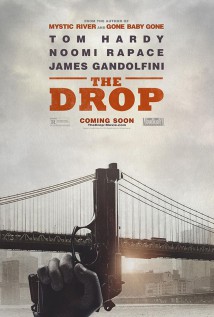
The Drop

As the summer movie season draws to a close, I look forward to better offerings in the fall. I’m optimistic about the films slated for release in the coming weeks, from Gone Girl to Kill the Messenger. I was disappointed with the summer selection, and it looks like studios are featuring some weightier movies in the next few months. The Drop’s trailer appeared promising, with multi-faceted Tom Hardy (Locke) alongside James Gandolfini (Enough Said) in his final film.

Writer David Lehane’s source material has given us some heavy, emotionally rich films like Mystic River and Gone Baby Gone, and the same melancholy, gritty undertones of the working class were present in The Drop. Lehane adapted the screenplay from one of his short stories, and the movie pulsated with moments of electricity, despite an overall quiet tone. Of course, in criminal parlance, a “drop” refers to a place where illegal money is exchanged for a criminal act, or “job.” Enter ordinary man Bog Saginawski (Hardy), a solitary guy whose low-level criminal activities belie a warm heart. He works at a neighborhood bar called Cousin Marv’s, owned by Gandolfini’s character in name only.

Marv’s bar doubles as a drop spot for the local mob, a no-nonsense group of Chechens who ousted him as owner a decade prior. He runs a tight ship, keeping Bob in line and reminding him of whose name is on the door. The movie opens with Bob narrating an overview of the way money changes hands in New York’s underworld, especially at night and especially at places like Marv’s. We watch as Bob discreetly receives mysterious brown envelopes from an assortment of crooks and hustlers; and it’s business as usual until two armed, masked men hold up the bar one night as Marv and Bob are closing.

The film follows the aftermath of the robbery, as Bob and Marv contend with the police and the mob. An interesting subplot emerges when Bob develops a friendship with a neighboring woman named Nadia (Noomi Rapace, Prometheus) after they discover an abused pit bull puppy. The adorable puppy was a recurring use of symbolism throughout the movie, representing the duality of the vicious breed and the innocence of a baby. Bob’s character somewhat mirrored the dog’s, as his simple, peaceful exterior obscured a more brutal survival instinct.

I was drawn in by the performances, and I’m beginning to think Hardy is incapable of a bad showing. His character does a 180, but the shift felt authentic rather than disingenuous. He had a fraternal chemistry with Gandolfini and plaintive tenderness with Rapace as they were threatened by a menacing ex-lover from her past.The film was suspenseful and effectively dramatic throughout, although it lagged here and there. Patient viewers will be rewarded in the final act, where the plot twists unexpectedly. The trailer is a bit misleading, so you should be forewarned that this is a definitely an “indie” movie with a subdued tone. It won’t make much of a splash at the box office, but The Drop is worth checking out. Grade: B

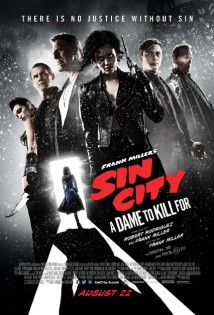
Sin City: A Dame to Kill For

As I type this review, Sin City: A Dame to Kill For is limping towards a sixth place showing at the box office. However, if you glance at IMDb.com, you’ll find that it has a respectable average user rating of 7.2. Count me among the IMDb tribe, as I found the movie to be just as visually stunning as its unique predecessor. Director Robert Rodriguez (Machete Kills) and Troublemaker Studios reunite the likes of Mickey Rourke (The Courier) and Rosario Dawson (The Captive), while adding newcomers Eva Green (300: Rise of an Empire) and Josh Brolin (Oldboy) to another hard-boiled tale from the back alleys of Basin City.

The movie opens against the familiar black & white backdrop we experienced in part 1. Recall that Bruce Willis’ character tangled with Senator Roark and his demented pedophile son, and that he ended up killing the younger Roark. In the sequel, Roark Sr. remains a corrupt senator, just as vicious as before. He crosses paths with a young gambler named Johnny (Joseph Gordon-Levitt, Don Jon), and when the cocky upstart bests him in a game of poker, Roark erupts in violence. This is just a small slice of life in Sin City, and it prepares the viewer for what’s to come.

Familiar characters Marv (Rourke) and Nancy (Jessica Alba, Little Fockers) collide at the hole-in-the-wall bar where Nancy performs nightly on stage. It’s the perfect seedy setting for the cast of characters in this dark underworld. We’re introduced to Dwight (Brolin), a private eye with a tortured past – just like nearly every other man in Sin City. Dwight is beguiled by ex-lover Ava Lorde (Green), a “dame to kill for.” His resolve crumbles, despite feeble attempts to resist her advances. The female characters in Sin City reminded me of a line from The Godfather: they’re more dangerous than shotguns.

As the tale unfolds, the characters have distinct yet overlapping storylines. The atmospheric tone and the cinematography were amazing. Cigarette smoke wafted through the air and lingered like smog, while splashes of color punctuated the otherwise monochromatic landscape. I saw the movie in 3D, and for once it was used effectively, as Frank Miller’s graphic novel sprang to life. I loved the gravelly narration, as both Dwight and Marv brought us into their world. Some viewers may not like the stereotypical portrayals of men as burly brutes or women as vampy but vulnerable vixens, but what other inhabitants would you expect in a place called Sin City?

If you enjoyed the first Sin City, you will probably think this one is even better; I did. The movie was a visual feast, if nothing else – and I found it supremely entertaining. My sole criticism is that each vignette ended in somewhat silly fashion, as the characters met their respective fates. This movie isn’t for everyone, but I sure enjoyed it. I normally give letter grades, but it’s more accurate if I just say this was 8/10 for me.

Lucy

Last week I had the misfortune of seeing a movie that was every bit as bad as I suspected it would be. Lucy looked silly from the outset, but there was the slightest hint of something cool. Scar Jo kicking butt and taking names? I’m here for it, nonsensical plot be damned. Imagine my disappointment when I not only confirmed the absurdity of the story, but also realized that Lucy’s cool factor was nil.

Judging from the trailer and word of mouth, I expected Lucy to be like the 2011 film Limitless, starring Bradley Cooper. That movie featured Cooper as a lackluster writer who takes a mysterious pill that unlocks his hidden potential. Unfortunately, Lucy was not as clever. The plot was deficient from the start, opening with Johansson as the titular heroine who finds herself the unwitting participant of a botched drug deal. We are given no background or sufficient character introduction – things simply begin happening. Lucy is forced to be a mule, carrying a bag of some new age blue crystallized drug. When she accidentally ingests the drug, she undergoes an almost supernatural change.

The drug allows Lucy to access more brain capacity than the average human being. Supposedly, we only access 10% or less of our cerebral capability. I have no idea if this is true, but it sounded absurd to my ears. Morgan Freeman appears as a scientist who has conducted extensive research on the phenomenon. As the drug continues to course through Lucy’s veins, we witness her rapid evolution as she transforms in unimaginable ways. As her neurological abilities expand, she acquires new “power,” such as the ability to control matter. Here is where the movie really lost me and where comparisons to Limitless fall short. It’s one thing for Lucy to reach her full human potential, it’s quite another thing for her to have the ability to control other people.

Writer/director Luc Besson (3 Days to Kill) is a gifted auteur, having given us the likes of Leon: The Professional, but his creative efforts fell woefully short here. For example, there is one scene where Lucy takes on an entire corridor full of villains. She uses her abilities to suspend the men in midair, instead of fighting her way through the gauntlet. If she has these increased abilities, why not incorporate hand-to-hand combat and let the character make mincemeat out of her foes? We know Johansson is capable from her work in The Avengers. It was just a poor choice in storytelling, in my opinion. Science-fiction movies can still incorporate elements of plausibility, and I thought Lucy took the easy way out. Ultimately, the story was paper thin, with characters just emerging and retreating with no rhyme or reason. Cinematic devices were incorporated and then abandoned. As the movie entered its final act, it reached the height of stupidity.

There isn’t much left to say. I found very little worthwhile about this movie. I like Scarlett Johansson a lot, but what could she do with the material? It’s not her fault; it is what it is. Morgan Freeman’s sage, majestic intonations were similarly ineffective in elevating such drivel. This is the kind of movie you watch on Netflix or cable when you’re bored at home with nothing better to do. And even then, it won’t have your full attention. Grade: D

Dawn of The Planet of the Apes

By the time we arrive at the third installment of a trilogy, I usually think the whole concept has “jumped the shark.” I found 2001’s reboot of Planet of the Apes supremely underwhelming, failing to live up to the intriguing, subtle social commentary of the Charlton Heston (The Order) original. I don’t think it was a hit with audiences either, and maybe that’s why it was ten years before someone thought to make a sequel, giving us 2011’s effective installment featuring James Franco (This Is the End). The trailer for Dawn of the Planet of the Apes promised a shift in storytelling, and since the second edition was entertaining, I was fairly optimistic.

Dawn opens in a post apocalyptic future, where a simian flu has ravaged the planet. Juxtaposed with this doomsday scenario is a bleak forecast whereby apes have evolved higher than what could’ve been imagined – thanks to man’s insatiable need to take technology past its moral end. Years of primate experiments have created a highly intelligent species of ape. The dwindling human population coupled with the rise of the apes has shifted the balance of power between species, with humans trying to restore the power grid after most of the world has been wiped out. A sizable community of apes have established themselves in the outskirts of San Francisco, living perhaps as early humans once did.

Their establishment of a moral code evinces their keen intelligence, serving as a fascinating sociological exercise in evolution and development. We met Caesar (Andy Serkis, The Hobbit: An Unexpected Journey) in the last Apes movie, and he is featured again in Dawn of the Planet of the Apes as the unquestionable leader of his tribe. He is everything one would desire in a leader, human or otherwise. He is patient, slow to anger, and governed by a sense of right and wrong. When a small band of human survivors surprisingly confronts the apes, Caesar reacts with prudence rather than fear. This puts him at odds with the other apes, namely best friend and secret nemesis Koba (Tony Kebbell, The Counselor), an ape that lacks Caesar’s favorable impression of mankind.

Circumstances dictate that humans and apes collide when it becomes clear that man needs the resources of Caesar’s territory to ensure its survival. Thus the stage is set for a standoff of Darwinian proportions. Malcolm (Jason Clarke, White House Down) compassionately leads the human explorers, but he answers to Dreyfus (Gary Oldman, The Dark Knight Rises) who is much more skeptical about the possibility of striking a peaceful understanding with the apes. With a nod to the jingoism and xenophobia of the current climate, the film depicts the fear we as humans (read: Americans) harbor toward those that are different from us.

While the movie was somewhat predictable in its story arc, I appreciated the parallel between Caesar and Shakespeare’s Caesar, as well as the humanization of these computer-generated characters. There was obviously a conscious shift in storytelling to feature the perspective of the apes more centrally, foregoing the human outlook and aligning the viewer with Caesar from the outset. Who can deny man’s incessant need to assert his dominance over others? History alone has taught us this. I found Dawn of the Planet of the Apes to be vastly entertaining, and in a sea of heretofore summer mediocrity, it stands out as worthwhile summertime fare – at least for now. Grade: B+

This article first appeared at Poptimal and was reprinted with permission.


X-Men: Days of Future Past

Whether it’s foolish or not, I’ve always shown brand loyalty. When I decide I like something, it takes me a while to turn my back on it, even if the quality declines. I’m also a sucker for advertising. Hence, I will probably have an iPhone for the rest of my life; I don’t care if the Samsung Galaxy is superior. I’m loyal to my favorite movie franchises too. Quite simply: I like X-Men. I’ve seen every installment in the franchise, and I can admit that a few were subpar (X-Men 2) – but that’s not going to stop me from seeing the latest entrant upon its release. I enjoyed 2011’s X-Men: First Class and eagerly anticipated a return to the prequel format that showcased the likes of a young Professor X (James McAvoy, Trance), Mystique (Jennifer Lawrence, American Hustle) and Magneto (Michael Fassbender, The Counselor).

Director Bryan Singer (Jack the Giant Slayer) returns to helm the latest iteration of the popular franchise, and I thought his efforts were mostly successful. The familiar themes are present, yet they felt more relevant than trite. The mutants have always been characterized by the juxtaposition of ostracism and duty, with some vehemently loyal to protecting a species that welcomes them with one hand, yet pushes them away with the other. However, Magneto and his ilk have a darker ethos, perennially mistrustful of the so-called benevolence of mankind. They know that fear defeats loyalty and love nearly every time, and would rather not give humans an inch, lest they take a proverbial mile.

The movie begins in an apocalyptic future, where the tenuous bond between mutants and humans has been irrevocably broken. The powers that be have crafted a method of ruthlessly efficient eradication of mutants, and the species is essentially helpless, barely staying one step ahead of their predators. A government scientist named Trask (Peter Dinklage, Game of Thrones) has enabled the reverse engineering of Mystique’s DNA, creating an adaptable killer who can snuff out mutants easily. The only way to ensure mutant survival is to go back in time and change the events of history so that the government does not develop this deadly technology.

The movie’s plot was entertaining and relatively simple, which I appreciated. McAvoy and the remaining cast were compelling and demonstrated great chemistry. Jennifer Lawrence added complexity to her role, humanizing her mutant character and making her a sympathetic figure in the face of persecution. There are always deeper psychological underpinnings at work in this franchise, if one chooses to explore them. Again, I find it interesting that so many mutants crave acceptance from the very institutions that seek to destroy them. I thought this was a fine addition to the franchise, and I wasn’t disappointed. Writer Simon Kinberg (This Means War) crafted a clever script that will allow an infusion of new life into the series, opening up tons of creative possibilities that were previously non-existent. I don’t want to reveal any spoilers, but since the movie involves changing the events of the past, it means that history can be re-written: for the X-Men and for everyone. Solid, fun movie. Grade: A-

Godzilla

I was really looking forward to Godzilla after seeing the trailer. Director Gareth Edwards appeared to have crafted an entertaining film in the vein of the old great disaster flicks. Unfortunately, I’m almost ill equipped to pen this review because I dozed off periodically throughout the movie. Make of that what you will, but here goes.

The movie opens with a recent flashback in time from the perspective of married scientists Joe (Bryan Cranston, Cold Comes the Night) and Sandra Brody (Juliette Binoche, Words and Pictures). The pair is conducting research when they become victims of a tragic accident involving an unidentified creature. To be more precise, the creature was a massive, unidentified terrestrial object (MUTO). Cranston adds heft and gravitas to the movie, but after the first 30 minutes or so, I began to lose interest.

We fast forward to the present day, where Joe’s son Ford is all grown up with a family of his own. Ford is estranged from his father, who has never recovered from the tragic and mysterious incident that claimed his wife. Ford has tried to put the memory of his mother behind him, but recognizes that it devastated his father. He is the first call Joe makes after being incarcerated overseas, and Ford vows to help him. The first act focused on this backstory, introducing us to the characters integral in advancing the plot, which eventually becomes secondary to the massive creatures warring with one another. We aren’t introduced to the titular behemoth until well into the movie – but I found the anticipation annoying rather than exciting.

I admit that I’m not as equipped to write this review as I usually am. I fell asleep and wasn’t terribly impressed by what I saw while awake. In an ironic way, doesn’t that prove my point? I simply wasn’t significantly engaged at any time. I wasn’t too entertained by the special effects, or the battle between Godzilla and the MUTO. These are just my thoughts, and if you’re a fan of the sci-fi genre or the iconic large lizard – then by all means go see Godzilla off GP. The guy sitting a few seats down from me in the theater seemed to be having a ball. Judge for yourself, but I was underwhelmed and disappointed. Grade: C

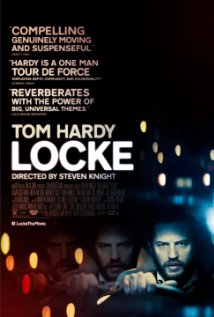
Locke

I believe the hallmark of a good actor is range. Versatility keeps your performances fresh and gives audiences something to look forward to. To that end, I find Tom Hardy (The Dark Knight Rises) one of the most versatile, talented actors around. He’s adept at romantic roles and action movies alike. One minute he is giving Batman hell, the next he’s wooing Reese Witherspoon. I haven’t been disappointed by any of his movies…until now.

Locke gives us a night in the life of Ivan Locke, a construction planner who is in for a very late, difficult evening. Instead of heading home as planned for a fun night with his wife Katrina and two sons, he is diverted out of town to witness the birth of his illegitimate child. He cheated on his wife the previous year with a co-worker named Bethan, the tryst resulting in a pregnancy. Instead of confessing to his wife, he’s remained silent until now, after Bethan goes into labor earlier than expected. We see Ivan make a series of phone calls to various people, including Katrina and Bethan. He also speaks extensively with a co-worker and with his boss, as his unexpected change of plans threatens to deter an important launch for his company.

It may seem like I’ve revealed a lot about the plot; but this is probably not a movie you’ll be seeing anyway, unless you’re a big fan of Hardy. The entire film consists of Locke in his car, driving to the hospital to see Bethan. The other characters are heard but not pictured. For all but five minutes of the film, we are watching Locke behind the wheel of his BMW, using the vehicle’s hands-free calling. The static environment was confining, and while Hardy’s acting was superb – it’s difficult to watch a character engage in such mundane activity for an hour and a half. Moreover, Hardy is literally the only character we see in the film. We can’t witness him interact with other characters in the traditional sense, which adds to the sense of confinement.

There were some elements of the movie I found effective, namely the fine job by Hardy. His range is impeccable, and he brought a sense of righteousness to the character, despite his abject infidelity. He has the requisite talent to carry a film. Furthermore, the film relies on the strength of verbal and audio performances, as we hear but never see the people with whom Locke is involved. This was not a passive viewing experience, as I found myself oddly engaged yet wanting the movie to be over. It took me about 45 minutes to realize that no climactic event was forthcoming.

Past movies have successfully employed some of the aspects of the film that didn’t quite work here for writer/director Steven Night (Eastern Promises). There have been movies that featured a solitary character (I Am Legend), a static setting (Phone Booth), or have relied heavily on a character’s voice (Her). But those movies either had varied settings or were infinitely more exciting than watching a person talk and drive. I can appreciate subtlety as much as the next person, but only to a point. The concept was interesting, but I thought it would have made a better short film. The plot wore thin pretty quickly. If you’re having trouble sleeping, this movie should do the trick. Grade: C

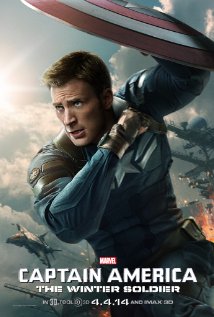
Captain America: The Winter Soldier

I often lament sequels, because more often than not they are unsatisfying. However, sometimes Hollywood manages to build effectively on an original movie by improving upon the protagonist in the sequel. Superhero movies are in a different realm right now, with The Dark Knight trilogy and Marvel’s The Avengers serving as the standard bearers for the genre. Whereas the Iron Man and Thor sequels have represented a slight decline in quality, I thought Captain America: The Winter Soldier was a marked improvement over its predecessor.

Chris Evans (most recently of Thor: The Dark World) reprises the role he established in 2011, but this time the storyline is significantly more entertaining. Evans has the interesting distinction of playing more than one superhero, having also portrayed Johnny Storm in The Fantastic Four franchise. Steve Rogers/Captain America is a much more compelling character, though his straight-arrow persona lacks the texture of his fellow Avengers. The sequel finds our hero adjusting to life in the 21st century while still feeling like a fish out of water. Recall that he was cryogenically frozen during World War II, only to be thawed out in a completely different era.

The movie opens with a reintroduction to the super soldier Steve Rogers as he undertakes a routine mission for S.H.I.E.LD. It’s established relatively early that Captain America has a simple but unwavering way of doing things.  He likes to deal in facts and strives to be truthful and straightforward in most aspects of life: what you see is what you get.  So when he discovers that S.H.I.E.L.D. director Nick Fury (Samuel L. Jackson, RoboCop) is less than forthright about the mission at hand, he feels slightly betrayed.

Fury’s dishonesty makes Rogers mistrustful of him as well as friend and fellow Avenger Black Widow (Natalia Romanoff) (Scarlett Johansson, Don Jon), who was privy to the deception but doesn’t have the same inflexible “code” as Rogers. This movie differed from the other Marvel entrants in that Fury was featured much more prominently. When he inexplicably becomes the target of assassins, he reveals to Rogers that a splinter group has arisen within S.H.I.E.L.D. That rogue faction is known as Hydra, and they’ve been operating since S.H.I.E.L.D.’s inception. Fury ominously warns Rogers that he can’t trust anyone, and soon he too feels Hydra’s wrath. Robert Redford (All is Lost) is featured as S.H.I.E.L.D. higher-up Alexander Pierce, a questionable character in odd pursuit of Rogers after casting suspicion upon him regarding Director Fury.

The title of this sequel references The Winter Soldier, a soldier every bit as impressive as Captain America. He’s relentless and formidable, complete with a metal arm and seemingly indestructible exterior. His origin is unknown, but Black Widow explains to Captain America that his kills are the stuff of legend. Captain America must expose the Hydra agents within S.H.I.E.L.D., while uncovering their end-game goal. All the while he must contend with The Winter Soldier, a foe against whom he is evenly matched. I’ve tried to describe the movie in a way that is accurate but doesn’t reveal too much – so I’ve been intentionally cryptic about a few details.

I enjoyed the movie because it was entertaining and action-packed. The storyline was more interesting than the first movie, and Rogers’ character was fleshed out more. Additionally, the supporting characters proved to be worthy additions, including Anthony Mackie (Runner Runner) as Falcon, an affable sidekick who fits in nicely alongside Captain America and Black Widow. Men (and some women) will appreciate Scarlett Johansson’s assets, and I thought she more than held her own. All of the Avengers are well cast, and Chris Evans is well suited in the starring role. I don’t go for the “straight-arrow” superhero types, as I like my heroes with a darker side – but he didn’t disappoint. I thought Iron Man 3 and Thor 2 were recent Marvel missteps, but Captain America: The Winter Soldier has the studio back on track and is poised to crush the box office. Grade: A-